
 Afryka
 Azja
Azja Europa
 Ameryka Południowa
 Australia i Oceania
 Antarktyda
 Ocean Spokojny
 Ocean Atlantycki
 Ocean Indyjski
 Ocean Arktyczny
 Morze Śródziemne
 Morze Czerwone
 Morze Karaibskie
 Morze Koralowe
 Morze Południowochińskie
 Morze Filipińskie
 Morze Andamańskie
 Morze Północne
 Morze Timor i Morze Arafura
 Zatoka Bengalska
 Zatoka Kalifornijska
Eastern bloodsucking conenose
 Ugryzienia
The eastern bloodsucking conenose is a winged insect that feeds on blood. It belongs to the group called kissing bugs and lives across North America and Latin America, especially in the southeastern United States. It matters because it can carry the parasite that causes Chagas disease.1



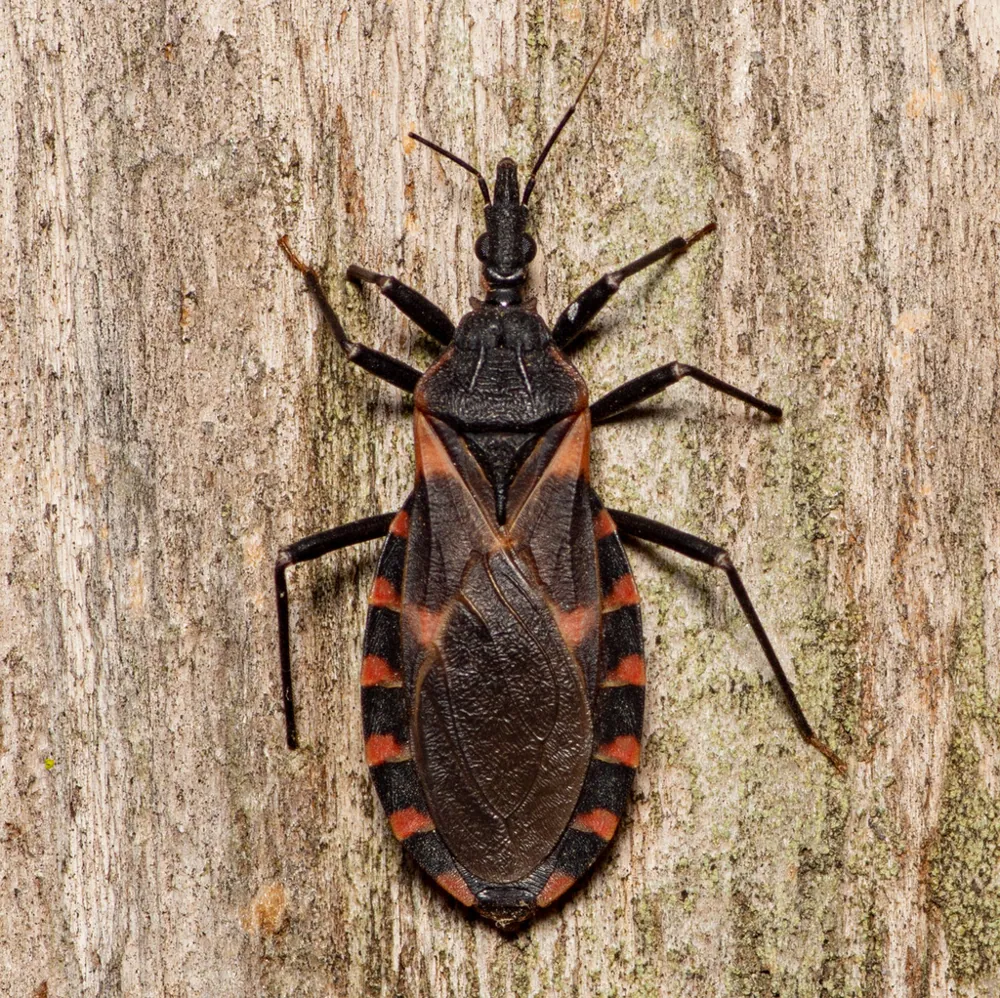
 Jak je rozpoznać
Siła jadu
Jad wydostaje się przez kły lub zęby, gdy zwierzę gryzie.
Jak bardzo jest niebezpieczne dla ludzi?
Zagrożenie dla ludzi: BolesneMoże naprawdę boleć, ale prawie nigdy nie jest groźne.Its bites are usually not particularly painful, but they are irritating. Bites can spread Trypanosoma cruzi, which causes Chagas disease. An estimated six to eight million people are currently infected, mainly in South America, with around 28,000 new cases each year. Documented cases in the United States are rare, with seven human infections from any Triatoma species reported in Texas, California, Tennessee and Louisiana.1
 Jeśli ugryzie
- Przy parzących włoskach gąsienic: zdejmij je taśmą klejącą, a potem umyj skórę. Nie pocieraj.
- Przy ugryzieniach: umyj i schłodź. Szukaj pomocy medycznej, jeśli poszkodowany źle się czuje albo łatwo krwawi.
Zawsze najpierw dzwoń na numer alarmowy (112, 000, 911). To ogólne wskazówki pierwszej pomocy, a nie porada medyczna. Podstawy pierwszej pomocy
 Uważaj na siebie
- Nigdy nie dotykaj, nie łap ani nie drażnij dzikiego zwierzęcia, nawet małego, i nawet jeśli wygląda, jakby spało albo było martwe.
- Zostaw mu miejsce. Jeśli je spotkasz, zachowaj spokój, powoli się wycofaj i pozwól mu odejść.
- Jeśli cię ugryzie: zachowaj spokój, nie ruszaj się, zadzwoń na numer alarmowy (112, 000, 911) albo jak najszybciej dotrzyj do szpitala. Zapamiętaj, jak wyglądało, zdjęcie pomaga.
Nie poluje na ciebie. Używa jadu, żeby złapać jedzenie albo się bronić, i dużo bardziej woli się schować. Więcej o bezpieczeństwie
Jakie jest duże?
Jakie jest długie?
 mniej więcej długości spinacza
Eastern bloodsucking conenose: jak duże jest w porównaniu z TOBĄ?
Zwykła matematyka w twojej przeglądarce. Nic nie jest zapisywane ani nigdzie wysyłane.
Jak szybkie jest?


Fakty
It bites people in the face, usually around the mouth or eyes, most often while they are asleep.1
At one location in Louisiana, 40% of these bugs were found to carry Trypanosoma cruzi, and 38% of those had fed on humans.1
Annual new cases of Chagas disease fell from about 700,000 in 1990 to around 28,000 today.1
Pogromca mitów
Mit: A bite from this bug directly gives you Chagas disease.
Prawda: Infection usually happens when the bug's faeces get into the bite site, for example when a sleeping person scratches or rubs their face. This species does not defecate while feeding, which makes transmission much less likely.1
Dla znawców jadu
- Nazwa naukowa
- Triatoma sanguisuga
- Grupa
- Gąsienice i owady
- Rodzina
- Reduviidae2
- Kolejność
- Hemiptera
- Kontynenty
- Ameryka Północna
- Młode
- The female typically lays eggs four to six days after a blood meal, and one female may lay hundreds of eggs in her lifetime. After hatching, the young bug feeds on blood and moults eight times before it becomes an adult.1
- Zagrożenie dla ludzi
- 2 / 5: Bolesne3
Skąd pochodzą fakty
- Triatoma sanguisuga (Wikipedia (CC BY-SA 4.0))
- Triatoma sanguisuga (iNaturalist): nazwy i klasyfikacja.
- Venom Wiki: poziom zagrożenia, typowy rozmiar i szacowana prędkość to nasze własne oceny. Zobacz, jak je ustalamy: Jak oceniamy zagrożenie.
Każdy fakt na tej stronie ma numer, który wskazuje jego źródło. Jeśli coś pomyliliśmy, przepraszamy, jesteśmy fanami zwierząt, a nie czasopismem naukowym. Napisz do nas na [email protected], a poprawimy to.
 Skorpion jest głodny! Venom Wiki to projekt jednej osoby: darmowy, bez reklam i bez śledzenia. Mały napiwek pomaga utrzymać go w sieci.Nakarm skorpiona
 Giant water bug
 Puss caterpillar
 Saddleback caterpillar
 Wheel bug
 Giant vinegaroon
 Rhodnius kissing bug
 Żararaka szorstka
 Eastern coral snake
 Eastern diamondback rattlesnake
 Eyelash viper
 Timber rattlesnake
 Western diamondback rattlesnake