
 Afryka
 Azja
Azja Europa
 Ameryka Południowa
 Australia i Oceania
 Antarktyda
 Ocean Spokojny
 Ocean Atlantycki
 Ocean Indyjski
 Ocean Arktyczny
 Morze Śródziemne
 Morze Czerwone
 Morze Karaibskie
 Morze Koralowe
 Morze Południowochińskie
 Morze Filipińskie
 Morze Andamańskie
 Morze Północne
 Morze Timor i Morze Arafura
 Zatoka Bengalska
 Zatoka Kalifornijska
Eastern lubber grasshopper
 Trujące po zjedzeniu
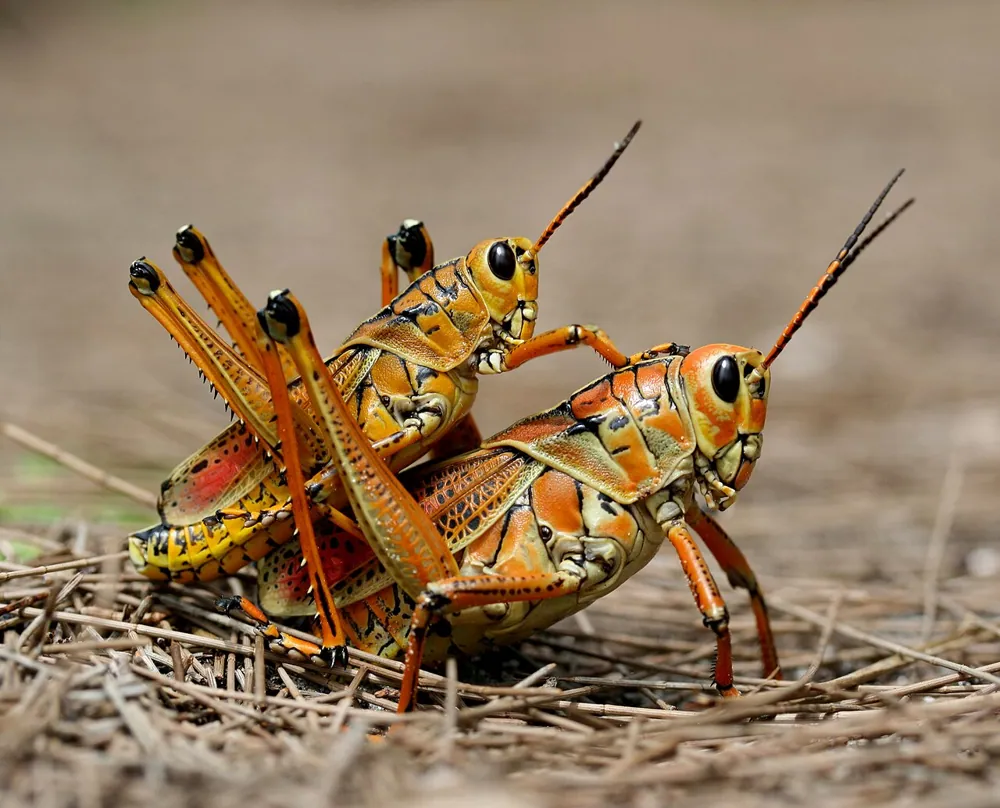
The Eastern lubber grasshopper is one of the largest grasshoppers in the United States, with bright, easy-to-spot colours. It lives in the southeastern and south-central United States, including all of Florida. It is poisonous rather than venomous: it does not bite or sting, but it can harm animals that eat it.1
 Jak je rozpoznać
- Nymphs are smaller than adults, wingless and completely black, with one or more yellow, orange or red stripes.1
- Adults are dull yellow with black spots and markings, bright orange with black markings, or entirely black with yellow or red striping.1
- Adult wings are usually much shorter than the body and cannot be used for flight.1
- Adult males are typically 4.3–5.5 cm long and females 5–7 cm long, making them very large for a grasshopper.1
Siła trucizny
Szkodzi tylko temu, kto je zje.
Jak bardzo jest niebezpieczne dla ludzi?
Zagrożenie dla ludzi: ŁagodneJak użądlenie pszczoły albo słabiej. W zasadzie nieszkodliwe dla ludzi.Co robi, gdy się boi?
When disturbed, it shows its bright colours as a warning, releases a dark, foul-smelling and foul-tasting foamy liquid from its thorax, and gives off a loud hiss to scare would-be attackers.1
 Jeśli ktoś je dotknął lub zjadł
- Jeśli ktoś je zjadł albo ma objawy po zjedzeniu: od razu zadzwoń na numer alarmowy albo do ośrodka toksykologicznego.
Zawsze najpierw dzwoń na numer alarmowy (112, 000, 911). To ogólne wskazówki pierwszej pomocy, a nie porada medyczna. Podstawy pierwszej pomocy
 Uważaj na siebie
- Nigdy nie dotykaj, nie łap ani nie drażnij dzikiego zwierzęcia, nawet małego, i nawet jeśli wygląda, jakby spało albo było martwe.
- Zostaw mu miejsce. Jeśli je spotkasz, zachowaj spokój, powoli się wycofaj i pozwól mu odejść.
- Po dotknięciu lub zjedzeniu: nie trzyj oczu ani ust, umyj ręce i szukaj pomocy medycznej.
Nie poluje na ciebie. Jego trucizna jest tylko po to, żeby nikt go nie zjadł. Więcej o bezpieczeństwie
Jakie jest duże?
Jakie jest długie?
 długie jak 3 klocków ułożonych w rzędzie
Eastern lubber grasshopper: jak duże jest w porównaniu z TOBĄ?
Zwykła matematyka w twojej przeglądarce. Nic nie jest zapisywane ani nigdzie wysyłane.
Jak szybkie jest?


Fakty
Most predatory birds and mammals avoid it because of its toxicity, but large predatory insects can still catch and kill adults.1
It is one of the largest grasshoppers in the United States, along with the western horse lubber grasshopper.1
Its wings are too small for flight in most adults, so it relies on its colours and defences instead.1
Adults in the black colour form are widely known as 'diablo' or 'black diablo'.1
In Louisiana it is called the 'devil's horse' or 'cheval-diable', and in Mississippi it is known as the 'giant locust'.1
Pogromca mitów
Mit: Its bright colours are just for decoration.
Prawda: The colours are a warning to predators that the grasshopper tastes unpleasant.1
Skąd pochodzą fakty
- Romalea (Wikipedia (CC BY-SA 4.0))
- Romalea microptera (iNaturalist): nazwy i klasyfikacja.
- Venom Wiki: poziom zagrożenia, typowy rozmiar i szacowana prędkość to nasze własne oceny. Zobacz, jak je ustalamy: Jak oceniamy zagrożenie.
Każdy fakt na tej stronie ma numer, który wskazuje jego źródło. Jeśli coś pomyliliśmy, przepraszamy, jesteśmy fanami zwierząt, a nie czasopismem naukowym. Napisz do nas na [email protected], a poprawimy to.
 Skorpion jest głodny! Venom Wiki to projekt jednej osoby: darmowy, bez reklam i bez śledzenia. Mały napiwek pomaga utrzymać go w sieci.Nakarm skorpiona
Więcej z tej samej grupy: Inne trujące zwierzęta
 Monarch butterflyInne trujące zwierzętaNieszkodliwe
 Striped blister beetleInne trujące zwierzętaTylko boliNie dotykaj
 Rozdymka japońskaInne trujące zwierzętaŚmiertelnie groźne
 Hawksbill sea turtleInne trujące zwierzętaMoże zabić
 Spanish flyInne trujące zwierzętaWymaga lekarzaNie dotykaj
 Greenland sharkInne trujące zwierzętaTylko boli
 Żararaka szorstka
 Eastern coral snake
 Eastern diamondback rattlesnake
 Eyelash viper
 Timber rattlesnake
 Western diamondback rattlesnake
,_mating.jpg)