
 Afryka
 Azja
Azja Europa
 Ameryka Południowa
 Australia i Oceania
 Antarktyda
 Ocean Spokojny
 Ocean Atlantycki
 Ocean Indyjski
 Ocean Arktyczny
 Morze Śródziemne
 Morze Czerwone
 Morze Karaibskie
 Morze Koralowe
 Morze Południowochińskie
 Morze Filipińskie
 Morze Andamańskie
 Morze Północne
 Morze Timor i Morze Arafura
 Zatoka Bengalska
 Zatoka Kalifornijska
Monarch butterfly
 Trujące po zjedzeniu
The monarch is one of the best-known butterflies in North America, with a black, orange and white pattern that is easy to spot. Its wings are poisonous if eaten, so it is a warning to predators. Some monarchs make a huge southward journey each autumn, covering thousands of miles.1


 Jak je rozpoznać
- Black, orange and white wing pattern that is easy to recognise.1
- Wingspan of 8.9 to 10.2 cm.1
- Caterpillars are pale green or grey-white when very young, with a large black head.1
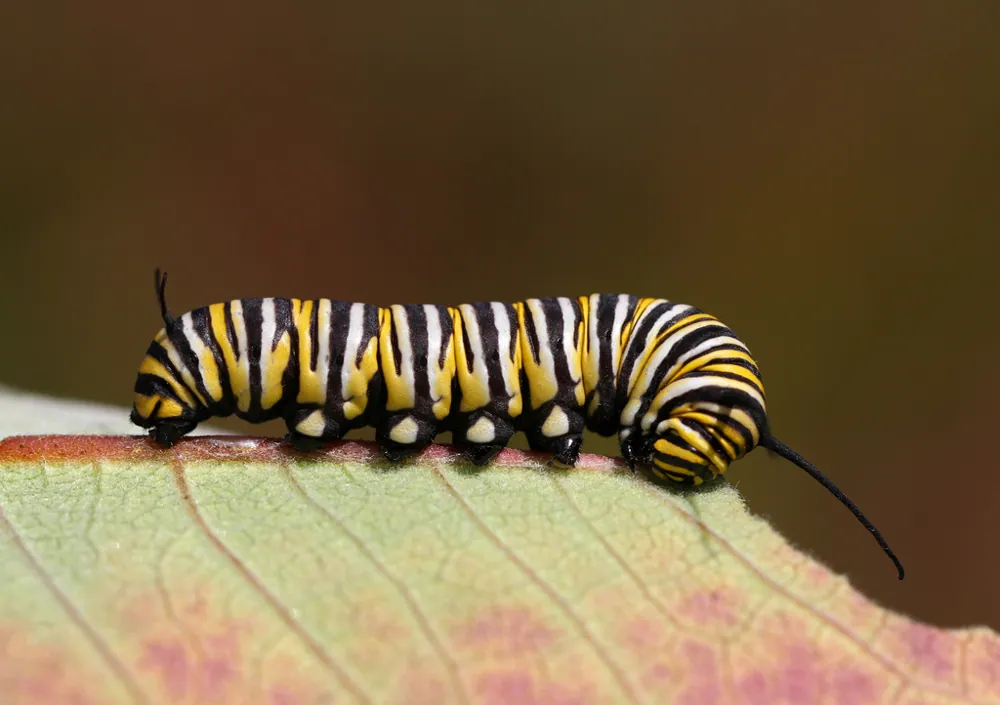
- Older caterpillars have white, yellow and black bands, plus black tentacles.1
Często mylone z: The viceroy butterfly is similar in colour and pattern but is much smaller. It also has an extra black stripe across each hindwing.1
Siła trucizny
Szkodzi tylko temu, kto je zje.
Jak bardzo jest niebezpieczne dla ludzi?
Zagrożenie dla ludzi: ŁagodneJak użądlenie pszczoły albo słabiej. W zasadzie nieszkodliwe dla ludzi.Co robi, gdy się boi?
Its bright black, orange and white pattern serves as a warning coloration to predators, and the viceroy butterfly copies it.1
 Jeśli ktoś je dotknął lub zjadł
- Jeśli ktoś je zjadł albo ma objawy po zjedzeniu: od razu zadzwoń na numer alarmowy albo do ośrodka toksykologicznego.
Zawsze najpierw dzwoń na numer alarmowy (112, 000, 911). To ogólne wskazówki pierwszej pomocy, a nie porada medyczna. Podstawy pierwszej pomocy
 Uważaj na siebie
- Nigdy nie dotykaj, nie łap ani nie drażnij dzikiego zwierzęcia, nawet małego, i nawet jeśli wygląda, jakby spało albo było martwe.
- Zostaw mu miejsce. Jeśli je spotkasz, zachowaj spokój, powoli się wycofaj i pozwól mu odejść.
- Po dotknięciu lub zjedzeniu: nie trzyj oczu ani ust, umyj ręce i szukaj pomocy medycznej.
Nie poluje na ciebie. Jego trucizna jest tylko po to, żeby nikt go nie zjadł. Więcej o bezpieczeństwie
Jakie jest duże?
Jakie jest długie?
 długie jak 3 klocków ułożonych w rzędzie
 przelot przez całe boisko piłkarskie w 42 s
Monarch butterfly: jak duże jest w porównaniu z TOBĄ?
Zwykła matematyka w twojej przeglądarce. Nic nie jest zapisywane ani nigdzie wysyłane.
Jak szybkie jest?


Fakty
Eastern North American monarchs migrate south each autumn to Florida and Mexico, covering thousands of miles, and return north in spring over several generations.1
A female monarch can lay eggs weighing up to her own body mass in total, even though each egg is only about 1/1000 of her mass.1
Fewer than 10% of monarch eggs and caterpillars commonly survive to adulthood, because of weather, predators, parasites and disease.1
Monarchs can develop from egg to adult in as little as 25 days in warm summer weather, but may take as long as seven weeks in cool spring conditions.1
A monarch caterpillar can travel up to 10 metres from its milkweed plant to find a safe place to pupate.1
The monarch was the first butterfly to have its genome sequenced, a draft of 273 million base pairs containing 16,866 protein-coding genes.1
Pogromca mitów
Mit: Monarch butterflies are genetically modified organisms.
Prawda: A 2015 study found genes from wasp bracoviruses in the North American monarch's genome. This led to articles calling monarchs genetically modified, but they are not genetically modified in the usual sense.1
Dla znawców jadu
- Nazwa naukowa
- Danaus plexippus
- Grupa
- Inne trujące zwierzęta
- Rodzina
- Nymphalidae2
- Kolejność
- Lepidoptera
- Kontynenty
- Ameryka Północna, Ameryka Południowa
- Młode
- Females lay eggs singly, usually on the underside of young milkweed leaves, with 300 to 500 eggs over two to five weeks, and up to 1,180 eggs in total.1
- Zagrożenie dla ludzi
- 1 / 5: Łagodne3
Skąd pochodzą fakty
- Monarch butterfly (Wikipedia (CC BY-SA 4.0))
- Danaus plexippus (iNaturalist): nazwy i klasyfikacja.
- Venom Wiki: poziom zagrożenia, typowy rozmiar i szacowana prędkość to nasze własne oceny. Zobacz, jak je ustalamy: Jak oceniamy zagrożenie.
Każdy fakt na tej stronie ma numer, który wskazuje jego źródło. Jeśli coś pomyliliśmy, przepraszamy, jesteśmy fanami zwierząt, a nie czasopismem naukowym. Napisz do nas na [email protected], a poprawimy to.
 Skorpion jest głodny! Venom Wiki to projekt jednej osoby: darmowy, bez reklam i bez śledzenia. Mały napiwek pomaga utrzymać go w sieci.Nakarm skorpiona
Więcej z tej samej grupy: Inne trujące zwierzęta
 Striped blister beetleInne trujące zwierzętaTylko boliNie dotykaj
 Eastern lubber grasshopperInne trujące zwierzętaNieszkodliwe
 Rozdymka japońskaInne trujące zwierzętaŚmiertelnie groźne
 Hawksbill sea turtleInne trujące zwierzętaMoże zabić
 Spanish flyInne trujące zwierzętaWymaga lekarzaNie dotykaj
 Greenland sharkInne trujące zwierzętaTylko boli
 Żararaka szorstka
 Eastern coral snake
 Eastern diamondback rattlesnake
 Eyelash viper
 Timber rattlesnake
 Western diamondback rattlesnake