
 Afryka
 Azja
Azja Europa
 Ameryka Południowa
 Australia i Oceania
 Antarktyda
 Ocean Spokojny
 Ocean Atlantycki
 Ocean Indyjski
 Ocean Arktyczny
 Morze Śródziemne
 Morze Czerwone
 Morze Karaibskie
 Morze Koralowe
 Morze Południowochińskie
 Morze Filipińskie
 Morze Andamańskie
 Morze Północne
 Morze Timor i Morze Arafura
 Zatoka Bengalska
 Zatoka Kalifornijska
Giant leaf frog
 Trucizna w skórze
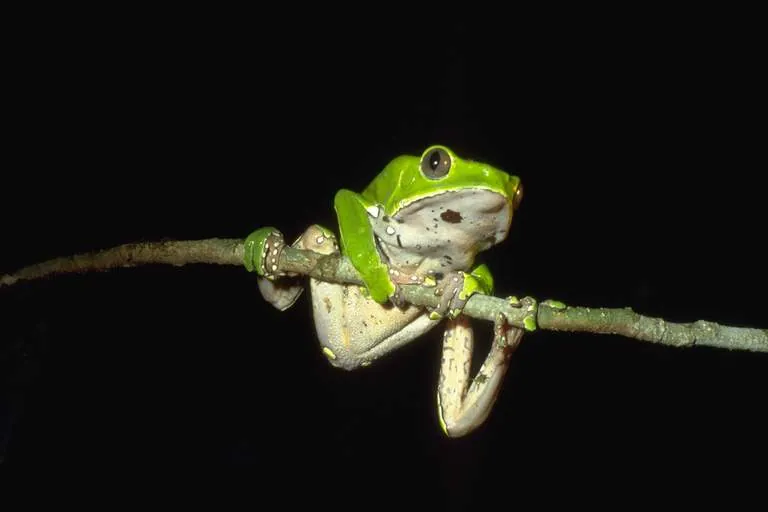
The giant leaf frog is a large tree frog with lime green skin and a white or cream belly. It lives in the rainforests of the Amazon basin in South America. Its skin releases chemicals that act as a defence against predators.1
 Jak je rozpoznać
- Lime green back with a white to yellow-white or cream belly1
- Sparse white spots with dark frames on the lower lips, chest and front legs, denser on the flanks and hind legs1
- Transparent brown fingers with large green adhesive discs1
- A prominent gland behind each eye, extending over the eardrum1
- Dark grey iris1
Siła trucizny
Jego skóra jest trująca. Niebezpiecznie jest jej dotykać, lizać ją albo ją jeść.
Jak działa jego trucizna?
The giant leaf frog's skin secretion contains opioid peptides, including deltorphin and dermorphin. Its skin peptides act as a chemical defence against predators. In kambo rituals, where the secretion is used, it induces intense vomiting.1
Jak bardzo jest niebezpieczne dla ludzi?
Zagrożenie dla ludzi: BolesneMoże naprawdę boleć, ale prawie nigdy nie jest groźne.Co robi, gdy się boi?
When threatened, its skin produces peptides that act as a chemical defence against predators.1
 Jeśli ktoś je dotknął lub zjadł
- Jeśli ktoś go dotknął: dokładnie umyj ręce i nie dotykaj oczu ani ust. Jeśli dziecko lub zwierzę domowe je polizało albo zjadło: zadzwoń do ośrodka toksykologicznego albo na numer alarmowy.
Zawsze najpierw dzwoń na numer alarmowy (112, 000, 911). To ogólne wskazówki pierwszej pomocy, a nie porada medyczna. Podstawy pierwszej pomocy
 Uważaj na siebie
- Nigdy nie dotykaj, nie łap ani nie drażnij dzikiego zwierzęcia, nawet małego, i nawet jeśli wygląda, jakby spało albo było martwe.
- Zostaw mu miejsce. Jeśli je spotkasz, zachowaj spokój, powoli się wycofaj i pozwól mu odejść.
- Po dotknięciu lub zjedzeniu: nie trzyj oczu ani ust, umyj ręce i szukaj pomocy medycznej.
Nie poluje na ciebie. Jego trucizna jest tylko po to, żeby nikt go nie zjadł. Więcej o bezpieczeństwie
Jakie jest duże?
Jakie jest długie?
 długie jak 4 klocków ułożonych w rzędzie
 100 metrów w 72 s (najszybszy człowiek potrzebuje 9,6)
Giant leaf frog: jak duże jest w porównaniu z TOBĄ?
Zwykła matematyka w twojej przeglądarce. Nic nie jest zapisywane ani nigdzie wysyłane.
Jak szybkie jest?


Fakty
Its skin secretion is known as Vacina do sapo, or frog vaccine, and is used in a ritual called kambo or sapo.1
Up to 61% of the eggs of the giant leaf frog are eaten by predators.1
Males fight rivals for mating rights by using their heads to separate a rival male from a female, and by pushing with their hind legs.1
Males are more likely to be targeted by predators during mating season, because their loud fights can be heard easily.1
Eggs are eaten by rove beetles, phorid flies, possibly tufted capuchins and banded cat-eyed snakes, because they are a source of protein.1
Dla znawców jadu
- Nazwa naukowa
- Phyllomedusa bicolor
- Grupa
- Drzewołazy, ropuchy i traszki
- Rodzina
- Phyllomedusidae2
- Kolejność
- Anura
- Kontynenty
- Ameryka Południowa
- Młode
- The female and male build a leaf-nest above forest pools and lay eggs in a gelatinous mass about 70 cm above the water. The eggs hatch in about 14 days, and the tadpoles fall into the water to develop into adult frogs.1
- Jak sobie radzi na wolności
- Least Concern1
- Zagrożenie dla ludzi
- 2 / 5: Bolesne3
Skąd pochodzą fakty
- Phyllomedusa bicolor (Wikipedia (CC BY-SA 4.0))
- Phyllomedusa bicolor (iNaturalist): nazwy i klasyfikacja.
- Venom Wiki: poziom zagrożenia, typowy rozmiar i szacowana prędkość to nasze własne oceny. Zobacz, jak je ustalamy: Jak oceniamy zagrożenie.
Każdy fakt na tej stronie ma numer, który wskazuje jego źródło. Jeśli coś pomyliliśmy, przepraszamy, jesteśmy fanami zwierząt, a nie czasopismem naukowym. Napisz do nas na [email protected], a poprawimy to.
 Skorpion jest głodny! Venom Wiki to projekt jednej osoby: darmowy, bez reklam i bez śledzenia. Mały napiwek pomaga utrzymać go w sieci.Nakarm skorpiona
Więcej z tej samej grupy: Drzewołazy, ropuchy i traszki
 Golden poison frogDrzewołazy, ropuchy i traszkiŚmiertelnie groźneNie dotykaj
 Cane toadDrzewołazy, ropuchy i traszkiWymaga lekarzaNie dotykaj
 Dyeing poison dart frogDrzewołazy, ropuchy i traszkiTylko boliNie dotykaj
 Black-legged poison frogDrzewołazy, ropuchy i traszkiMoże zabićNie dotykaj
 Bruno's casque-headed frogDrzewołazy, ropuchy i traszkiWymaga lekarzaNie dotykaj
 Harlequin poison frogDrzewołazy, ropuchy i traszkiWymaga lekarzaNie dotykaj
 Terciopelo
 Brazilian wandering spider
 Eyelash viper
 Golden lancehead
 South American bushmaster
 Peruvian giant centipede