
 Afryka
 Azja
Azja Europa
 Ameryka Południowa
 Australia i Oceania
 Antarktyda
 Ocean Spokojny
 Ocean Atlantycki
 Ocean Indyjski
 Ocean Arktyczny
 Morze Śródziemne
 Morze Czerwone
 Morze Karaibskie
 Morze Koralowe
 Morze Południowochińskie
 Morze Filipińskie
 Morze Andamańskie
 Morze Północne
 Morze Timor i Morze Arafura
 Zatoka Bengalska
 Zatoka Kalifornijska
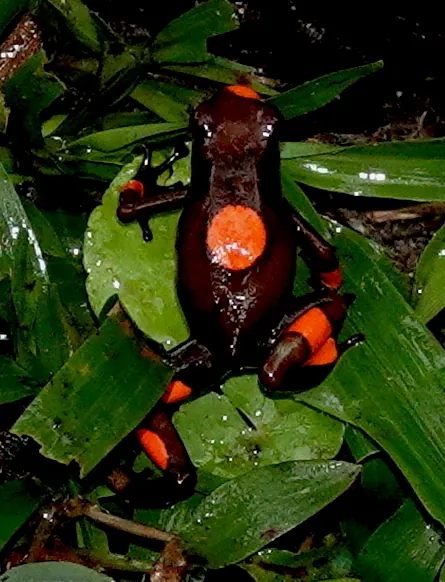
Harlequin poison frog
 Trucizna w skórze
The harlequin poison frog is a small, brightly marked frog that lives on the forest floor of western Colombia. Its skin carries strong toxins, so it is one of the poison dart frogs that should never be handled. It is now critically endangered because its rainforest home is being destroyed.1

 Jak je rozpoznać
- Background colour ranges from light to dark brown.1
- Usually has a vivid, bright spot on its back.1
- Small, with an average snout-to-vent length of about 3.3 cm.1
- Active on the forest floor, feeding on the ground after sunrise and hiding under leaf litter or on fallen logs by 16:00.1
Często mylone z: Some frogs that were once classed as this species were separated into new species in 2018: Oophaga anchicayensis, Oophaga andresi and Oophaga solanensis.1
Siła trucizny
Jego skóra jest trująca. Niebezpiecznie jest jej dotykać, lizać ją albo ją jeść.
Jak działa jego trucizna?
The frog produces histrionicotoxins, which are cardiotoxins, meaning they affect the heart. These compounds act as potent blockers of nicotinic acetylcholine receptors, the sites that receive nerve signals at muscle and nerve junctions. They also affect sodium and potassium channels, though much less strongly.1
Jak bardzo jest niebezpieczne dla ludzi?
Zagrożenie dla ludzi: GroźneJeśli ktoś dotknie lub zje to zwierzę, trzeba iść do lekarza. Zgony są bardzo rzadkie.The frog's toxins can be dangerous. Wild-caught frogs may be toxic and dangerous to handle, and they often have a much higher fatality rate in captivity.1
 Jeśli ktoś je dotknął lub zjadł
- Jeśli ktoś go dotknął: dokładnie umyj ręce i nie dotykaj oczu ani ust. Jeśli dziecko lub zwierzę domowe je polizało albo zjadło: zadzwoń do ośrodka toksykologicznego albo na numer alarmowy.
Zawsze najpierw dzwoń na numer alarmowy (112, 000, 911). To ogólne wskazówki pierwszej pomocy, a nie porada medyczna. Podstawy pierwszej pomocy
 Uważaj na siebie
- Nigdy nie dotykaj, nie łap ani nie drażnij dzikiego zwierzęcia, nawet małego, i nawet jeśli wygląda, jakby spało albo było martwe.
- Zostaw mu miejsce. Jeśli je spotkasz, zachowaj spokój, powoli się wycofaj i pozwól mu odejść.
- Po dotknięciu lub zjedzeniu: nie trzyj oczu ani ust, umyj ręce i szukaj pomocy medycznej.
Nie poluje na ciebie. Jego trucizna jest tylko po to, żeby nikt go nie zjadł. Więcej o bezpieczeństwie
Jakie jest duże?
Jakie jest długie?
 mniej więcej długości spinacza
 100 metrów w 97 s (najszybszy człowiek potrzebuje 9,6)
Harlequin poison frog: jak duże jest w porównaniu z TOBĄ?
Zwykła matematyka w twojej przeglądarce. Nic nie jest zapisywane ani nigdzie wysyłane.
Jak szybkie jest?


Fakty
The tadpoles cannot feed on their own. They are obligate egg-feeders and will starve without the unfertilised eggs their mother provides.1
A parent carries the tadpoles to tiny water pools, often found in the axil of a bromeliad plant, where they develop.1
Histrionicotoxins are hard to make in a lab. Synthesising them has been the subject of many different attempts.1
Harlequin poison frogs are among the most difficult poison dart frogs to raise in captivity.1
Adults are active on the ground during the day and retreat to refuge by mid-afternoon.1
Dla znawców jadu
- Nazwa naukowa
- Oophaga histrionica
- Grupa
- Drzewołazy, ropuchy i traszki
- Rodzina
- Dendrobatidae2
- Kolejność
- Anura
- Kontynenty
- Ameryka Południowa
- Młode
- The female lays eggs among leaf litter. A parent carries the newly hatched tadpoles to a small water pool, often in a bromeliad, and the mother later lays unfertilised eggs for the tadpoles to eat.1
- Jak sobie radzi na wolności
- Critically Endangered1
- Zagrożenie dla ludzi
- 3 / 5: Groźne3
Skąd pochodzą fakty
- Harlequin poison frog (Wikipedia (CC BY-SA 4.0))
- Oophaga histrionica (iNaturalist): nazwy i klasyfikacja.
- Venom Wiki: poziom zagrożenia, typowy rozmiar i szacowana prędkość to nasze własne oceny. Zobacz, jak je ustalamy: Jak oceniamy zagrożenie.
Każdy fakt na tej stronie ma numer, który wskazuje jego źródło. Jeśli coś pomyliliśmy, przepraszamy, jesteśmy fanami zwierząt, a nie czasopismem naukowym. Napisz do nas na [email protected], a poprawimy to.
 Skorpion jest głodny! Venom Wiki to projekt jednej osoby: darmowy, bez reklam i bez śledzenia. Mały napiwek pomaga utrzymać go w sieci.Nakarm skorpiona
Więcej z tej samej grupy: Drzewołazy, ropuchy i traszki
 Liściołaz żółtyDrzewołazy, ropuchy i traszkiŚmiertelnie groźneNie dotykaj
 Cane toadDrzewołazy, ropuchy i traszkiWymaga lekarzaNie dotykaj
 Dyeing poison dart frogDrzewołazy, ropuchy i traszkiTylko boliNie dotykaj
 Black-legged poison frogDrzewołazy, ropuchy i traszkiMoże zabićNie dotykaj
 Bruno's casque-headed frogDrzewołazy, ropuchy i traszkiWymaga lekarzaNie dotykaj
 Giant leaf frogDrzewołazy, ropuchy i traszkiTylko boliNie dotykaj
 Żararaka szorstka
 Brazilian wandering spider
 Eyelash viper
 Golden lancehead
 South American bushmaster
 Peruvian giant centipede