
 Afryka
 Azja
Azja Europa
 Ameryka Południowa
 Australia i Oceania
 Antarktyda
 Ocean Spokojny
 Ocean Atlantycki
 Ocean Indyjski
 Ocean Arktyczny
 Morze Śródziemne
 Morze Czerwone
 Morze Karaibskie
 Morze Koralowe
 Morze Południowochińskie
 Morze Filipińskie
 Morze Andamańskie
 Morze Północne
 Morze Timor i Morze Arafura
 Zatoka Bengalska
 Zatoka Kalifornijska
Pygmy rattlesnake
 Ugryzienia
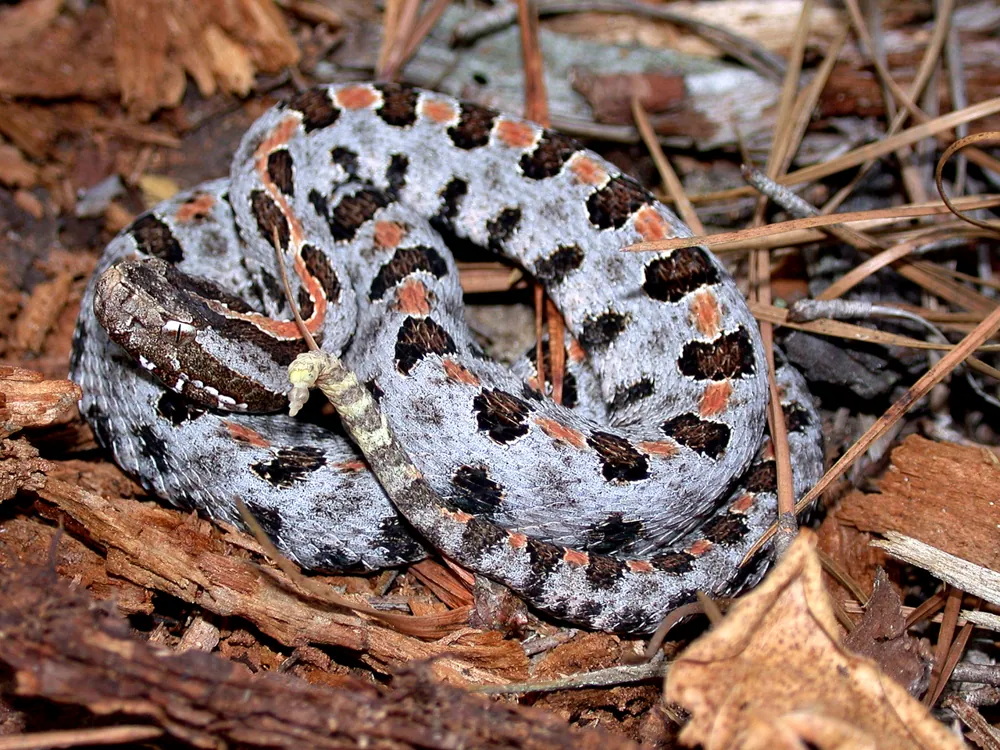
The pygmy rattlesnake is a small, venomous snake that lives in the southeastern United States. It is the smallest rattlesnake found on the North American continent. Its venom is strongly tissue-damaging, but the snake makes so little that a bite is unlikely to be fatal to an adult.1



 Jak je rozpoznać
- Small but bulky in width, usually 40 to 60 cm long including the tail1
- Dorsal pattern of oval or roughly circular spots with somewhat regular edges1
- Flank spots are mostly round and not much taller than they are wide1
- Usually 23 rows of dorsal scales at midbody1
- Young snakes may be paler or more vividly marked, and have a yellow tail tip. The rattle is tiny and gives only a faint buzz that is heard from a few feet away1
Siła jadu
Jad wydostaje się przez kły lub zęby, gdy zwierzę gryzie.
Jak działa jego jad?
Its venom is cytotoxic, which means it damages cells, and it is strongly haemorrhagic, which means it causes bleeding. The venom is tissue-toxic but contains no neurotoxins, which attack the nerves. The snake produces only a small amount of venom and contains substantial amounts of serotonin and related compounds.1
Jak bardzo jest niebezpieczne dla ludzi?
Zagrożenie dla ludzi: BolesneMoże naprawdę boleć, ale prawie nigdy nie jest groźne.The snake produces too little venom to be likely to deliver a fatal bite to a human adult.1
Co robi, gdy się boi?
Some individuals are very aggressive and strike furiously, while others are lethargic and do not rattle at all, and many are reluctant to bite.1
 Jeśli ugryzie
- Trzymaj poszkodowanego w bezruchu i spokoju, trzymaj ugryzioną kończynę na wysokości serca, zdejmij pierścionki i to, co ciasne, i jak najszybciej dotrzyj do szpitala.
Zawsze najpierw dzwoń na numer alarmowy (112, 000, 911). To ogólne wskazówki pierwszej pomocy, a nie porada medyczna. Podstawy pierwszej pomocy
 Uważaj na siebie
- Nigdy nie dotykaj, nie łap ani nie drażnij dzikiego zwierzęcia, nawet małego, i nawet jeśli wygląda, jakby spało albo było martwe.
- Zostaw mu miejsce. Jeśli je spotkasz, zachowaj spokój, powoli się wycofaj i pozwól mu odejść.
- Jeśli cię ugryzie: zachowaj spokój, nie ruszaj się, zadzwoń na numer alarmowy (112, 000, 911) albo jak najszybciej dotrzyj do szpitala. Zapamiętaj, jak wyglądało, zdjęcie pomaga.
Nie poluje na ciebie. Używa jadu, żeby złapać jedzenie albo się bronić, i dużo bardziej woli się schować. Więcej o bezpieczeństwie
Jakie jest duże?
Jakie jest długie?
 długie jak 4 bananów ułożonych jeden za drugim
 100 metrów w 110 s (najszybszy człowiek potrzebuje 9,6)
Pygmy rattlesnake: jak duże jest w porównaniu z TOBĄ?
Zwykła matematyka w twojej przeglądarce. Nic nie jest zapisywane ani nigdzie wysyłane.
Jak szybkie jest?


Fakty
Its venom was the basis for the drug eptifibatide, which is used to prevent clotting during a heart attack.1
It is the smallest rattlesnake found on the North American continent.1
Its rattle is unusually small, which may show the early stages of how rattles evolved.1
Snake fungal disease has risen sharply in pygmy rattlesnakes over the past decade and is a major cause of death, though some snakes have recovered in the field.1
Females may give birth to live young even while infected with snake fungal disease.1
Pogromca mitów
Mit: Its bite is deadly to people.
Prawda: The snake makes so little venom that a bite is unlikely to be fatal to an adult human.1
Dla znawców jadu
Skąd pochodzą fakty
- Sistrurus miliarius (Wikipedia (CC BY-SA 4.0))
- Sistrurus miliarius (iNaturalist): nazwy i klasyfikacja.
- Venom Wiki: poziom zagrożenia, typowy rozmiar i szacowana prędkość to nasze własne oceny. Zobacz, jak je ustalamy: Jak oceniamy zagrożenie.
Każdy fakt na tej stronie ma numer, który wskazuje jego źródło. Jeśli coś pomyliliśmy, przepraszamy, jesteśmy fanami zwierząt, a nie czasopismem naukowym. Napisz do nas na [email protected], a poprawimy to.
 Skorpion jest głodny! Venom Wiki to projekt jednej osoby: darmowy, bez reklam i bez śledzenia. Mały napiwek pomaga utrzymać go w sieci.Nakarm skorpiona
 Eastern diamondback rattlesnake
 Timber rattlesnake
 Western diamondback rattlesnake
 Sidewinder
 Mojave rattlesnake
 Aruba rattlesnake
 Żararaka szorstka
 Eastern coral snake
 Eyelash viper
 Arizona bark scorpion
 Brown recluse
 Cane toad