
 Afurika
 Aziya
Aziya Uburayi
 Amerika y'Amajyepfo
 Ositaraliya na Oseyaniya
 Antaragitika
 Inyanja ya Pasifika
 Inyanja ya Atalantika
 Inyanja y'Abahinde
 Inyanja ya Arigitika
 Inyanja ya Mediterane
 Inyanja Itukura
 Inyanja ya Karayibe
 Inyanja ya Korali
 Inyanja y'Amajyepfo y'u Bushinwa
 Inyanja ya Filipine
 Inyanja ya Andamani
 Inyanja y'Amajyaruguru
 Inyanja ya Timor na Arafura
 Ikigobe cya Bengali
 Ikigobe cya Kaliforuniya
Arizona blond tarantula
 Iraruma
The Arizona blond tarantula is a large, burrowing spider with pale, golden-looking hairs on its front body. It lives in the deserts of Arizona and New Mexico and nearby parts of Mexico. Its venom is considered low in toxicity, so it is not highly dangerous to people.1

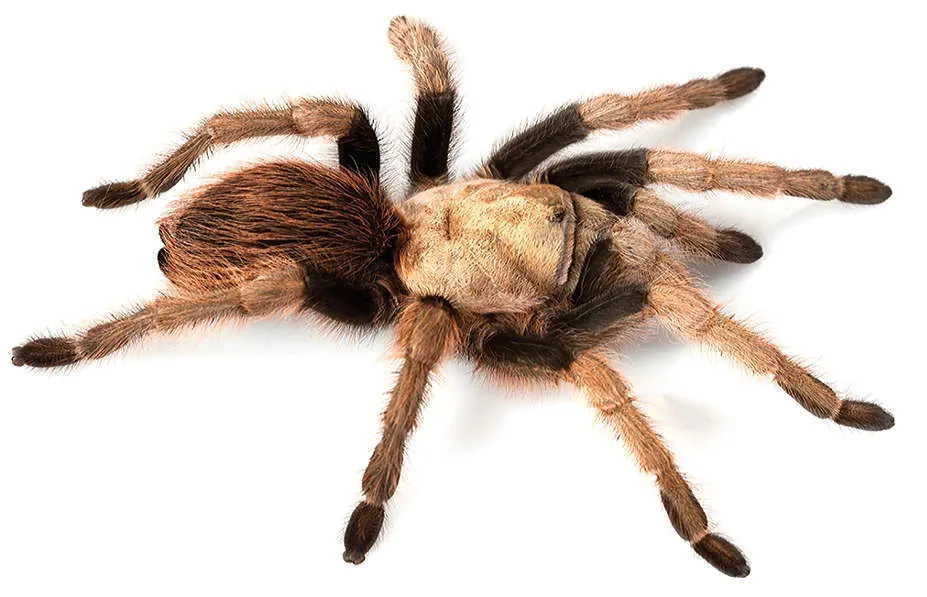
 Uko wayimenya
- Front body (carapace) covered in dense pale hairs, which gives it the blonde name.1
- Females are usually a uniform tan colour.1
- Males have black legs, a copper-coloured front body and a reddish abdomen.1
- Burrows can be 2.5 to 5.1 cm across, with some strands of silk over the opening.1
- Body length is up to 5.6 cm in females and up to 4.4 cm in males.1
Imbaraga z'ubumara
Ubumara busohokera mu menyo yayo y'ubumara cyangwa mu yandi menyo iyo iriye.
Ubumara bwayo bukora iki?
The venom contains neurotoxins, which attack the nerves. The two named compounds are Apc600 and Apc728. These toxins have not been studied in depth, and the venom is considered low in toxicity for humans.1
Iteje akaga kangana iki ku bantu?
Akaga ku bantu: YorohejeNko guterwa urubori n'uruyuki cyangwa munsi yaho. Mu by'ukuri ntacyo itwaye abantu.The venom is not highly dangerous to humans. Compared with a bee sting, its venom level is not significantly higher. It is one of the least dangerous spiders in its family, Theraphosidae.1
 Niba iruma
- Oza aho yarumye kandi uhakonjeshe. Shaka ubufasha bwa muganga niba ububabare bukabije cyangwa umuntu yumva atameze neza.
Buri gihe banza uhamagare nimero y'ubutabazi (112, 000, 911). Izi ni inama rusange z'ubutabazi bw'ibanze, si inama za muganga. Ibanze by'ubutabazi bw'ibanze
 Irinde akaga
- Ntuzigere ukora, ufata cyangwa ushotora inyamaswa yo mu gasozi, nubwo yaba ntoya, kandi nubwo yasa n'isinziriye cyangwa yapfuye.
- Yihe umwanya. Niba uhuye n'imwe, tuza, usubire inyuma buhoro buhoro kandi uyireke yigendere.
- Niba imwe ikurumye: tuza, ntunyeganyege, hamagara nimero y'ubutabazi (112, 000, 911) cyangwa ujye ku bitaro vuba. Ibuka uko yasaga, ifoto irafasha.
Ntigushakisha ngo ikugirire nabi. Ikoresha ubumara bwayo kugira ngo ifate ibyo kurya cyangwa yirinde, kandi ikunda cyane kwihisha. Ibindi ku kwirinda
Ingana gute?
Ireshya ite?
 ngufi kurusha agahera kawe
 yakwiruka metero 100 mu masegonda 220 (umuntu wihuta kurusha abandi akenera 9,6)
Arizona blond tarantula ingana ite ugereranyije NAWE?
Ni imibare gusa ikorerwa muri mudasobwa yawe. Nta kintu kibikwa cyangwa cyoherezwa ahandi.
Yihuta gute?


Ibintu by'ukuri
Females can live about 24 to 30 years, while males live about 5 to 10 years.1
Each spider molts about 25 times over two years, going through ten main stages.1
Newborns look like females, and males only show male features after several years of development.1
Its popularity among beginner tarantula keepers is linked to its long lifespan and calm nature.1
Molting is seasonal, and is especially common in March and April, even though tarantulas can molt at any time of day.1
Ku bahanga mu by'ubumara
Aho ibintu bivugwa bituruka
- Aphonopelma chalcodes (Wikipedia (CC BY-SA 4.0))
- Aphonopelma chalcodes (iNaturalist): amazina n'ibyiciro.
- Venom Wiki: urwego rw'akaga, ingano isanzwe n'ikigereranyo cy'umuvuduko ni ibyacu bwite. Reba uko tubibara: Uko tugena akaga.
Buri kintu kivugwa kuri iyi paji gifite nimero yerekana aho cyavuye. Niba twibeshye, tubabarire, turi abakunzi b'inyamaswa, ntituri ikinyamakuru cya siyansi. Tubwire kuri [email protected] tuzabikosora.
 Sikorupiyo irashonje! Venom Wiki ni umushinga w'umuntu umwe: ni ubuntu, nta matangazo kandi nta bikurikirana abantu. Impano ntoya ifasha kugira ngo ikomeze kuboneka kuri interineti.Gaburira sikorupiyo
Izindi zo mu itsinda rimwe: Tarantula na funnel-web
 Mexican redknee tarantulaTarantula na funnel-webNtacyo itwaye
 Ravine trapdoor spiderTarantula na funnel-webNtacyo itwaye
 Trinidad chevron tarantulaTarantula na funnel-webIrababaza gusa
 Antilles pinktoe tarantulaTarantula na funnel-webNtacyo itwaye
 California trapdoor spiderTarantula na funnel-webNtacyo itwaye
 Costa Rican zebra tarantulaTarantula na funnel-webNtacyo itwaye
 Terciopelo
 Eastern coral snake
 Eastern diamondback rattlesnake
 Eyelash viper
 Timber rattlesnake
 Western diamondback rattlesnake