
 Afurika
 Aziya
Aziya Uburayi
 Amerika y'Amajyepfo
 Ositaraliya na Oseyaniya
 Antaragitika
 Inyanja ya Pasifika
 Inyanja ya Atalantika
 Inyanja y'Abahinde
 Inyanja ya Arigitika
 Inyanja ya Mediterane
 Inyanja Itukura
 Inyanja ya Karayibe
 Inyanja ya Korali
 Inyanja y'Amajyepfo y'u Bushinwa
 Inyanja ya Filipine
 Inyanja ya Andamani
 Inyanja y'Amajyaruguru
 Inyanja ya Timor na Arafura
 Ikigobe cya Bengali
 Ikigobe cya Kaliforuniya
Trinidad chevron tarantula
 Iraruma
The Trinidad chevron tarantula is a large hairy spider that lives only on the island of Trinidad. It spends much of its life in tree bark and crevices, and it is also a popular pet in many countries because it is easy to breed in captivity.1

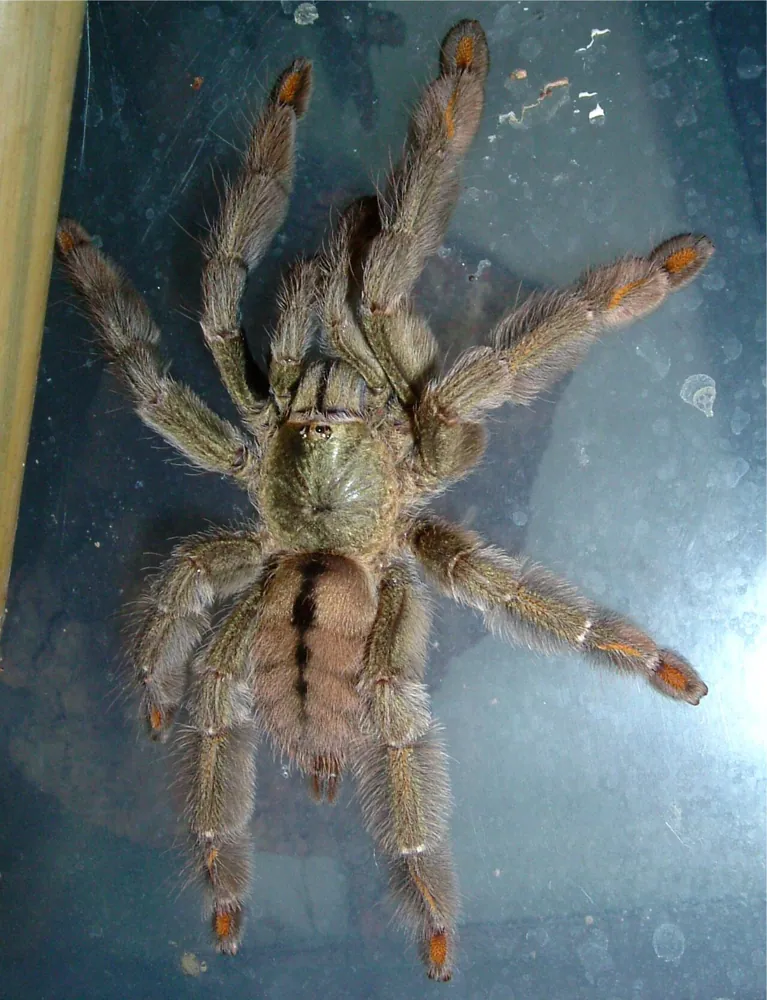
 Uko wayimenya
- Females have dark, chevron-shaped (V-shaped) markings on the abdomen.1
- Females are green, tan or brown, with orange markings on the legs.1
- Males are a more uniform grey or brown, with long legs in proportion to their body.1
- Males keep orange markings on the latter part of their legs.1
- Spiderlings are mostly dark, with pale orange bands on the legs that look like leg warmers. These bands fade as the spider grows.1
Ikunze kwitiranywa na: The female's orange leg markings are similar to those of P. irminia, another species in the same genus.1
Imbaraga z'ubumara
Ubumara busohokera mu menyo yayo y'ubumara cyangwa mu yandi menyo iyo iriye.
Ubumara bwayo bukora iki?
The venom has been studied for possible medical uses, including pain relief and the management of glioma, breast cancer and stroke. It is also of interest for managing cartilage damage in rheumatoid arthritis. The main active compound studied is psalmotoxin.1
Iteje akaga kangana iki ku bantu?
Akaga ku bantu: IrababazaIshobora kubabaza cyane, ariko hafi ya buri gihe nta kibazo gikomeye biteza. Niba iruma
- Oza aho yarumye kandi uhakonjeshe. Shaka ubufasha bwa muganga niba ububabare bukabije cyangwa umuntu yumva atameze neza.
Buri gihe banza uhamagare nimero y'ubutabazi (112, 000, 911). Izi ni inama rusange z'ubutabazi bw'ibanze, si inama za muganga. Ibanze by'ubutabazi bw'ibanze
 Irinde akaga
- Ntuzigere ukora, ufata cyangwa ushotora inyamaswa yo mu gasozi, nubwo yaba ntoya, kandi nubwo yasa n'isinziriye cyangwa yapfuye.
- Yihe umwanya. Niba uhuye n'imwe, tuza, usubire inyuma buhoro buhoro kandi uyireke yigendere.
- Niba imwe ikurumye: tuza, ntunyeganyege, hamagara nimero y'ubutabazi (112, 000, 911) cyangwa ujye ku bitaro vuba. Ibuka uko yasaga, ifoto irafasha.
Ntigushakisha ngo ikugirire nabi. Ikoresha ubumara bwayo kugira ngo ifate ibyo kurya cyangwa yirinde, kandi ikunda cyane kwihisha. Ibindi ku kwirinda
Ingana gute?
Ireshya ite?
 ireshya n'ibice 5 by'ibikinisho byo kubaka biri ku murongo
 yakwiruka metero 100 mu masegonda 200 (umuntu wihuta kurusha abandi akenera 9,6)
Trinidad chevron tarantula ingana ite ugereranyije NAWE?
Ni imibare gusa ikorerwa muri mudasobwa yawe. Nta kintu kibikwa cyangwa cyoherezwa ahandi.
Yihuta gute?


Ibintu by'ukuri
The venom is being studied for possible uses in medicine, including pain relief and treatments for some cancers and stroke.1
Spiderlings have pale orange bands on their legs that look like leg warmers. These fade as they grow.1
Males have a much shorter lifespan than females. Their life ends soon after they mature and reproduce.1
P. cambridgei has stridulatory setae (called lyra) on its maxillae. This trait was once seen only in Asian and African species.1
Aho ibintu bivugwa bituruka
- Psalmopoeus cambridgei (Wikipedia (CC BY-SA 4.0))
- Psalmopoeus cambridgei (iNaturalist): amazina n'ibyiciro.
- Venom Wiki: urwego rw'akaga, ingano isanzwe n'ikigereranyo cy'umuvuduko ni ibyacu bwite. Reba uko tubibara: Uko tugena akaga.
Buri kintu kivugwa kuri iyi paji gifite nimero yerekana aho cyavuye. Niba twibeshye, tubabarire, turi abakunzi b'inyamaswa, ntituri ikinyamakuru cya siyansi. Tubwire kuri [email protected] tuzabikosora.
 Sikorupiyo irashonje! Venom Wiki ni umushinga w'umuntu umwe: ni ubuntu, nta matangazo kandi nta bikurikirana abantu. Impano ntoya ifasha kugira ngo ikomeze kuboneka kuri interineti.Gaburira sikorupiyo
Izindi zo mu itsinda rimwe: Tarantula na funnel-web
 Mexican redknee tarantulaTarantula na funnel-webNtacyo itwaye
 Arizona blond tarantulaTarantula na funnel-webNtacyo itwaye
 Ravine trapdoor spiderTarantula na funnel-webNtacyo itwaye
 Antilles pinktoe tarantulaTarantula na funnel-webNtacyo itwaye
 California trapdoor spiderTarantula na funnel-webNtacyo itwaye
 Costa Rican zebra tarantulaTarantula na funnel-webNtacyo itwaye
 Terciopelo
 Eastern coral snake
 Eastern diamondback rattlesnake
 Eyelash viper
 Timber rattlesnake
 Western diamondback rattlesnake