
 Afurika
 Aziya
Aziya Uburayi
 Amerika y'Amajyepfo
 Ositaraliya na Oseyaniya
 Antaragitika
 Inyanja ya Pasifika
 Inyanja ya Atalantika
 Inyanja y'Abahinde
 Inyanja ya Arigitika
 Inyanja ya Mediterane
 Inyanja Itukura
 Inyanja ya Karayibe
 Inyanja ya Korali
 Inyanja y'Amajyepfo y'u Bushinwa
 Inyanja ya Filipine
 Inyanja ya Andamani
 Inyanja y'Amajyaruguru
 Inyanja ya Timor na Arafura
 Ikigobe cya Bengali
 Ikigobe cya Kaliforuniya
Brazilian salmon pink birdeater
 Iraruma
The Brazilian salmon pink bird-eating tarantula is a large spider from north-eastern Brazil. It is one of the biggest tarantulas in the world, and it is a popular pet among tarantula keepers because it is calm and breeds easily.1



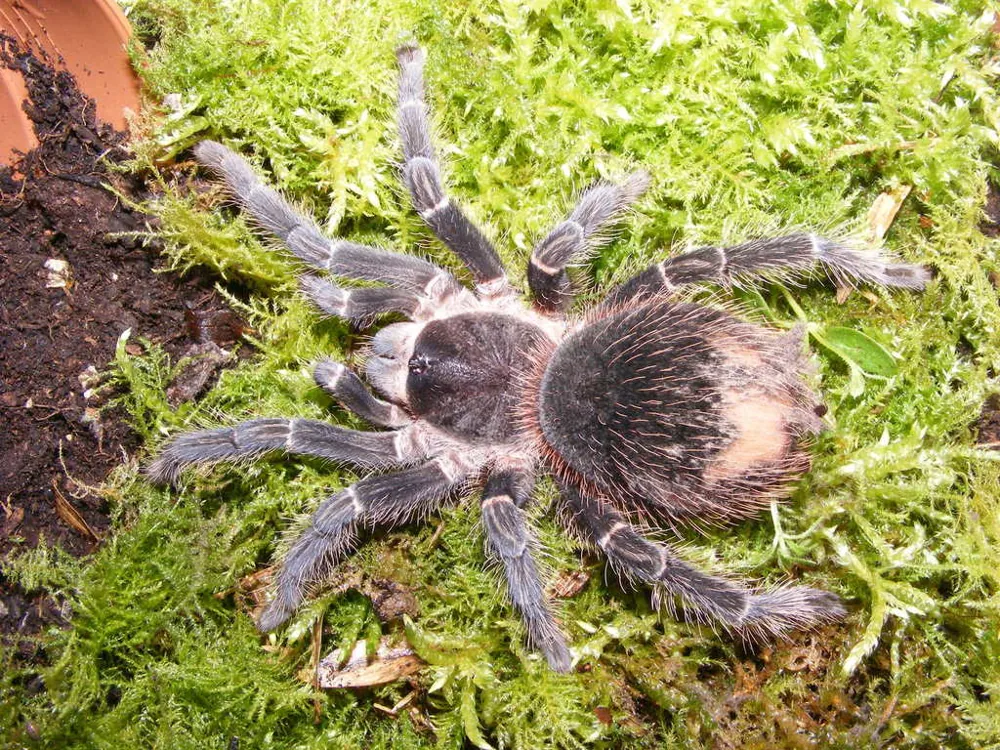
 Uko wayimenya
Imbaraga z'ubumara
Ubumara busohokera mu menyo yayo y'ubumara cyangwa mu yandi menyo iyo iriye.
Ubumara bwayo bukora iki?
The venom is weak to humans. The bite is painful, and the fangs, which can be up to 2.5 cm long, can penetrate human skin. Some sites claim the bite is similar to a cat bite, but this is not confirmed.1
Iteje akaga kangana iki ku bantu?
Akaga ku bantu: YorohejeNko guterwa urubori n'uruyuki cyangwa munsi yaho. Mu by'ukuri ntacyo itwaye abantu.A bite is mechanically dangerous because of the fangs, but it is not medically significant. The tarantula bites only when provoked, and only as a last resort. Its urticating hairs can cause mild to severe skin irritation. Handling can also seriously injure or kill the tarantula, because a fall of more than a few inches can rupture its abdomen.1
Ikora iki iyo ifite ubwoba?
When threatened, it raises its legs and the front of its body to deter predators, flicks irritating urticating hairs from its abdomen, and only bites if the attack continues.1
 Niba iruma
- Oza aho yarumye kandi uhakonjeshe. Shaka ubufasha bwa muganga niba ububabare bukabije cyangwa umuntu yumva atameze neza.
Buri gihe banza uhamagare nimero y'ubutabazi (112, 000, 911). Izi ni inama rusange z'ubutabazi bw'ibanze, si inama za muganga. Ibanze by'ubutabazi bw'ibanze
 Irinde akaga
- Ntuzigere ukora, ufata cyangwa ushotora inyamaswa yo mu gasozi, nubwo yaba ntoya, kandi nubwo yasa n'isinziriye cyangwa yapfuye.
- Yihe umwanya. Niba uhuye n'imwe, tuza, usubire inyuma buhoro buhoro kandi uyireke yigendere.
- Niba imwe ikurumye: tuza, ntunyeganyege, hamagara nimero y'ubutabazi (112, 000, 911) cyangwa ujye ku bitaro vuba. Ibuka uko yasaga, ifoto irafasha.
Ntigushakisha ngo ikugirire nabi. Ikoresha ubumara bwayo kugira ngo ifate ibyo kurya cyangwa yirinde, kandi ikunda cyane kwihisha. Ibindi ku kwirinda
Ingana gute?
Ireshya ite?
Iremera ibingana iki?

 ireshya n'ibice 9 by'ibikinisho byo kubaka biri ku murongo
 yakwiruka metero 100 mu masegonda 160 (umuntu wihuta kurusha abandi akenera 9,6)
Brazilian salmon pink birdeater ingana ite ugereranyije NAWE?
Ni imibare gusa ikorerwa muri mudasobwa yawe. Nta kintu kibikwa cyangwa cyoherezwa ahandi.
Yihuta gute?


Ibintu by'ukuri
Males must hook back the female's fangs during mating, and slow males risk being eaten by the female.1
It is considered the fourth largest tarantula in the world, behind the three species in the genus Theraphosa.1
Before moulting, it lies on its back and forces itself out of its old skin, and it stops eating a few days beforehand.1
Males deposit sperm onto a webbed mat, called a sperm web, before finding a female.1
Usenya ibinyoma
Ikinyoma: Brazilian salmon pink tarantulas are bird-eaters.
Ukuri: There is very little evidence that they catch and eat birds. In the wild they mainly eat large insects and sometimes amphibians and small reptiles.1
Aho ibintu bivugwa bituruka
- Lasiodora parahybana (Wikipedia (CC BY-SA 4.0))
- Lasiodora parahybana (iNaturalist): amazina n'ibyiciro.
- Venom Wiki: urwego rw'akaga, ingano isanzwe n'ikigereranyo cy'umuvuduko ni ibyacu bwite. Reba uko tubibara: Uko tugena akaga.
Buri kintu kivugwa kuri iyi paji gifite nimero yerekana aho cyavuye. Niba twibeshye, tubabarire, turi abakunzi b'inyamaswa, ntituri ikinyamakuru cya siyansi. Tubwire kuri [email protected] tuzabikosora.
 Sikorupiyo irashonje! Venom Wiki ni umushinga w'umuntu umwe: ni ubuntu, nta matangazo kandi nta bikurikirana abantu. Impano ntoya ifasha kugira ngo ikomeze kuboneka kuri interineti.Gaburira sikorupiyo
Izindi zo mu itsinda rimwe: Tarantula na funnel-web
 Goliath birdeaterTarantula na funnel-webIrababaza gusa
 Chilean rose tarantulaTarantula na funnel-webNtacyo itwaye
 Greenbottle blue tarantulaTarantula na funnel-webNtacyo itwaye
 Pinktoe tarantulaTarantula na funnel-webNtacyo itwaye
 Brazilian funnel-web spiderTarantula na funnel-webBisaba muganga
 Burgundy goliath birdeaterTarantula na funnel-webIrababaza gusa
 Golden poison frog
 Terciopelo
 Brazilian wandering spider
 Eyelash viper
 Golden lancehead
 South American bushmaster