
 Afurika
 Aziya
Aziya Uburayi
 Amerika y'Amajyepfo
 Ositaraliya na Oseyaniya
 Antaragitika
 Inyanja ya Pasifika
 Inyanja ya Atalantika
 Inyanja y'Abahinde
 Inyanja ya Arigitika
 Inyanja ya Mediterane
 Inyanja Itukura
 Inyanja ya Karayibe
 Inyanja ya Korali
 Inyanja y'Amajyepfo y'u Bushinwa
 Inyanja ya Filipine
 Inyanja ya Andamani
 Inyanja y'Amajyaruguru
 Inyanja ya Timor na Arafura
 Ikigobe cya Bengali
 Ikigobe cya Kaliforuniya
Brazilian wandering spider
 Iraruma
The Brazilian wandering spider is a large, hairy spider whose bite is medically significant. It lives in parts of South America, including Brazil, Uruguay, Paraguay and Argentina, and it is often found near homes. Its bite can cause severe pain and dangerous effects on the heart and breathing.1



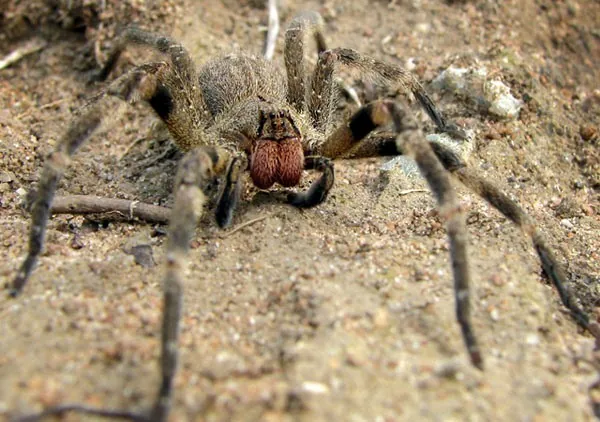
 Uko wayimenya
Imbaraga z'ubumara
Ubumara busohokera mu menyo yayo y'ubumara cyangwa mu yandi menyo iyo iriye.
Ubumara bwayo bukora iki?
The venom contains neurotoxic peptides, which attack the nerves. These act as calcium channel blockers that disrupt how nerve cells send signals. The venom also causes intense pain and inflammation. At deadly concentrations it causes loss of muscle control, breathing problems, paralysis and eventual asphyxiation. Other symptoms reported include priapism, a rapid heartbeat, irregular heartbeat, cardiogenic shock, fluid in the lungs and convulsions.1
Iteje akaga kangana iki ku bantu?
Akaga ku bantu: Iteje akaga cyaneIshobora kwica umuntu utavuwe.Its bite can be life-threatening, and several deaths are documented. Between 1925 and 1945, 415 bites by this species were recorded, and 400 of those people needed antivenom. The spider can give a dry bite with no venom, or a bite with only a small dose.1
 Inkuru nziza: abaganga bafite umuti (umuti urwanya ubumara, antivenom) cyangwa uburyo bwo kuvura ibi.1
Ikora iki iyo ifite ubwoba?
When threatened, it raises its first two pairs of legs as a warning.1
 Niba iruma
- In the documented cases, victims were treated in hospital with anaesthetics, tetanus prophylaxis, antivenom and fluid replacement. Recovery could take about 36 hours after a bite.1
- Oza aho yarumye kandi uhashyire agapaki k'urubura kubera ububabare. Shaka ubufasha bwa muganga niba ububabare bukabije, bukwirakwira cyangwa umuntu yumva atameze neza.
Buri gihe banza uhamagare nimero y'ubutabazi (112, 000, 911). Izi ni inama rusange z'ubutabazi bw'ibanze, si inama za muganga. Ibanze by'ubutabazi bw'ibanze
 Irinde akaga
- Ntuzigere ukora, ufata cyangwa ushotora inyamaswa yo mu gasozi, nubwo yaba ntoya, kandi nubwo yasa n'isinziriye cyangwa yapfuye.
- Yihe umwanya. Niba uhuye n'imwe, tuza, usubire inyuma buhoro buhoro kandi uyireke yigendere.
- Niba imwe ikurumye: tuza, ntunyeganyege, hamagara nimero y'ubutabazi (112, 000, 911) cyangwa ujye ku bitaro vuba. Ibuka uko yasaga, ifoto irafasha.
Ntigushakisha ngo ikugirire nabi. Ikoresha ubumara bwayo kugira ngo ifate ibyo kurya cyangwa yirinde, kandi ikunda cyane kwihisha. Ibindi ku kwirinda
Ingana gute?
Ireshya ite?
 ngufi kurusha agahera kawe
 yakwiruka metero 100 mu masegonda 170 (umuntu wihuta kurusha abandi akenera 9,6)
Brazilian wandering spider ingana ite ugereranyije NAWE?
Ni imibare gusa ikorerwa muri mudasobwa yawe. Nta kintu kibikwa cyangwa cyoherezwa ahandi.
Yihuta gute?


Ibintu by'ukuri
A venom component called Tx2-6 is being studied for use in treatments for erectile dysfunction.1
Humans may be about ten times more sensitive to the venom than mice.1
Females may attack males after mating.1
Males perform a dance to attract females, and males may fight each other during courtship.1
Females can store sperm in a separate chamber until they are ready to fertilise their eggs.1
The average venom yield is 1.25 mg, and 0.4 mg in winter.1
Aho ibintu bivugwa bituruka
- Phoneutria nigriventer (Wikipedia (CC BY-SA 4.0))
- Phoneutria nigriventer (iNaturalist): amazina n'ibyiciro.
- Venom Wiki: urwego rw'akaga, ingano isanzwe n'ikigereranyo cy'umuvuduko ni ibyacu bwite. Reba uko tubibara: Uko tugena akaga.
Buri kintu kivugwa kuri iyi paji gifite nimero yerekana aho cyavuye. Niba twibeshye, tubabarire, turi abakunzi b'inyamaswa, ntituri ikinyamakuru cya siyansi. Tubwire kuri [email protected] tuzabikosora.
 Sikorupiyo irashonje! Venom Wiki ni umushinga w'umuntu umwe: ni ubuntu, nta matangazo kandi nta bikurikirana abantu. Impano ntoya ifasha kugira ngo ikomeze kuboneka kuri interineti.Gaburira sikorupiyo
Izindi zo mu itsinda rimwe: Ibitagangurirwa
 Amazon wandering spiderIbitagangurirwaIshobora kwica
 Chilean recluseIbitagangurirwaBisaba muganga
 Golden silk orb-weaverIbitagangurirwaNtacyo itwaye
 Keyserling's wandering spiderIbitagangurirwaIshobora kwica
 Argentine black widowIbitagangurirwaBisaba muganga
 Bahia wandering spiderIbitagangurirwaBisaba muganga
Iba kandi muri: Amerika y'Amajyepfo
 Golden poison frogIbikeri by'uburozi, ibikeri binini na newtYicaNtukayikoreho
 TerciopeloPit viperYica
 Eyelash viperPit viperIshobora kwica
 Golden lanceheadPit viperIshobora kwica
 South American bushmasterPit viperIshobora kwica
 Cane toadIbikeri by'uburozi, ibikeri binini na newtBisaba mugangaNtukayikoreho