
 Afurika
 Aziya
Aziya Uburayi
 Amerika y'Amajyepfo
 Ositaraliya na Oseyaniya
 Antaragitika
 Inyanja ya Pasifika
 Inyanja ya Atalantika
 Inyanja y'Abahinde
 Inyanja ya Arigitika
 Inyanja ya Mediterane
 Inyanja Itukura
 Inyanja ya Karayibe
 Inyanja ya Korali
 Inyanja y'Amajyepfo y'u Bushinwa
 Inyanja ya Filipine
 Inyanja ya Andamani
 Inyanja y'Amajyaruguru
 Inyanja ya Timor na Arafura
 Ikigobe cya Bengali
 Ikigobe cya Kaliforuniya
Fat-tailed scorpion
 Itera urubori
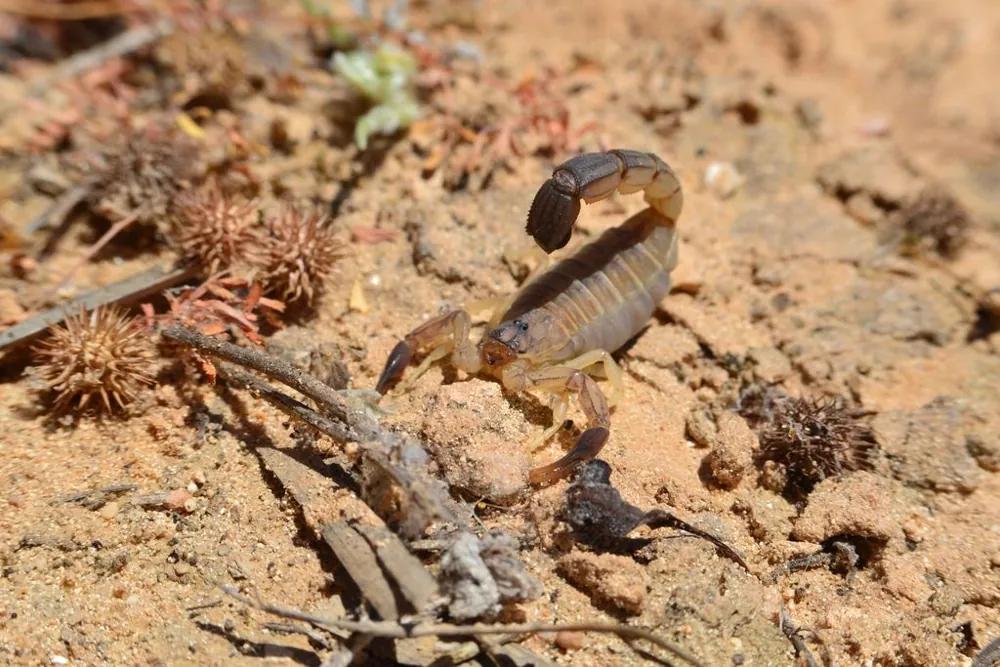
The fat-tailed scorpion is a hardy desert scorpion from North Africa. It can survive powerful sandstorms without digging a burrow. Its venom is among the most dangerous of any scorpion in the world, so it is important to know it by sight and keep well away from it.1



 Uko wayimenya
- It is a medium-sized scorpion that can grow up to 10 centimetres long.1
- It has a very thick, powerful tail.1
- Stripes run along the sides of its dome-shaped body.1
- Its armour is covered in tiny dome-shaped granules.1
- It is active at night and hides by day.1
Ikunze kwitiranywa na: Generally similar scorpions from the Middle East and India were once thought to be this species. Recent studies treat them as different species.1
Imbaraga z'ubumara
Ubumara busohokera mu rubori.
Ubumara bwayo bukora iki?
Its venom is very potent and is mainly made of neurotoxins (which attack the nerves), cardiotoxins (which harm the heart) and myotoxins (which damage muscle). It also contains hemotoxins, which affect the blood. Deaths in people usually occur through heart and breathing failure, and sometimes through bleeding in the brain, organ damage or shock.1
Iteje akaga kangana iki ku bantu?
Akaga ku bantu: Iteje akaga cyaneIshobora kwica umuntu utavuwe.It is one of the world's most dangerous scorpions, due to the strength of its venom and its aggressive temperament. It claims several lives each year.1
 Niba itera urubori
- Konjesha aho yateye urubori ukoresheje agapaki k'urubura, kandi umuntu agume atuje atanyeganyega. Shaka ubufasha bwa muganga vuba, cyane cyane ku bana: sikorupiyo zimwe zica abana.
Buri gihe banza uhamagare nimero y'ubutabazi (112, 000, 911). Izi ni inama rusange z'ubutabazi bw'ibanze, si inama za muganga. Ibanze by'ubutabazi bw'ibanze
 Irinde akaga
- Ntuzigere ukora, ufata cyangwa ushotora inyamaswa yo mu gasozi, nubwo yaba ntoya, kandi nubwo yasa n'isinziriye cyangwa yapfuye.
- Yihe umwanya. Niba uhuye n'imwe, tuza, usubire inyuma buhoro buhoro kandi uyireke yigendere.
- Niba imwe igutereye urubori: tuza, ntunyeganyege, hamagara nimero y'ubutabazi (112, 000, 911) cyangwa ujye ku bitaro vuba. Ibuka uko yasaga, ifoto irafasha.
Ntigushakisha ngo ikugirire nabi. Ikoresha ubumara bwayo kugira ngo ifate ibyo kurya cyangwa yirinde, kandi ikunda cyane kwihisha. Ibindi ku kwirinda
Ingana gute?
Ireshya ite?
 ireshya n'ibice 3 by'ibikinisho byo kubaka biri ku murongo
 yakwiruka metero 100 mu masegonda 180 (umuntu wihuta kurusha abandi akenera 9,6)
Fat-tailed scorpion ingana ite ugereranyije NAWE?
Ni imibare gusa ikorerwa muri mudasobwa yawe. Nta kintu kibikwa cyangwa cyoherezwa ahandi.
Yihuta gute?


Ibintu by'ukuri
It can withstand sandstorms strong enough to strip paint off steel, and it does not dig burrows to shelter from them.1
Researchers have considered copying this surface texture for use on aeroplanes and helicopters.1
Its armour has dome-shaped granules about 10 micrometres high, and scientists think this texture helps protect it from sand.1
The lethal dose (LD50) of its venom is 0.32 mg per kg when injected under the skin.1
Its venom contains a toxin called AaTX1, which was first found in this species.1
Usenya ibinyoma
Ikinyoma: The fat-tailed scorpion lives across the Middle East and as far east as India.
Ukuri: Older data suggested a wider range, but more recent studies have discredited this. It is found in North Africa.1
Aho ibintu bivugwa bituruka
- Androctonus australis (Wikipedia (CC BY-SA 4.0))
- Androctonus australis (iNaturalist): amazina n'ibyiciro.
- Venom Wiki: urwego rw'akaga, ingano isanzwe n'ikigereranyo cy'umuvuduko ni ibyacu bwite. Reba uko tubibara: Uko tugena akaga.
Buri kintu kivugwa kuri iyi paji gifite nimero yerekana aho cyavuye. Niba twibeshye, tubabarire, turi abakunzi b'inyamaswa, ntituri ikinyamakuru cya siyansi. Tubwire kuri [email protected] tuzabikosora.
 Sikorupiyo irashonje! Venom Wiki ni umushinga w'umuntu umwe: ni ubuntu, nta matangazo kandi nta bikurikirana abantu. Impano ntoya ifasha kugira ngo ikomeze kuboneka kuri interineti.Gaburira sikorupiyo
 Deathstalker
 Emperor scorpion
 Arabian fat-tailed scorpion
 Transvaal thick-tailed scorpion
 European yellow-tailed scorpion
 Flat rock scorpion
 Black mamba
 Egyptian cobra
 Puff adder
 Boomslang
 Gaboon viper
 Western honey bee