
 Afurika
 Aziya
Aziya Uburayi
 Amerika y'Amajyepfo
 Ositaraliya na Oseyaniya
 Antaragitika
 Inyanja ya Pasifika
 Inyanja ya Atalantika
 Inyanja y'Abahinde
 Inyanja ya Arigitika
 Inyanja ya Mediterane
 Inyanja Itukura
 Inyanja ya Karayibe
 Inyanja ya Korali
 Inyanja y'Amajyepfo y'u Bushinwa
 Inyanja ya Filipine
 Inyanja ya Andamani
 Inyanja y'Amajyaruguru
 Inyanja ya Timor na Arafura
 Ikigobe cya Bengali
 Ikigobe cya Kaliforuniya
Pine-tree lappet
 Ubwoya buryana
The pine-tree lappet is a moth whose caterpillars eat the needles and bark of pine and spruce trees. It is found across Europe, Asia and North Africa. Its caterpillars are covered in fine, sharp hairs that can irritate the skin and cause a serious illness, so it is important to recognise them and avoid touching them.1
 Uko wayimenya
- Caterpillars are fuzzy, covered in long, slender hairs with sharp tips, and have black hairs on the thorax.1
- Caterpillar thorax has thick, alternating steel-blue bands, and the abdomen has a black mark bordered by irregular white lines.1
- Cocoons are loose and partly see-through, ranging from yellow-brown to deep black, and are often marked with steel-blue hairs.1
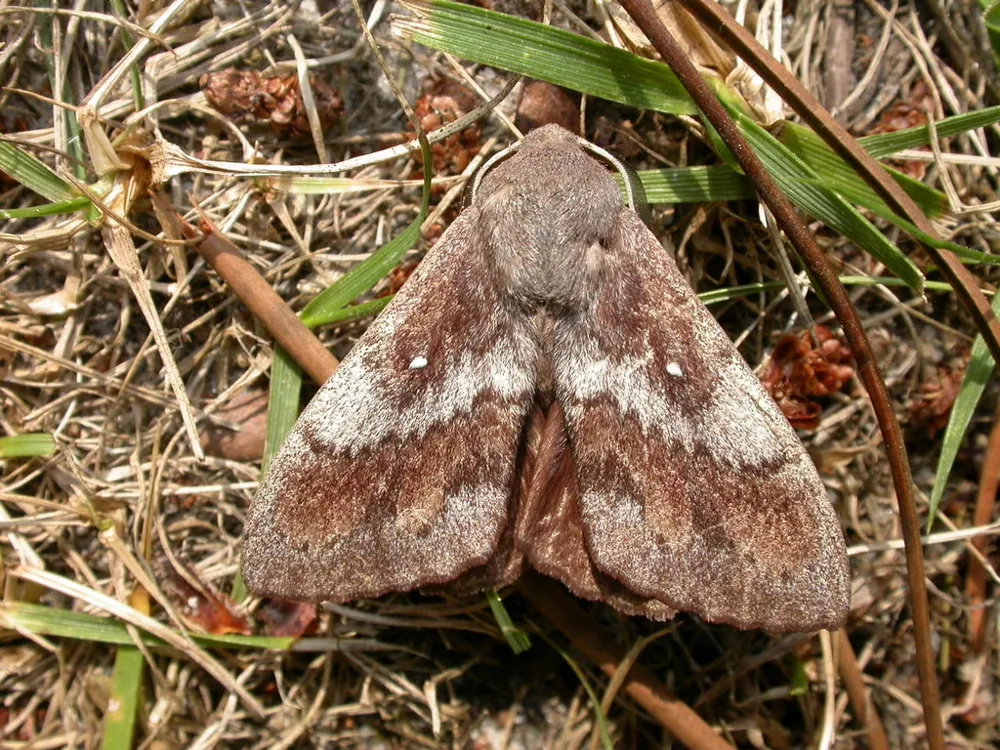
- Adult forewings are grey-brown to brown with a reddish-brown band and a dark brown to black stripe along the edges.1
- Females are larger than males, with a wingspan of 70 to 90 mm, while males have a wingspan of 50 to 70 mm and are usually darker.1
Imbaraga z'ubumara
Ubwoya buto cyane cyangwa uduhwa ducika tukaguma mu ruhu tukaryana.
Ubumara bwayo bukora iki?
This animal is not venomous. When the sharp hairs of the caterpillar or cocoon break the skin, they release a toxin. This can cause skin rash, inflammation of the joints and cartilage, and chronic osteoarthritis.1
Iteje akaga kangana iki ku bantu?
Akaga ku bantu: IrababazaIshobora kubabaza cyane, ariko hafi ya buri gihe nta kibazo gikomeye biteza.Contact with the hairs of living or dead caterpillars, or with their cocoons, can cause an illness called dendrolimiasis.1
Ikora iki iyo ifite ubwoba?
Caterpillars defend themselves with their sharp, irritating hairs, while adults lose these hairs and rely on camouflage.1
 Niba ukoze ku bwoya bwayo
- Ku bwoya bw'ibinyabwoya biryana: bukureho ukoresheje sikoci ifata, hanyuma woze uruhu. Ntugakube.
- Iyo yarumye: oza aho yarumye kandi uhakonjeshe. Shaka ubufasha bwa muganga niba umuntu yumva atameze neza cyangwa ava amaraso byoroshye.
Buri gihe banza uhamagare nimero y'ubutabazi (112, 000, 911). Izi ni inama rusange z'ubutabazi bw'ibanze, si inama za muganga. Ibanze by'ubutabazi bw'ibanze
 Irinde akaga
- Ntuzigere ukora, ufata cyangwa ushotora inyamaswa yo mu gasozi, nubwo yaba ntoya, kandi nubwo yasa n'isinziriye cyangwa yapfuye.
- Yihe umwanya. Niba uhuye n'imwe, tuza, usubire inyuma buhoro buhoro kandi uyireke yigendere.
- Niba ukoze ku bwoya bwayo: tuza, ntunyeganyege, hamagara nimero y'ubutabazi (112, 000, 911) cyangwa ujye ku bitaro vuba. Ibuka uko yasaga, ifoto irafasha.
Ntigushakisha ngo ikugirire nabi. Ikoresha ubumara bwayo kugira ngo ifate ibyo kurya cyangwa yirinde, kandi ikunda cyane kwihisha. Ibindi ku kwirinda
Ingana gute?
Ireshya ite?
 ireshya n'ibice 3 by'ibikinisho byo kubaka biri ku murongo
 itinda kurusha ikinyamushongo cyo mu murima
Pine-tree lappet ingana ite ugereranyije NAWE?
Ni imibare gusa ikorerwa muri mudasobwa yawe. Nta kintu kibikwa cyangwa cyoherezwa ahandi.
Yihuta gute?

Ibintu by'ukuri
Mass feeding by caterpillars can strip whole forests of their needles, which harms the forestry industry.1
Caterpillars can survive for a month without food, which helps them spread when people accidentally transport them.1
Adult moths do not feed and live for only about 9 to 10 days.1
Caterpillars eat the first skins of their eggs as their first meal after hatching.1
Scientists found that the cast skins of the caterpillar contain a substance that may help protect them from fungal infections.1
A single generation takes one year in warmer climates, but about two years in cooler regions.1
Ku bahanga mu by'ubumara
Aho ibintu bivugwa bituruka
- Dendrolimus pini (Wikipedia (CC BY-SA 4.0))
- Dendrolimus pini (iNaturalist): amazina n'ibyiciro.
- Venom Wiki: urwego rw'akaga, ingano isanzwe n'ikigereranyo cy'umuvuduko ni ibyacu bwite. Reba uko tubibara: Uko tugena akaga.
Buri kintu kivugwa kuri iyi paji gifite nimero yerekana aho cyavuye. Niba twibeshye, tubabarire, turi abakunzi b'inyamaswa, ntituri ikinyamakuru cya siyansi. Tubwire kuri [email protected] tuzabikosora.
 Sikorupiyo irashonje! Venom Wiki ni umushinga w'umuntu umwe: ni ubuntu, nta matangazo kandi nta bikurikirana abantu. Impano ntoya ifasha kugira ngo ikomeze kuboneka kuri interineti.Gaburira sikorupiyo
Izindi zo mu itsinda rimwe: Ibinyabwoya n'udukoko
 Oak processionaryIbinyabwoya n'udukokoIrababaza gusaNtukayikoreho
 Pine processionaryIbinyabwoya n'udukokoIrababaza gusaNtukayikoreho
 Common bombardier beetleIbinyabwoya n'udukokoNtacyo itwaye
 Asian giant water bugIbinyabwoya n'udukokoIrababaza gusa
 Blue-striped nettle grubIbinyabwoya n'udukokoIrababaza gusaNtukayikoreho
 Brown-tail mothIbinyabwoya n'udukokoIrababaza gusaNtukayikoreho
Iba kandi muri: Uburayi
 Common European adderVipera na adderBisaba muganga
 Spanish flyIzindi nyamaswa zifite uburoziBisaba mugangaNtukayikoreho
 Common waspInzuki, amavubi n'amavubi maniniIrababaza gusa
 European hornetInzuki, amavubi n'amavubi maniniIrababaza gusa
 Fire salamanderIbikeri by'uburozi, ibikeri binini na newtIrababaza gusaNtukayikoreho
 Western honey beeInzuki, amavubi n'amavubi maniniIrababaza gusa