
 Afurika
 Aziya
Aziya Uburayi
 Amerika y'Amajyepfo
 Ositaraliya na Oseyaniya
 Antaragitika
 Inyanja ya Pasifika
 Inyanja ya Atalantika
 Inyanja y'Abahinde
 Inyanja ya Arigitika
 Inyanja ya Mediterane
 Inyanja Itukura
 Inyanja ya Karayibe
 Inyanja ya Korali
 Inyanja y'Amajyepfo y'u Bushinwa
 Inyanja ya Filipine
 Inyanja ya Andamani
 Inyanja y'Amajyaruguru
 Inyanja ya Timor na Arafura
 Ikigobe cya Bengali
 Ikigobe cya Kaliforuniya
Common wasp
 Itera urubori
The common wasp is a yellow and black wasp that lives in colonies. It is found in parts of Europe, Asia, Australia, New Zealand and South America, and it often comes into gardens, orchards and buildings. It matters because it can sting people and damage fruit crops.1
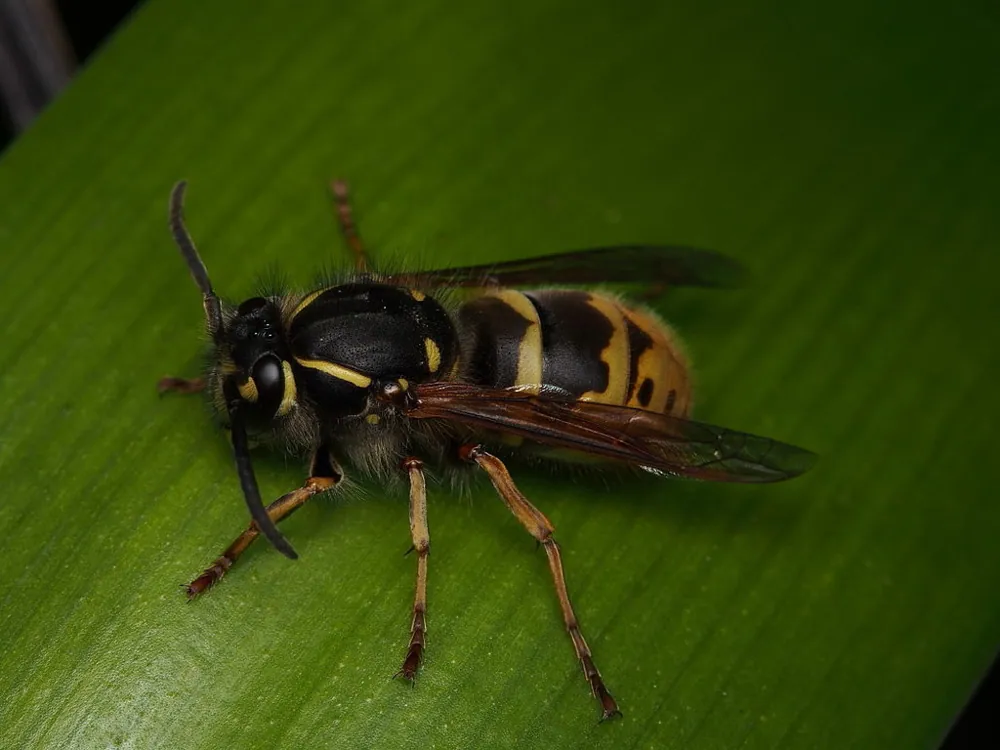
 Uko wayimenya
- Black and yellow warning colours, with yellow bands on the thorax and black dots and rings on the abdomen.1
- Seen from the front, the face has a single black mark on the clypeus, shaped like an anchor or a dagger.1
- Workers measure about 12–17 mm from head to tip of abdomen, while queens are about 20 mm long.1
- Its paper nest is brittle and tan coloured, with open cells and a column attaching it to the surface.1
Ikunze kwitiranywa na: The common wasp looks very similar to Vespula germanica, the German wasp. Seen head on, the German wasp has three black dots on its face, while the common wasp has only one black mark. Males of the two species are almost impossible to tell apart by eye and need the shape of their genitalia to identify them.1
Imbaraga z'ubumara
Ubumara busohokera mu rubori.
Iteje akaga kangana iki ku bantu?
Akaga ku bantu: IrababazaIshobora kubabaza cyane, ariko hafi ya buri gihe nta kibazo gikomeye biteza.The common wasp frequently damages fruit crops and can endanger humans.1
 Niba itera urubori
- Kuramo urubori rw'uruyuki uruharura, kandi ukonjeshe aho rwateye.
- Niba umuntu ahumeka bimugoye, akabyimba mu maso cyangwa mu muhogo, cyangwa akumva agiye guta ubwenge, ni ikibazo cyihutirwa cya aleriji: hamagara nimero y'ubutabazi kandi ukoreshe urushinge rwe rwa adrenaline (adrenaline pen) niba arufite.
Buri gihe banza uhamagare nimero y'ubutabazi (112, 000, 911). Izi ni inama rusange z'ubutabazi bw'ibanze, si inama za muganga. Ibanze by'ubutabazi bw'ibanze
 Irinde akaga
- Ntuzigere ukora, ufata cyangwa ushotora inyamaswa yo mu gasozi, nubwo yaba ntoya, kandi nubwo yasa n'isinziriye cyangwa yapfuye.
- Yihe umwanya. Niba uhuye n'imwe, tuza, usubire inyuma buhoro buhoro kandi uyireke yigendere.
- Niba imwe igutereye urubori: tuza, ntunyeganyege, hamagara nimero y'ubutabazi (112, 000, 911) cyangwa ujye ku bitaro vuba. Ibuka uko yasaga, ifoto irafasha.
Ntigushakisha ngo ikugirire nabi. Ikoresha ubumara bwayo kugira ngo ifate ibyo kurya cyangwa yirinde, kandi ikunda cyane kwihisha. Ibindi ku kwirinda
Ingana gute?
Ireshya ite?
 ireshya hafi na trombone yo gufata impapuro
 yaguruka ikambuka ikibuga cyose cy'umupira w'amaguru mu masegonda 16
Common wasp ingana ite ugereranyije NAWE?
Ni imibare gusa ikorerwa muri mudasobwa yawe. Nta kintu kibikwa cyangwa cyoherezwa ahandi.
Yihuta gute?


Ibintu by'ukuri
The nest has a chemical that repels ants, which is spread around the base of the nest column to stop ants attacking it.1
Workers use their wings as fans to cool the nest when it gets too hot, as its best temperature is around 32 °C.1
A new queen searches for a nest site and performs a dance-like wing movement that helps her find the spot again after she has left.1
The wasps mark the path from their nest to their food with pheromone trails, which are specific to the species rather than to each colony.1
The queen dies in autumn, and once she is gone the colony breaks down and the workers die of cold or starvation.1
Usenya ibinyoma
Ikinyoma: Common wasps found in North America are the same species as the common wasp of Europe.
Ukuri: Until 2010 they were thought to be the same, but the North American ones are a different species, Vespula alascensis.1
Ku bahanga mu by'ubumara
Aho ibintu bivugwa bituruka
- Vespula vulgaris (Wikipedia (CC BY-SA 4.0))
- Vespula vulgaris (iNaturalist): amazina n'ibyiciro.
- Venom Wiki: urwego rw'akaga, ingano isanzwe n'ikigereranyo cy'umuvuduko ni ibyacu bwite. Reba uko tubibara: Uko tugena akaga.
Buri kintu kivugwa kuri iyi paji gifite nimero yerekana aho cyavuye. Niba twibeshye, tubabarire, turi abakunzi b'inyamaswa, ntituri ikinyamakuru cya siyansi. Tubwire kuri [email protected] tuzabikosora.
 Sikorupiyo irashonje! Venom Wiki ni umushinga w'umuntu umwe: ni ubuntu, nta matangazo kandi nta bikurikirana abantu. Impano ntoya ifasha kugira ngo ikomeze kuboneka kuri interineti.Gaburira sikorupiyo
Izindi zo mu itsinda rimwe: Inzuki, amavubi n'amavubi manini
 Asian giant hornetInzuki, amavubi n'amavubi maniniIshobora kwica
 European hornetInzuki, amavubi n'amavubi maniniIrababaza gusa
 Western honey beeInzuki, amavubi n'amavubi maniniIrababaza gusa
 Giant honey beeInzuki, amavubi n'amavubi maniniBisaba muganga
 Asian hornetInzuki, amavubi n'amavubi maniniIrababaza gusa
 European paper waspInzuki, amavubi n'amavubi maniniIrababaza gusa
Iba kandi muri: Uburayi
 Common European adderVipera na adderBisaba muganga
 Spanish flyIzindi nyamaswa zifite uburoziBisaba mugangaNtukayikoreho
 Fire salamanderIbikeri by'uburozi, ibikeri binini na newtIrababaza gusaNtukayikoreho
 Blunt-nosed viperVipera na adderIshobora kwica
 Nose-horned viperVipera na adderIshobora kwica
 Ottoman viperVipera na adderIshobora kwica