
 Afurika
 Aziya
Aziya Uburayi
 Amerika y'Amajyepfo
 Ositaraliya na Oseyaniya
 Antaragitika
 Inyanja ya Pasifika
 Inyanja ya Atalantika
 Inyanja y'Abahinde
 Inyanja ya Arigitika
 Inyanja ya Mediterane
 Inyanja Itukura
 Inyanja ya Karayibe
 Inyanja ya Korali
 Inyanja y'Amajyepfo y'u Bushinwa
 Inyanja ya Filipine
 Inyanja ya Andamani
 Inyanja y'Amajyaruguru
 Inyanja ya Timor na Arafura
 Ikigobe cya Bengali
 Ikigobe cya Kaliforuniya
South American rattlesnake
 Iraruma
The South American rattlesnake is a large, highly venomous pit viper. It lives across much of South America, except the Andes Mountains, and also on some Caribbean islands. It is the most widely spread member of its genus, which is why it matters to people in so many places.1


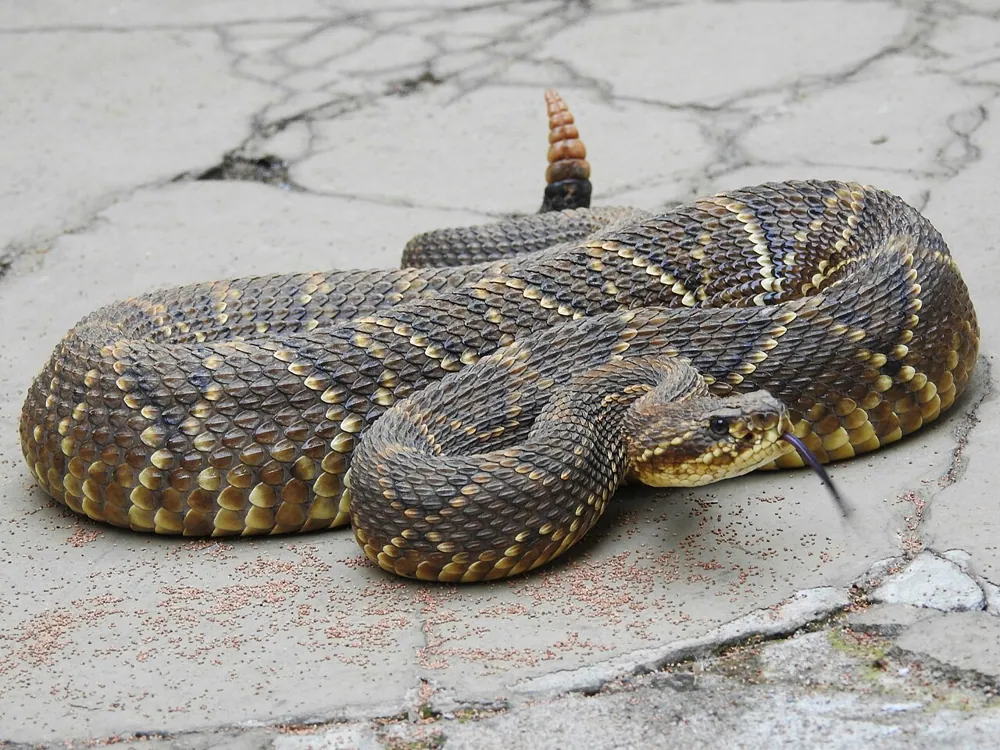
 Uko wayimenya
- Two distinct stripes start at the base of the head, and the colour between the lines is lighter than the stripes.1
- Body colour and pattern vary, but most have 18 to 32 dark diamond or rhombic spots along the back.1
- The head has a dark brown bar at the top and a dark band behind the eye.1
- The tail is usually grey, with dark, faint crossed bands.1
- The belly is white or yellowish with light grey spots, getting darker towards the tail.1
Imbaraga z'ubumara
Ubumara busohokera mu menyo yayo y'ubumara cyangwa mu yandi menyo iyo iriye.
Ubumara bwayo bukora iki?
Its venom contains neurotoxins, which attack the nerves, and myotoxins, which damage muscle. These cause progressive paralysis, including impaired or lost vision, hearing problems, drooping eyelids and weakness in the neck muscles, which can become so limp that the head appears broken. Breathing can eventually be stopped by paralysis, and the muscle damage can cause dark urine.1
Iteje akaga kangana iki ku bantu?
Akaga ku bantu: Iteje akaga cyaneIshobora kwica umuntu utavuwe.It is a highly venomous snake. The mortality rate is 72% for bite cases without specific serum treatment, and 11% for cases with it. Acute kidney failure is considered the main cause of death.1
 Inkuru nziza: abaganga bafite umuti (umuti urwanya ubumara, antivenom) cyangwa uburyo bwo kuvura ibi.1
Ikora iki iyo ifite ubwoba?
It is highly alert and gives little warning before it strikes, but it is seldom aggressive towards people.1
 Niba iruma
- Specific serum treatment (antivenom) greatly lowers the death rate, so a bite needs urgent hospital care to give it.1
- Umuntu agume atanyeganyega kandi atuje, urugingo rwarumwe rugume ku rwego rumwe n'umutima, mukuremo impeta n'ibindi bintu bifashe cyane, kandi mujye ku bitaro vuba.
Buri gihe banza uhamagare nimero y'ubutabazi (112, 000, 911). Izi ni inama rusange z'ubutabazi bw'ibanze, si inama za muganga. Ibanze by'ubutabazi bw'ibanze
 Irinde akaga
- Ntuzigere ukora, ufata cyangwa ushotora inyamaswa yo mu gasozi, nubwo yaba ntoya, kandi nubwo yasa n'isinziriye cyangwa yapfuye.
- Yihe umwanya. Niba uhuye n'imwe, tuza, usubire inyuma buhoro buhoro kandi uyireke yigendere.
- Niba imwe ikurumye: tuza, ntunyeganyege, hamagara nimero y'ubutabazi (112, 000, 911) cyangwa ujye ku bitaro vuba. Ibuka uko yasaga, ifoto irafasha.
Ntigushakisha ngo ikugirire nabi. Ikoresha ubumara bwayo kugira ngo ifate ibyo kurya cyangwa yirinde, kandi ikunda cyane kwihisha. Ibindi ku kwirinda
Ingana gute?
Ireshya ite?
 ireshya n'injangwe zo mu rugo 4 zikurikiranye kuva ku zuru kugeza ku murizo
 ireshya n'imineke 11 ikurikiranye
 yakwiruka metero 100 mu masegonda 90 (umuntu wihuta kurusha abandi akenera 9,6)
South American rattlesnake ingana ite ugereranyije NAWE?
Ni imibare gusa ikorerwa muri mudasobwa yawe. Nta kintu kibikwa cyangwa cyoherezwa ahandi.
Yihuta gute?


Ibintu by'ukuri
The lethal dose for a 60 kg human is possibly 18 mg, while a snake's venom yield is 20 to 100 mg.1
Crotoxin, a neurotoxin, makes up about 48.5% to 89.4% of the venom proteins in one subspecies, though it is typically 60% to 70%.1
It is the most widely distributed member of its genus, and seven subspecies are currently recognised.1
It is more active at dusk and in the early hours of the morning.1
Males compete for access to females from the end of summer, with mating in autumn and the young born the following spring or summer.1
Usenya ibinyoma
Ikinyoma: Yellow venom means the bite damages blood and tissue, and white venom means it attacks the nerves.
Ukuri: Venom colour does not determine the type. Colour depends on pigments in the venom, not on whether it is haemorrhagic or neurotoxic.1
Ku bahanga mu by'ubumara
- Izina rya siyansi
- Crotalus durissus
- Itsinda
- Rattlesnake
- Umuryango
- Viperidae2
- Itsinda rinini (order)
- Squamata
- Imigabane
- Amerika y'Amajyepfo
- Abana bato
- It gives birth to live young (ovoviviparous), usually four to eight at a time. In Roraima, Brazil, gestation has been reported to last five months, with up to 14 young.1
- Akaga ku bantu
- 4 / 5: Iteje akaga cyane3
Aho ibintu bivugwa bituruka
- Crotalus durissus (Wikipedia (CC BY-SA 4.0))
- Crotalus durissus (iNaturalist): amazina n'ibyiciro.
- Venom Wiki: urwego rw'akaga, ingano isanzwe n'ikigereranyo cy'umuvuduko ni ibyacu bwite. Reba uko tubibara: Uko tugena akaga.
Buri kintu kivugwa kuri iyi paji gifite nimero yerekana aho cyavuye. Niba twibeshye, tubabarire, turi abakunzi b'inyamaswa, ntituri ikinyamakuru cya siyansi. Tubwire kuri [email protected] tuzabikosora.
 Sikorupiyo irashonje! Venom Wiki ni umushinga w'umuntu umwe: ni ubuntu, nta matangazo kandi nta bikurikirana abantu. Impano ntoya ifasha kugira ngo ikomeze kuboneka kuri interineti.Gaburira sikorupiyo
 Uracoan rattlesnake
 Eastern diamondback rattlesnake
 Timber rattlesnake
 Western diamondback rattlesnake
 Sidewinder
 Mojave rattlesnake
 Golden poison frog
 Terciopelo
 Brazilian wandering spider
 Eyelash viper
 Golden lancehead
 South American bushmaster