
 Afurika
 Aziya
Aziya Uburayi
 Amerika y'Amajyepfo
 Ositaraliya na Oseyaniya
 Antaragitika
 Inyanja ya Pasifika
 Inyanja ya Atalantika
 Inyanja y'Abahinde
 Inyanja ya Arigitika
 Inyanja ya Mediterane
 Inyanja Itukura
 Inyanja ya Karayibe
 Inyanja ya Korali
 Inyanja y'Amajyepfo y'u Bushinwa
 Inyanja ya Filipine
 Inyanja ya Andamani
 Inyanja y'Amajyaruguru
 Inyanja ya Timor na Arafura
 Ikigobe cya Bengali
 Ikigobe cya Kaliforuniya
Two-striped forest pitviper
 Iraruma
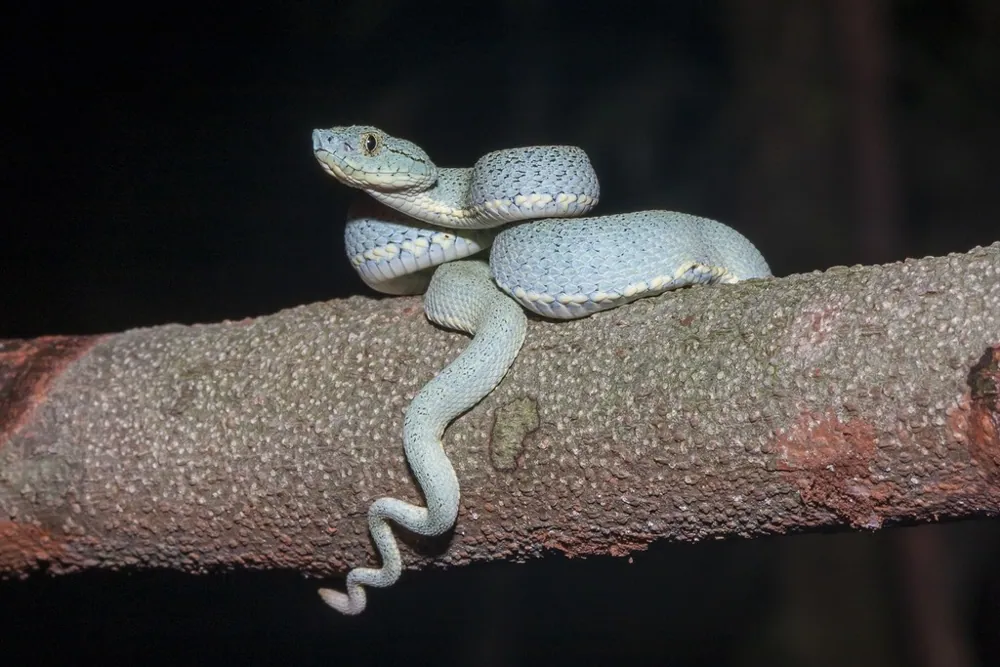
The two-striped forest pitviper is a highly venomous snake that lives mostly in trees and bushes. It is a pale green pit viper found in the Amazon region of South America. It is an important cause of snakebites across the whole Amazon.1



 Uko wayimenya
Imbaraga z'ubumara
Ubumara busohokera mu menyo yayo y'ubumara cyangwa mu yandi menyo iyo iriye.
Ubumara bwayo bukora iki?
Its venom disrupts blood clotting, causing profound coagulopathy, bruising and spontaneous bleeding. Reported symptoms include local pain, swelling, bleeding gums, bleeding from the fang punctures, nausea, shock, loss of consciousness and bleeding from the mouth, nose and eyes.1
Iteje akaga kangana iki ku bantu?
Akaga ku bantu: Iteje akaga cyaneIshobora kwica umuntu utavuwe.It is highly venomous and an important cause of snakebite throughout the Amazon region. Because it lives in trees, most bites are to the upper body, including the hands, arms and face. At least one death has been reported.1
 Niba iruma
- Umuntu agume atanyeganyega kandi atuje, urugingo rwarumwe rugume ku rwego rumwe n'umutima, mukuremo impeta n'ibindi bintu bifashe cyane, kandi mujye ku bitaro vuba.
Buri gihe banza uhamagare nimero y'ubutabazi (112, 000, 911). Izi ni inama rusange z'ubutabazi bw'ibanze, si inama za muganga. Ibanze by'ubutabazi bw'ibanze
 Irinde akaga
- Ntuzigere ukora, ufata cyangwa ushotora inyamaswa yo mu gasozi, nubwo yaba ntoya, kandi nubwo yasa n'isinziriye cyangwa yapfuye.
- Yihe umwanya. Niba uhuye n'imwe, tuza, usubire inyuma buhoro buhoro kandi uyireke yigendere.
- Niba imwe ikurumye: tuza, ntunyeganyege, hamagara nimero y'ubutabazi (112, 000, 911) cyangwa ujye ku bitaro vuba. Ibuka uko yasaga, ifoto irafasha.
Ntigushakisha ngo ikugirire nabi. Ikoresha ubumara bwayo kugira ngo ifate ibyo kurya cyangwa yirinde, kandi ikunda cyane kwihisha. Ibindi ku kwirinda
Ingana gute?
Ireshya ite?
 ireshya n'injangwe zo mu rugo 2,5 zikurikiranye kuva ku zuru kugeza ku murizo
 ireshya n'imineke 7 ikurikiranye
 yakwiruka metero 100 mu masegonda 100 (umuntu wihuta kurusha abandi akenera 9,6)
Two-striped forest pitviper ingana ite ugereranyije NAWE?
Ni imibare gusa ikorerwa muri mudasobwa yawe. Nta kintu kibikwa cyangwa cyoherezwa ahandi.
Yihuta gute?


Ibintu by'ukuri
Its prehensile tail lets it grip branches, so it always rests where it can anchor itself.1
Its venom has been measured in a laboratory with a DL50 of 6.28 mg/kg, a standard measure of how toxic a substance is.1
It is a nocturnal snake that spends the day hidden in thick leaves, tree hollows or at the base of palm fronds.1
Young snakes stay low to the ground, where they hunt small frogs and lizards.1
Aho ibintu bivugwa bituruka
- Bothrops bilineatus (Wikipedia (CC BY-SA 4.0))
- Bothrops bilineatus (iNaturalist): amazina n'ibyiciro.
- Venom Wiki: urwego rw'akaga, ingano isanzwe n'ikigereranyo cy'umuvuduko ni ibyacu bwite. Reba uko tubibara: Uko tugena akaga.
Buri kintu kivugwa kuri iyi paji gifite nimero yerekana aho cyavuye. Niba twibeshye, tubabarire, turi abakunzi b'inyamaswa, ntituri ikinyamakuru cya siyansi. Tubwire kuri [email protected] tuzabikosora.
 Sikorupiyo irashonje! Venom Wiki ni umushinga w'umuntu umwe: ni ubuntu, nta matangazo kandi nta bikurikirana abantu. Impano ntoya ifasha kugira ngo ikomeze kuboneka kuri interineti.Gaburira sikorupiyo
Izindi zo mu itsinda rimwe: Pit viper
 Terciopelo
 Eyelash viper
 Golden lancehead
 South American bushmaster
 Common lancehead
 Jararaca
Iba kandi muri: Amerika y'Amajyepfo
 Golden poison frogIbikeri by'uburozi, ibikeri binini na newtYicaNtukayikoreho
 Brazilian wandering spiderIbitagangurirwaIshobora kwica
 Cane toadIbikeri by'uburozi, ibikeri binini na newtBisaba mugangaNtukayikoreho
 Peruvian giant centipedeCentipedeBisaba muganga
 Bullet antIbimonyoIrababaza gusa
 Common vampire batInyamabere zifite ubumaraIrababaza gusa