
 Afrika
 Asia
Asia Yuropu
 Amerika yeKumaodzanyemba
 Australia neOceania
 Antarctica
 Gungwa rePacific
 Gungwa reAtlantic
 Gungwa reIndia
 Gungwa reArctic
 Gungwa reMediterranean
 Gungwa Dzvuku
 Gungwa reCaribbean
 Gungwa reCoral
 Gungwa reChina yeKumaodzanyemba
 Gungwa rePhilippines
 Gungwa reAndaman
 Gungwa reKuchamhembe
 Gungwa reTimor neArafura
 Gungwa reBengal
 Gulf yeCalifornia
Uzungwe viper
 Inoruma
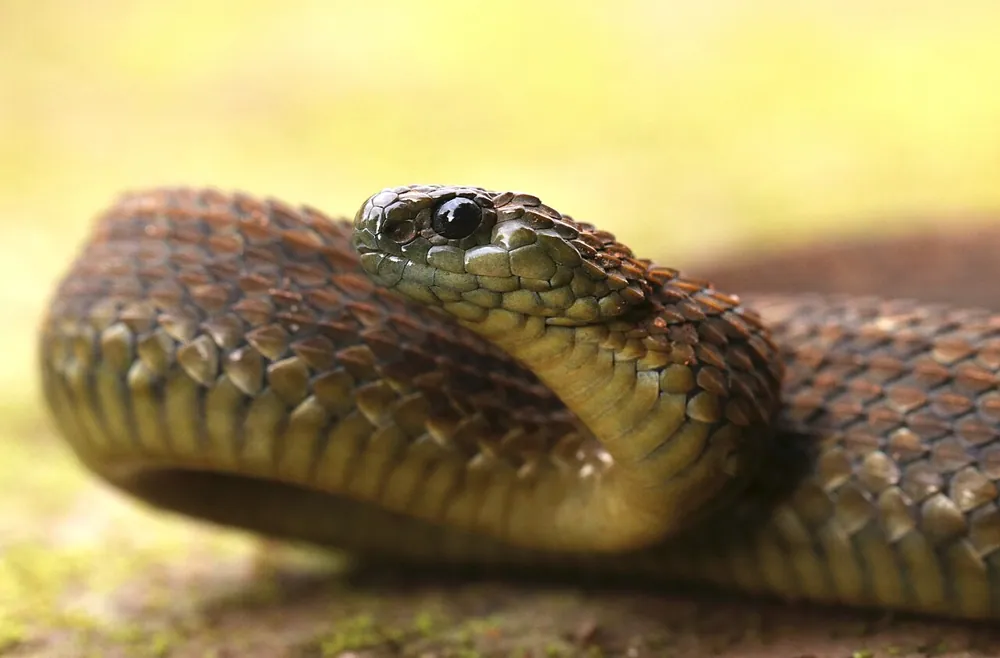
The Uzungwe viper is a small, rare snake that lives only on a few mountains in south-central Tanzania, in Africa. It lives on the ground in bushes and bamboo, and it mainly eats slugs and worms. Because it has such a tiny home range, it is special to scientists who study it.1



 Maziviro ayo
- Small snake, reaching only 40 cm (16 in) in total length including the tail.1
- Broad, triangular head that is clearly separate from the neck, with a short, rounded snout.1
- Brown to blackish brown body with a pair of zigzag stripes running from the back of the head to the tail. The stripes may break into a chain of darker diamond-shaped blotches down the back.1
- Belly is greenish white to olive.1
- Relatively short tail that is not used for gripping.1
Inowanzovhiringidzwa ne: It is similar to Montatheris hindii and Proatheris superciliaris, which are also ground-living vipers. The zigzag stripes and short tail are the features to note.1
Simba reuturu
Uturu hunobuda nemeno ayo painoruma.
Ine ngozi yakadii kuvanhu?
Ngozi kuvanhu: InorwadzaInogona kurwadza chaizvo, asi kazhinji haisi njodzi huru.No cases of bite have been recorded. Because its range is very small, bites are unlikely to occur.1
 Kana ikaruma
- Chengeta munhu asingafambe uye akadzikama, chengeta nhengo yakarumwa yakaenzana nemwoyo, bvisa mhete nezvinhu zvakasunga, uende kuchipatara nokukurumidza.
Gara uchitanga wafonera nhamba yechimbichimbi (112, 000, 911). Iri izano rakajairika rerubatsiro rwekutanga, kwete zano rechiremba. Zvakakosha zverubatsiro rwekutanga
 Gara wakachengeteka
- Usambobata mhuka yesango, kuedza kuitora kana kuinetsa, kunyange iri diki, uye kunyange ichiita seyakarara kana yakafa.
- Ipa nzvimbo. Kana ukasangana nayo, dzikama, dzokera shure zvishoma nezvishoma uirege iende nenzira yayo.
- Kana imwe ikakuruma: dzikama, gara wakanyarara, fonera nhamba yechimbichimbi (112, 000, 911) kana kuti enda kuchipatara nokukurumidza. Rangarira kuti yaitaridzika sei, mufananidzo unobatsira.
Haisi kukutsvaga. Inoshandisa uturu hwayo kubata chikafu kana kuzvidzivirira, uye inotonyanya kuda kuhwanda. Zvimwe pamusoro pekugara wakachengeteka
Yakakura sei?
Yakareba zvakadii?
 yakareba semabhanana 2 akateedzana
 yakareba sezvidhinha zvematoyi 12 zvakateedzana
 inogona kumhanya mamita 100 mumasekondi 120 (munhu anomhanyisa kupfuura vose anoda 9.6)
Uzungwe viper yakakura sei kana yaenzaniswa NEWE?
Masvomhu chete mubrowser yako. Hapana chinochengetwa kana kutumirwa kupi zvako.
Inomhanya zvakadii?


Chokwadi
It was first thought to be a burrowing snake, but this is now considered unlikely because it has no obvious body features for living underground.1
It has been found in the gardens of tea farms as well as in wild mountain forest.1
Its entire known range is only a few mountains in south-central Tanzania.1
Kwakabva chokwadi
- Atheris barbouri (Wikipedia (CC BY-SA 4.0))
- Atheris barbouri (iNaturalist): mazita nekurongwa kwemhuka.
- Venom Wiki: danho rengozi, saizi yakajairika nekufungidzira kwekumhanya ndezvedu. Ona kuti tinozviwana sei: Matinoyera ngozi.
Chokwadi chimwe nechimwe pane peji rino chine nhamba inoratidza kwachakabva. Kana takakanganisa, ruregerero, tiri vanoda mhuka, kwete magazini yesainzi. Tiudze pa[email protected] tichazvigadzirisa.
 Chinyavada chine nzara! Venom Wiki iprojekiti yemunhu mumwe: yemahara, isina kushambadza uye isina zvinokuteedzera. Chipo chidiki chinobatsira kuti irambe iri paindaneti.Fudza chinyavada
 Puff adder
 Gaboon viper
 Northeast African carpet viper
 West African carpet viper
 Rhinoceros viper
 West African Gaboon viper
 Black mamba
 Deathstalker
 Egyptian cobra
 Boomslang
 Fat-tailed scorpion
 Western honey bee