
 Afrika
 Asia
Asia Yuropu
 Amerika yeKumaodzanyemba
 Australia neOceania
 Antarctica
 Gungwa rePacific
 Gungwa reAtlantic
 Gungwa reIndia
 Gungwa reArctic
 Gungwa reMediterranean
 Gungwa Dzvuku
 Gungwa reCaribbean
 Gungwa reCoral
 Gungwa reChina yeKumaodzanyemba
 Gungwa rePhilippines
 Gungwa reAndaman
 Gungwa reKuchamhembe
 Gungwa reTimor neArafura
 Gungwa reBengal
 Gulf yeCalifornia
Egyptian cobra
 Inoruma
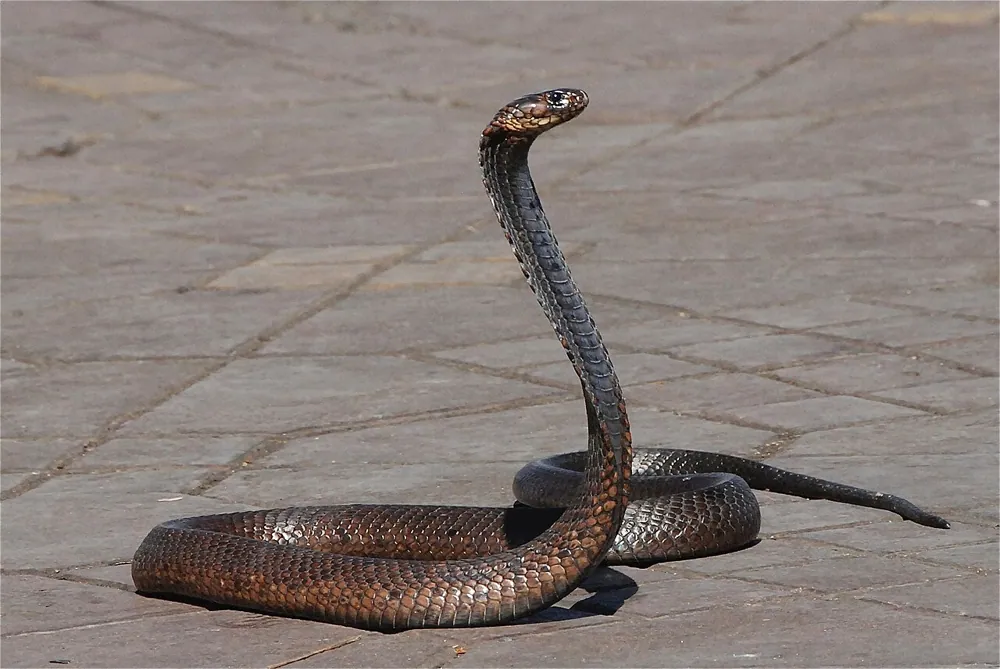
The Egyptian cobra is one of the most venomous snakes in Northern Africa. It lives across much of North Africa and the savannas of West Africa, and it often lives close to people, sometimes entering villages and houses. Its bite is dangerous, so it is important to know what it looks like.1



 Maziviro ayo
- Its large, flattened head is slightly distinct from its neck, and it can spread a hood like other cobras.1
- Most individuals are some shade of brown, often with a tear-drop mark below the eye.1
- Some are copper-red or grey-brown, and those from Morocco are almost entirely black.1
- The belly is mostly creamy white, yellow brown, grey, blue grey, dark brown or black, often with dark spots.1
- It is a large snake, with an average length of roughly 1.4 metres.1
Simba reuturu
Uturu hunobuda nemeno ayo painoruma.
Uturu hwayo hunoitei?
Its venom is mainly made of neurotoxins, which attack the nerves, and cytotoxins, which damage cells. The venom stops nerve signals reaching the muscles, and in later stages it also affects the heart and lungs, which can lead to death from respiratory failure. A bite causes local pain, severe swelling, bruising, blistering and tissue death, and may also cause headache, vomiting, dizziness, convulsions or paralysis.1
Ine ngozi yakadii kuvanhu?
Ngozi kuvanhu: InourayaImwe yemhuka dzine ngozi zvikuru pasi rose.The venom is strong enough to kill a person. A single bite can release an average of 175 to 300 mg of venom. Its venom is slow-acting and does not always cause death. Venom from northern African populations, especially from Egypt, Tunisia, Algeria and Libya, is more potent than venom from southern and western populations.1
 Mashoko akanaka: vanachiremba vane mushonga (antivenom) kana kurapwa kwechinhu ichi.1
Inoitei kana yatya?
When approached, it usually tries to escape, but if threatened it rises up with its hood spread and strikes.1
 Kana ikaruma
- Get to a hospital fast: antivenom is the treatment. In a 2018 case, a bitten man was evacuated to Egypt, treated with antivenom and made a full recovery.1
- Chengeta munhu asingafambe uye akadzikama, bvisa mhete nezvinhu zvakasunga, uende kuchipatara nokukurumidza: antivenom ndiwo mushonga wacho.
Gara uchitanga wafonera nhamba yechimbichimbi (112, 000, 911). Iri izano rakajairika rerubatsiro rwekutanga, kwete zano rechiremba. Zvakakosha zverubatsiro rwekutanga
 Gara wakachengeteka
- Usambobata mhuka yesango, kuedza kuitora kana kuinetsa, kunyange iri diki, uye kunyange ichiita seyakarara kana yakafa.
- Ipa nzvimbo. Kana ukasangana nayo, dzikama, dzokera shure zvishoma nezvishoma uirege iende nenzira yayo.
- Kana imwe ikakuruma: dzikama, gara wakanyarara, fonera nhamba yechimbichimbi (112, 000, 911) kana kuti enda kuchipatara nokukurumidza. Rangarira kuti yaitaridzika sei, mufananidzo unobatsira.
Haisi kukutsvaga. Inoshandisa uturu hwayo kubata chikafu kana kuzvidzivirira, uye inotonyanya kuda kuhwanda. Zvimwe pamusoro pekugara wakachengeteka
Yakakura sei?
Yakareba zvakadii?
 yakareba seimbwa 2,5 kubva pamhuno kusvika kumuswe
 yakareba semabhanana 14 akateedzana
 inogona kumhanya mamita 100 mumasekondi 44 (munhu anomhanyisa kupfuura vose anoda 9.6)
Egyptian cobra yakakura sei kana yaenzaniswa NEWE?
Masvomhu chete mubrowser yako. Hapana chinochengetwa kana kutumirwa kupi zvako.
Inomhanya zvakadii?


Chokwadi
Most ancient sources blame an Egyptian cobra for the death of Cleopatra and her two handmaidens, though recent researchers have questioned this.1
Ancient Egyptian pharaohs wore a stylised cobra, the uraeus, on their diadem as a symbol of sovereignty.1
In 2006, a pet cobra escaped in Toronto and forced the evacuation of a house for more than five months.1
In 2011, a venomous female cobra went missing from the Bronx Zoo and was found in a dark corner of the reptile house six days later. Staff named her "Mia", for "missing in action".1
It is often found in water, and there are records of it swimming in the Mediterranean Sea.1
Kuputsa ngano
Ngano: Egyptian cobras spit venom, like some other African cobras.
Chokwadi: This species does not spit venom. It delivers its venom by biting.1
Kwakabva chokwadi
- Egyptian cobra (Wikipedia (CC BY-SA 4.0))
- Naja haje (iNaturalist): mazita nekurongwa kwemhuka.
- Venom Wiki: danho rengozi, saizi yakajairika nekufungidzira kwekumhanya ndezvedu. Ona kuti tinozviwana sei: Matinoyera ngozi.
Chokwadi chimwe nechimwe pane peji rino chine nhamba inoratidza kwachakabva. Kana takakanganisa, ruregerero, tiri vanoda mhuka, kwete magazini yesainzi. Tiudze pa[email protected] tichazvigadzirisa.
 Chinyavada chine nzara! Venom Wiki iprojekiti yemunhu mumwe: yemahara, isina kushambadza uye isina zvinokuteedzera. Chipo chidiki chinobatsira kuti irambe iri paindaneti.Fudza chinyavada
 Black mamba
 Cape cobra
 Eastern green mamba
 Jameson's mamba
 Western green mamba
 Ashe's spitting cobra
 Deathstalker
 Puff adder
 Boomslang
 Fat-tailed scorpion
 Gaboon viper
 Western honey bee