
 Afrika
 Aasiya
 Yurub
Yurub Koonfurta Ameerika
 Awstaraaliya iyo Oceania
 Antaarktika
 Badweynta Baasifigga
 Badweynta Atlantik
 Badweynta Hindiya
 Badweynta Arktik
 Badda Dhexe
 Badda Cas
 Badda Karibiyaanka
 Badda Kooraal
 Badda Koonfurta Shiinaha
 Badda Filibiin
 Badda Andaman
 Badda Waqooyi
 Badda Timor iyo Arafura
 Gacanka Bengaal
 Gacanka Kaliforniya
Asian needle ant
 Mudid
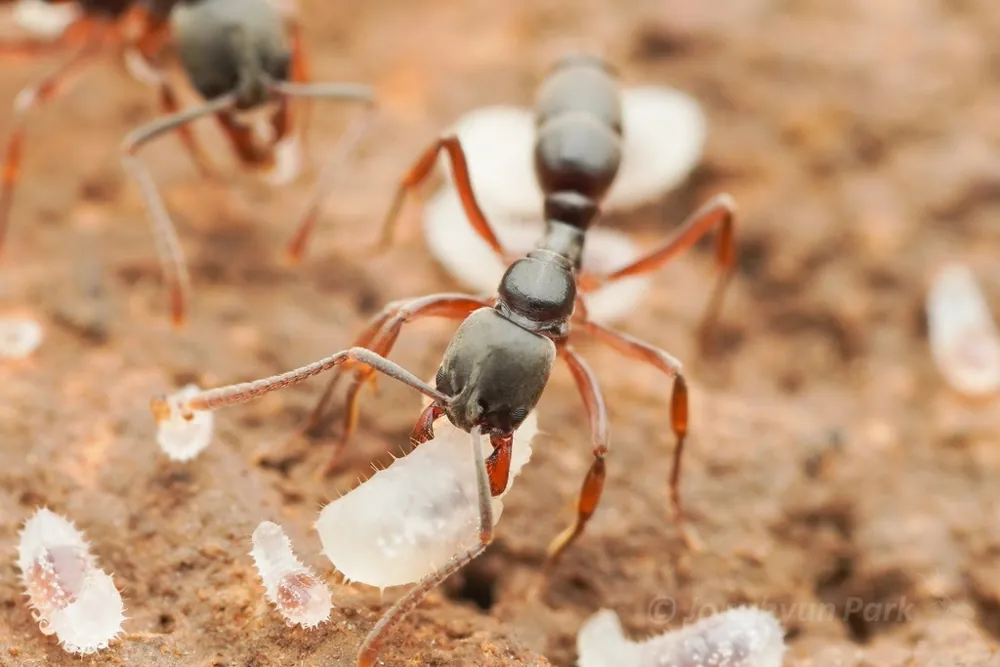
MudidThe Asian needle ant is a small stinging ant that is native to Japan and mainland Asia. It has spread to the United States, where it is now common across much of the American South and along the East Coast. It matters because its sting can cause serious allergic reactions in some people, and it crowds out native ants.1

 Sida loo aqoonsado
- A stinging ant from the ponerine group1
- Often nests near termite colonies, which are a reliable food source1
- Looks very similar to Brachyponera luteipes, B. nigrita and B. obscurans, so it is often mistaken for them1
Inta badan lagu khaldaa: It is commonly mistaken for Brachyponera luteipes, Brachyponera nigrita and Brachyponera obscurans because they look similar. Misidentification can mean people do not realise the seriousness of the sting.1
Awoodda sunta
Suntu waxay ka soo baxdaa mudde.
Maxay samaysaa suntiisa (qaniin ama mudid)?
Its venom contains proteins that can trigger allergic reactions. The sting is painful and can leave people in distress. In some cases, allergic reactions cause anaphylaxis, a severe whole-body reaction, or urticaria, which is hives.1
Intee buu dadka khatar ugu yahay?
Khatarta dadka: Xanuun badanAad buu u xanuunjin karaa, laakiin ku dhowaad weligiis khatar weyn ma aha.The ant is not aggressive but will sting when disturbed. Its sting can cause anaphylaxis in some people. As it spreads into more urban areas, encounters with people are likely to increase.1
Muxuu sameeyaa marka uu baqo?
Although not aggressive, it will sting when it is disturbed.1
 Haddii uu mudo
- Dhaq oo qabooji meelaha la muday.
- Haddii qofku neefsashada ku dhibtoonayo, wejiga ama cunaha ay bararaan, ama uu dareemayo inuu suuxayo, waa xaalad xasaasiyadeed oo degdeg ah: wac lambarka gurmadka degdegga ah.
Marka hore had iyo jeer wac lambarka gurmadka degdegga ah (112, 000, 911). Kani waa hage guud oo gargaar degdeg ah, ma aha talo caafimaad. Aasaaska gargaarka degdegga ah
 Badbaado
- Weligaa ha taaban, ha qaban, hana ku ciyaarin xayawaan duurjoog ah, xitaa mid yar, xitaa haddii uu u muuqdo inuu hurdo ama dhintay.
- Meel u bannee. Haddii aad mid la kulanto, deg, tartiib dib ugu noqo oo u daa inuu jidkiisa maro.
- Haddii mid ku mudo: deg, ha dhaqaaqin, wac lambarka gurmadka degdegga ah (112, 000, 911) ama si degdeg ah u tag isbitaalka. Xusuuso sida uu u egyahay, sawir ayaa caawiya.
Kuma raadinayo. Suntiisa wuxuu u isticmaalaa inuu cunto ku qabsado ama isku difaaco, wuxuuna aad u door bidaa inuu dhuunto. Wax badan oo ku saabsan badbaadada
Intee buu le'eg yahay?
Intee buu dherer le'eg yahay?
 aad u yar oo ciddiyahaaga dul fadhiisan kara
Intee buu Asian needle ant le'eg yahay marka ADIGA laguu barbar dhigo?
Xisaab keliya oo browser-kaaga ku jirta. Waxba lama keydiyo, meelna looma diro.
Intee buu u dheereeyaa?


Xaqiiqooyin
In invaded areas, the native ant Aphaenogaster rudis was reduced by 96%.1
A study in North Carolina found that the Asian needle ant outnumbered all native ant species in most sample areas.1
Workers carry nestmates from one place to another when the colony moves nests. Unlike many ant species, they likely use visual cues rather than pheromone trails to do this.1
Queen ants have a special pouch that stores sperm, so they can mate once and keep reproducing for their whole lives.1
The European Union has listed it as an invasive alien species of Union concern, so it cannot be imported, bred, transported, sold or intentionally released in any EU member state.1
Meesha xaqiiqooyinku ka yimaadaan
- Brachyponera chinensis (Wikipedia (CC BY-SA 4.0))
- Brachyponera chinensis (iNaturalist): magacyada iyo kala soocidda.
- Venom Wiki: heerka khatarta, cabbirka caadiga ah iyo qiyaasta xawaaraha annaga ayaa sameeyay. Eeg sida aan u xisaabinno: Sida aan u qiimeyno khatarta.
Xaqiiq kasta oo boggan ku jirta waxay leedahay lambar tilmaamaya ilaha laga keenay. Haddii aan wax khaldanno, raalli ahaw, waxaan nahay dad xayawaanka jecel, ma aha joornaal saynis. Nagu soo sheeg [email protected] waana saxaynaynaa.
 Dabaqalloocu waa gaajaysan yahay! Venom Wiki waa mashruuc hal qof leeyahay: waa bilaash, xayaysiis iyo raadraac midna ma leh. Deeq yar ayaa caawisa inuu internetka ku sii jiro.Quudi dabaqallooca
 Green weaver ant
 Red wood ant
 Arboreal bicoloured ant
 European fire ant
 Indian jumping ant
 Samsum ant
 Deathstalker
 Indian cobra
 Indian saw-scaled viper
 King cobra
 Puff adder
 Abeesada Russell