
 Afrika
 Asia
Asia Yuropa
 Amerika Borwa
 Australia le Oceania
 Antarctica
 Lewatle la Pacific
 Lewatle la Atlantic
 Lewatle la India
 Lewatle la Arctic
 Lewatle la Mediterranean
 Lewatle le Lefubedu
 Lewatle la Caribbean
 Lewatle la Coral
 Lewatle la China Borwa
 Lewatle la Philippine
 Lewatle la Andaman
 Lewatle la Leboya
 Lewatle la Timor le Arafura
 Kgwohlo ya Bengal
 Kgwohlo ya California
California forest scorpion
 Ho hlaba
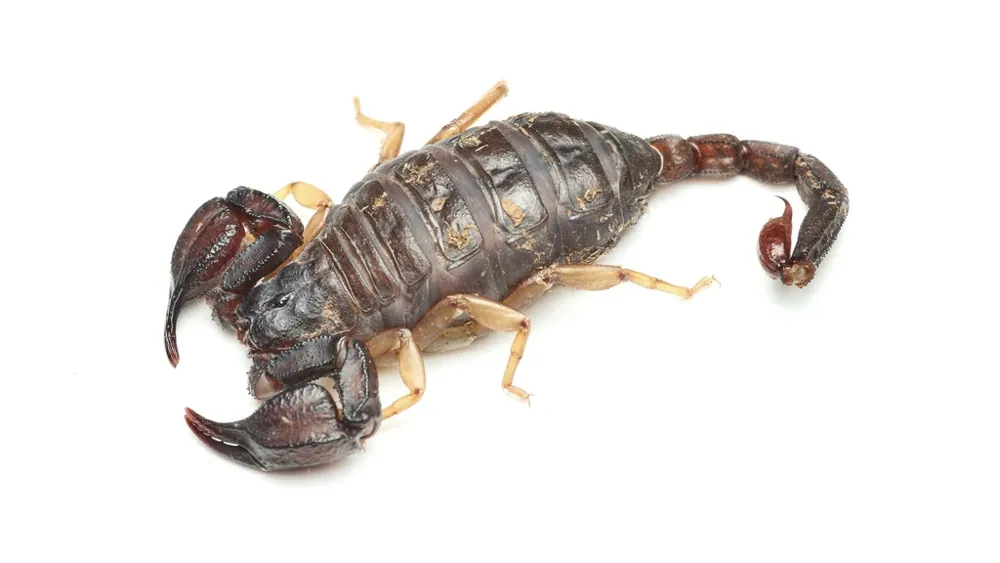
The California forest scorpion is a small scorpion that lives in the Redwood Forests and Oak Woodlands of California. Scientists consider it a foundational species, meaning many other living things in these forests depend on it. It is shy and rarely seen.1

 Ho e tseba jwang
- Typically dark brown or black, with legs that are translucent yellowish-brown1
- Eight legs and two large claws in front of the mouth1
- A squat body with a thinner tail than many other scorpion species1
- Males are duller in colour, smaller and shorter than females1
- On the underside of the fifth tail segment, a ridge forks into a shape like a 'Y'1
Matla a chefo
Chefo e tswa ka lemao le hlabang.
Chefo ya yona (eo e e kenyang ka ho loma kapa ho hlaba) e etsang?
It is venomous. Its sting is milder than a honeybee's sting.1
E kotsi hakae ho batho?
Kotsi ho batho: E bobebeJwaloka ho hlajwa ke notshi kapa ho fetang moo. Ha e na kotsi ho batho.It is described as smaller than a little finger, with a sting milder than a honeybee's. It is so shy that it is most often seen running away.1
E etsang ha e tshohile?
It is most often seen running away rather than standing its ground.1
 Haeba e hlaba
- Pholisa moo e hlabileng teng ka pakete ya leqhwa mme o boloke motho a sa sisinyehe. Fumana thuso ya bongaka kapele, haholoholo bakeng sa bana: diphepheng tse ding di bolaya bana.
Kamehla letsetsa nomoro ya tshohanyetso pele (112, 000, 911). Ena ke tataiso e akaretsang ya thuso ya pele, hase keletso ya bongaka. Metheo ya thuso ya pele
 Dula o bolokehile
- O se ke wa ama, wa tshwara kapa wa tena phoofolo ya naheng, leha e le e nyenyane, le leha e shebahala e robetse kapa e shwele.
- E fe sebaka. Ha o kopana le yona, dula o kgutsitse, kgutlela morao butle mme o e tlohele e tsamaye ka tsela ya yona.
- Haeba e nngwe e o hlaba: dula o kgutsitse, o se ke wa sisinyeha, letsetsa nomoro ya tshohanyetso (112, 000, 911) kapa o ye sepetlele kapele. Hopola hore e ne e shebahala jwang, foto e a thusa.
Ha e o batle. E sebedisa chefo ya yona ho tshwara dijo kapa ho itshireletsa, mme e kgetha ho ipata. Ho eketsehileng ka ho dula o bolokehile
Hokae lefatsheng?
E kgolo hakae?
E telele hakae?
 e telele jwaloka diboloko tsa ho bapala tse 2 moleng
 e ka matha metara e 100 ka metsotswana e 260 (motho ya potlakang ka ho fetisisa o hloka 9,6)
California forest scorpion e kgolo hakae ha e bapiswa le WENA?
Ke dipalo feela ka hara sebatli sa hao. Ha ho letho le bolokwang kapa le romelwang kae kapa kae.
E potlaka hakae?


Dintlha
It is so shy that it hunts only on moonless nights.1
After birth, the young climb onto the mother's back, and their legs never touch the ground during the climb.1
It is considered a foundational species in California's Redwood Forests and Oak Woodlands, which means the ecosystem relies on it.1
It needs a moister environment than many other scorpion species, so it stays under rocks, bark and dead trees.1
Bakeng sa ditsebi tsa chefo
- Lebitso la saense
- Uroctonus mordax
- Sehlopha
- Diphepheng
- Lelapa
- Vaejovidae2
- Tatelano
- Scorpiones
- Dikontinente
- Amerika Leboya
- Masea
- It gives birth to live young, mainly in summer. The young are born in a membrane that the mother holds until they can escape, then they climb onto her back.1
- Kotsi ho batho
- 1 / 5: E bobebe3
Moo dintlha di tswang teng
- Uroctonus mordax (Wikipedia (CC BY-SA 4.0))
- Uroctonus mordax (iNaturalist): mabitso le tlhophiso.
- Venom Wiki: boemo ba kotsi, boholo bo tlwaelehileng le kakanyo ya lebelo ke tsa rona. Bona kamoo re di balang ka teng: Kamoo re lekanyang kotsi ka teng.
Taba e nngwe le e nngwe leqepheng lena e na le nomoro e bontshang mohlodi wa yona. Haeba re entse phoso, re kopa tshwarelo, re barati ba diphoofolo, hase makasine wa saense. Re bolelle ho [email protected] mme re tla e lokisa.
 Phepheng e lapile! Venom Wiki ke projeke ya motho a le mong: ke mahala, ha e na dipapatso ebile ha e na di-tracker. Thuso e nyenyane ya tjhelete e e boloka e ntse e le inthaneteng.Fepa phepheng
 Arizona bark scorpion
 Cuban blue scorpion
 Striped bark scorpion
 Giant desert hairy scorpion
 Colima scorpion
 Durango scorpion
 Terciopelo
 Eastern coral snake
 Eastern diamondback rattlesnake
 Eyelash viper
 Timber rattlesnake
 Western diamondback rattlesnake