
 Afrika
 Asia
Asia Yuropa
 Amerika Borwa
 Australia le Oceania
 Antarctica
 Lewatle la Pacific
 Lewatle la Atlantic
 Lewatle la India
 Lewatle la Arctic
 Lewatle la Mediterranean
 Lewatle le Lefubedu
 Lewatle la Caribbean
 Lewatle la Coral
 Lewatle la China Borwa
 Lewatle la Philippine
 Lewatle la Andaman
 Lewatle la Leboya
 Lewatle la Timor le Arafura
 Kgwohlo ya Bengal
 Kgwohlo ya California
Common quail
 E a chefa ha e jewaE ja: Hanyane ka tsohleE chefang, eseng e nang le chefo
The common quail is a small, plump ground-nesting bird. It breeds across Europe and North Africa and spends the winter in Africa and southern India. Its meat can be poisonous, so it is a bird where a little knowledge matters.1
 Ho e tseba jwang
- A small, compact bird about 16 to 18 cm long1
- Streaked brown plumage with a white eyestripe1
- Males have a white chin1
- Long wings, unlike most game birds1
- A call of three repeated chirps, and the male's song sounds like 'wet-my-lips'1
Hangata e ferekanngwa le: The Japanese quail (Coturnix japonica), native to Asia, looks very similar. Its call is very different from that of the common quail, which is the best way to tell them apart.1
Matla a chefo
E kotsi feela haeba ho na le se e jang.
Chefo ya yona (e chefang ha o e ama kapa o e ja) e etsang?
This bird is not venomous. Its meat can be poisonous if the birds have eaten certain plants, although which plants is still debated. The resulting illness, called coturnism, causes muscle soreness and may lead to kidney failure.1
E kotsi hakae ho batho?
Kotsi ho batho: E bohlokoE ka utlwisa bohloko haholo, empa hoo e batlang e le kamehla ha e kotsi haholo.One in four people who eat poisonous quail meat become ill with coturnism. The illness can lead to kidney failure.1
E etsang ha e tshohile?
When flushed, it keeps low and soon drops back into cover. It would rather creep away than fly.1
 Haeba motho a e amme kapa a e jele
- Haeba motho a e jele kapa a na le matshwao ka mora ho e ja: letsetsa nomoro ya tshohanyetso kapa setsi sa chefo (poison centre) hang-hang.
Kamehla letsetsa nomoro ya tshohanyetso pele (112, 000, 911). Ena ke tataiso e akaretsang ya thuso ya pele, hase keletso ya bongaka. Metheo ya thuso ya pele
 Dula o bolokehile
- O se ke wa ama, wa tshwara kapa wa tena phoofolo ya naheng, leha e le e nyenyane, le leha e shebahala e robetse kapa e shwele.
- E fe sebaka. Ha o kopana le yona, dula o kgutsitse, kgutlela morao butle mme o e tlohele e tsamaye ka tsela ya yona.
- Haeba o e amme kapa o e jele: o se ke wa hohla mahlo kapa molomo, hlatswa matsoho mme o fumane thuso ya bongaka.
Ha e o batle. Chefo ya yona e teng feela hore ho se be le letho le e jang. Ho eketsehileng ka ho dula o bolokehile
Hokae lefatsheng?
E kgolo hakae?
E telele hakae?
E boima hakae?

 e telele jwaloka diboloko tsa ho bapala tse 6 moleng
 e ka fofa ho tshela lebala lohle la bolo ya maoto ka metsotswana e 9,5
Common quail e kgolo hakae ha e bapiswa le WENA?
Ke dipalo feela ka hara sebatli sa hao. Ha ho letho le bolokwang kapa le romelwang kae kapa kae.
E potlaka hakae?


Dintlha
Huge numbers are caught in nets along the Mediterranean coast of Egypt. An estimated 12.9 million birds were caught across Egypt in 2012 during the autumn migration.1
In 1537, Queen Jane Seymour, third wife of Henry VIII, developed a strong craving for quail. Courtiers and diplomats abroad were ordered to find supplies for her.1
The Book of Numbers in the Bible describes a huge mass of quails blown in by a wind, which the Israelites took as meat in the wilderness.1
Common quails are strongly migratory, unlike most game birds.1
The young can leave the nest and feed themselves shortly after hatching, and they stay with the family group for 30 to 50 days.1
Bakeng sa ditsebi tsa chefo
- Lebitso la saense
- Coturnix coturnix
- Sehlopha
- Diphoofolo tse ding tse chefang
- Lelapa
- Phasianidae2
- Tatelano
- Galliformes
- Dikontinente
- Yuropa, Asia, Afrika
- Masea
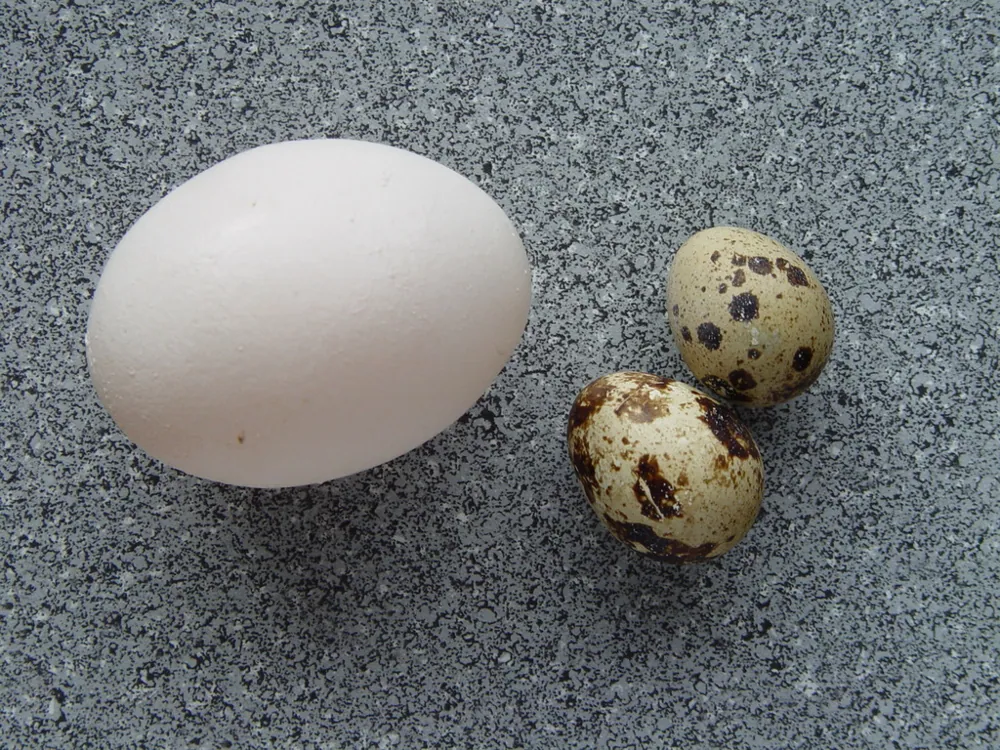
- The female lays a clutch of 8 to 13 eggs, one every 24 hours, in a shallow scrape on the ground. The chicks hatch together after 17 to 20 days and can feed themselves soon after hatching.1
- Boemo ba yona naheng
- Least concern (IUCN)1
- Kotsi ho batho
- 2 / 5: E bohloko3
Moo dintlha di tswang teng
- Common quail (Wikipedia (CC BY-SA 4.0))
- Coturnix coturnix (iNaturalist): mabitso le tlhophiso.
- Venom Wiki: boemo ba kotsi, boholo bo tlwaelehileng le kakanyo ya lebelo ke tsa rona. Bona kamoo re di balang ka teng: Kamoo re lekanyang kotsi ka teng.
Taba e nngwe le e nngwe leqepheng lena e na le nomoro e bontshang mohlodi wa yona. Haeba re entse phoso, re kopa tshwarelo, re barati ba diphoofolo, hase makasine wa saense. Re bolelle ho [email protected] mme re tla e lokisa.
 Phepheng e lapile! Venom Wiki ke projeke ya motho a le mong: ke mahala, ha e na dipapatso ebile ha e na di-tracker. Thuso e nyenyane ya tjhelete e e boloka e ntse e le inthaneteng.Fepa phepheng
Tse ding tsa sehlopha se le seng: Diphoofolo tse ding tse chefang
 Spanish flyDiphoofolo tse ding tse chefangE hloka ngakaO se ke wa ama
 African crested ratDiphoofolo tse ding tse chefangE hloka ngakaO se ke wa ama
 Green spotted pufferDiphoofolo tse ding tse chefangE hloka ngaka
 Spur-winged gooseDiphoofolo tse ding tse chefangE utlwisa bohloko feela
 Cinnabar mothDiphoofolo tse ding tse chefangHa e na kotsi
 Fahaka pufferfishDiphoofolo tse ding tse chefangE ka bolaya
E boetse e phela: Yuropa
 Common European adderDi-viper le di-adderE hloka ngaka
 Common waspDinotshi, di-wasp le di-hornetE utlwisa bohloko feela
 European hornetDinotshi, di-wasp le di-hornetE utlwisa bohloko feela
 Fire salamanderDihoho tse chefang, mampotsana le di-newtE utlwisa bohloko feelaO se ke wa ama
 Western honey beeDinotshi, di-wasp le di-hornetE utlwisa bohloko feela
 Blunt-nosed viperDi-viper le di-adderE ka bolaya