
 Afrika
 Asia
Asia Yuropa
 Amerika Borwa
 Australia le Oceania
 Antarctica
 Lewatle la Pacific
 Lewatle la Atlantic
 Lewatle la India
 Lewatle la Arctic
 Lewatle la Mediterranean
 Lewatle le Lefubedu
 Lewatle la Caribbean
 Lewatle la Coral
 Lewatle la China Borwa
 Lewatle la Philippine
 Lewatle la Andaman
 Lewatle la Leboya
 Lewatle la Timor le Arafura
 Kgwohlo ya Bengal
 Kgwohlo ya California
Warrior wasp
 Ho hlaba
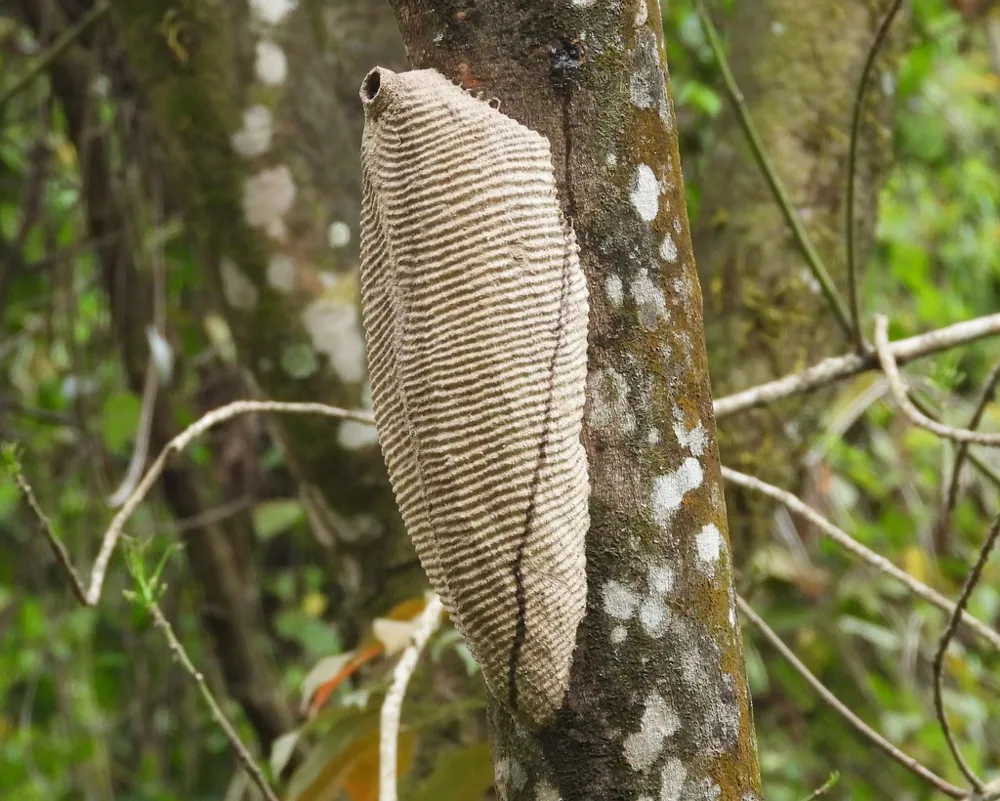
The warrior wasp is a large paper wasp that lives in Central and South America. It builds paper nests on tree trunks and is known for an extremely painful sting. Its colonies defend their nests together as a group.1
 Ho e tseba jwang
Matla a chefo
Chefo e tswa ka lemao le hlabang.
Chefo ya yona (eo e e kenyang ka ho loma kapa ho hlaba) e etsang?
The sting is extremely painful. On the Schmidt sting pain index it scores the highest possible rating, the same as the bullet ant. On the Starr sting pain scale it also scores the maximum 4 out of 4, a rating shared by very few other species.1
E kotsi hakae ho batho?
Kotsi ho batho: E tebilengHo hlajwa ho hloka ngaka. Lefu le etsahala ka seoelo haholo.A sting from this wasp is rated as traumatically painful, and such stings often need some medical attention.1
E etsang ha e tshohile?
When disturbed, many workers leave the nest to display or sting. They raise their abdomen upright in a behaviour called gaster-flagging, and they drum the nest walls to sound an alarm.1
 Haeba e hlaba
- Because the sting is often traumatically painful, medical attention may be needed.1
- Kgwaratla lemao la notshi o le ntshe mme o pholise sebaka seo.
- Haeba motho a hema ka thata, sefahleho kapa qoqotho di ruruha, kapa a ikutlwa a tla idibala, ke tshohanyetso ya aletjhi (allergy): letsetsa nomoro ya tshohanyetso mme o sebedise pene ya hae ya adrenaline (adrenaline auto-injector) haeba a na le yona.
Kamehla letsetsa nomoro ya tshohanyetso pele (112, 000, 911). Ena ke tataiso e akaretsang ya thuso ya pele, hase keletso ya bongaka. Metheo ya thuso ya pele
 Dula o bolokehile
- O se ke wa ama, wa tshwara kapa wa tena phoofolo ya naheng, leha e le e nyenyane, le leha e shebahala e robetse kapa e shwele.
- E fe sebaka. Ha o kopana le yona, dula o kgutsitse, kgutlela morao butle mme o e tlohele e tsamaye ka tsela ya yona.
- Haeba e nngwe e o hlaba: dula o kgutsitse, o se ke wa sisinyeha, letsetsa nomoro ya tshohanyetso (112, 000, 911) kapa o ye sepetlele kapele. Hopola hore e ne e shebahala jwang, foto e a thusa.
Ha e o batle. E sebedisa chefo ya yona ho tshwara dijo kapa ho itshireletsa, mme e kgetha ho ipata. Ho eketsehileng ka ho dula o bolokehile
Hokae lefatsheng?
E kgolo hakae?
E telele hakae?
 e telele jwaloka klipi ya pampiri
 e ka fofa ho tshela lebala lohle la bolo ya maoto ka metsotswana e 13
Warrior wasp e kgolo hakae ha e bapiswa le WENA?
Ke dipalo feela ka hara sebatli sa hao. Ha ho letho le bolokwang kapa le romelwang kae kapa kae.
E potlaka hakae?


Dintlha
Its sting ranks as high as the bullet ant's on the Schmidt sting pain index, which is the top rating.1
Army ants regularly prey on these wasps, and the wasps have been seen piling their bodies against the nest entrance to defend against them.1
Montezuma oropendola birds often nest in trees where these wasps are present, because the wasps' stings help keep predators and parasites away.1
When moving to a new nest, the wasps rub glands on their abdomen to lay a chemical trail that the colony can follow.1
A colony can have more than one queen at a time, and the number of queens often changes.1
Bakeng sa ditsebi tsa chefo
- Lebitso la saense
- Synoeca septentrionalis
- Sehlopha
- Dinotshi, di-wasp le di-hornet
- Lelapa
- Vespidae2
- Tatelano
- Hymenoptera
- Dikontinente
- Amerika Leboya, Amerika Borwa
- Masea
- The queen lays eggs in the cells of the nest. The larvae hatch about a week after the nest is finished, and they become adults around 30 days after hatching.1
- Kotsi ho batho
- 3 / 5: E tebileng3
Moo dintlha di tswang teng
- Synoeca septentrionalis (Wikipedia (CC BY-SA 4.0))
- Synoeca septentrionalis (iNaturalist): mabitso le tlhophiso.
- Venom Wiki: boemo ba kotsi, boholo bo tlwaelehileng le kakanyo ya lebelo ke tsa rona. Bona kamoo re di balang ka teng: Kamoo re lekanyang kotsi ka teng.
Taba e nngwe le e nngwe leqepheng lena e na le nomoro e bontshang mohlodi wa yona. Haeba re entse phoso, re kopa tshwarelo, re barati ba diphoofolo, hase makasine wa saense. Re bolelle ho [email protected] mme re tla e lokisa.
 Phepheng e lapile! Venom Wiki ke projeke ya motho a le mong: ke mahala, ha e na dipapatso ebile ha e na di-tracker. Thuso e nyenyane ya tjhelete e e boloka e ntse e le inthaneteng.Fepa phepheng
Tse ding tsa sehlopha se le seng: Dinotshi, di-wasp le di-hornet
 Tarantula hawkDinotshi, di-wasp le di-hornetE utlwisa bohloko feela
 Executioner waspDinotshi, di-wasp le di-hornetE hloka ngaka
 Bald-faced hornetDinotshi, di-wasp le di-hornetE utlwisa bohloko feela
 Cow killer velvet antDinotshi, di-wasp le di-hornetE utlwisa bohloko feela
 Eastern cicada killerDinotshi, di-wasp le di-hornetHa e na kotsi
 Armadillo waspDinotshi, di-wasp le di-hornetE hloka ngaka
 Terciopelo
 Eastern coral snake
 Eastern diamondback rattlesnake
 Eyelash viper
 Timber rattlesnake
 Western diamondback rattlesnake