
 Afrika
 Asia
Asia Ulaya
Ulaya Amerika Kusini
 Australia na Oceania
 Antaktika
 Bahari ya Pasifiki
 Bahari ya Atlantiki
 Bahari ya Hindi
 Bahari ya Aktiki
 Bahari ya Mediterania
 Bahari ya Shamu
 Bahari ya Karibi
 Bahari ya Matumbawe
 Bahari ya Kusini ya China
 Bahari ya Ufilipino
 Bahari ya Andaman
 Bahari ya Kaskazini
 Bahari ya Timor na Arafura
 Ghuba ya Bengal
 Ghuba ya California
Pine processionary
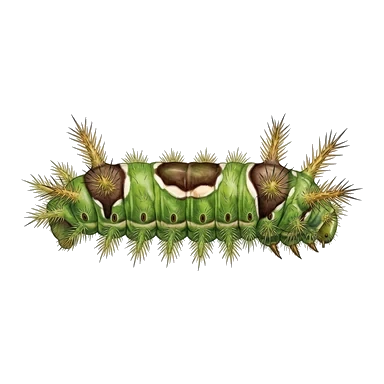 Manyoya yanayowasha
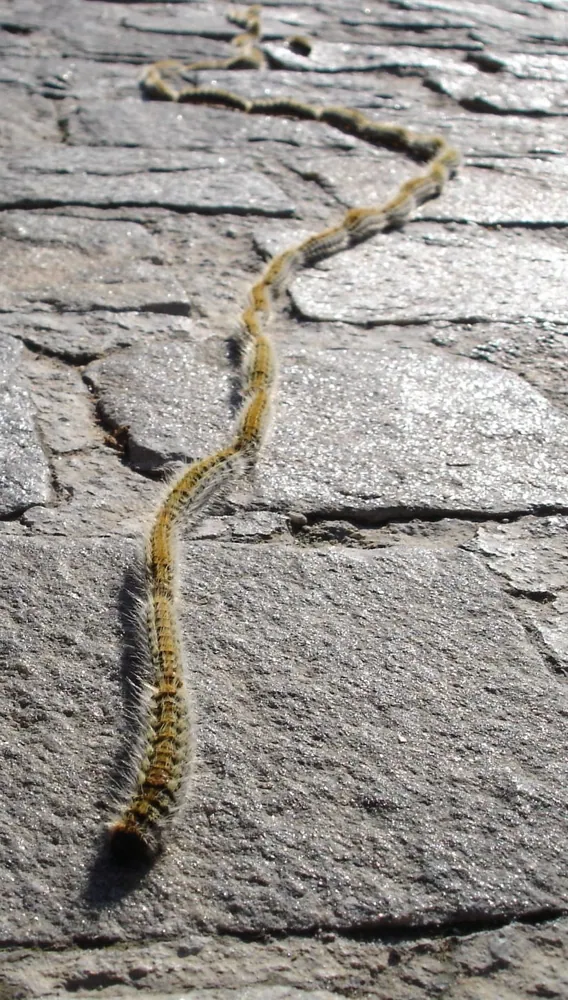
The pine processionary is a moth whose caterpillars are famous for marching in long, nose-to-tail lines through pine woods. Their hairs cause painful rashes and eye irritation, and they can strip the needles from whole trees. It lives around the Mediterranean and is spreading north.1
 Jinsi ya kumtambua
- Caterpillars are orange-brown and hairy, with blue bands.1
- Large silken nests in pine trees, often with several in one tree and signs of stripped needles.1
- Caterpillars move in single-file processions, usually at night and when leaving the tree to pupate.1
- Adults have predominantly light brown forewings with brown markings and white hindwings.1
- Adult males have a crescent marking on the wings and are larger than the oak processionary.1
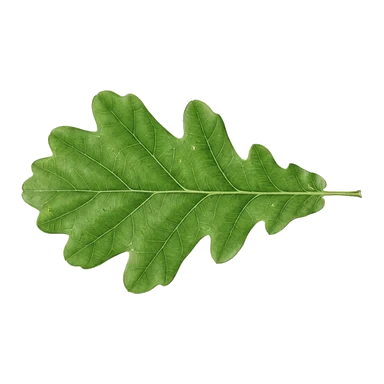
Mara nyingi huchanganywa na: The oak processionary (Thaumetopoea processionea) is smaller as an adult, has an indistinct wing marking rather than a crescent, and lives in broad-leaved rather than coniferous forests. The pale eggar moth has no crescent marking on its wings.1
Nguvu ya sumu
Manyoya madogo au vinywele hukatika ndani ya ngozi na kuwasha.
Sumu yake hufanya nini?
The species is not venomous. Its caterpillars have hairs containing an irritant chemical called thaumetopoein, which causes skin rashes (urticaria) and eye irritation on contact. Some people may have an allergic reaction. The hairs of fifth-stage larvae can also break off and spread across nearby exposed skin.1
Ana hatari gani kwa watu?
Hatari kwa watu: InaumaInaweza kuuma sana, lakini karibu kamwe si jambo zito.Simple contact with the caterpillar hairs can cause severe rashes and eye irritation in humans and other mammals. Some individuals may have an allergic reaction.1
Hufanya nini akiogopa?
When stressed or threatened, fifth-stage caterpillars eject harpoon-shaped hairs that irritate any exposed skin nearby.1
 Ukigusa manyoya yake
- Kwa manyoya ya kiwavi yanayowasha: yaondoe kwa utepe unaonata, kisha osha ngozi. Usisugue.
- Kwa kuumwa: osha na upoze. Tafuta msaada wa kitabibu mtu akijisikia vibaya au akivuja damu kwa urahisi.
Daima piga namba ya dharura kwanza (112, 000, 911). Huu ni mwongozo wa jumla wa huduma ya kwanza, si ushauri wa kitabibu. Misingi ya huduma ya kwanza
 Kaa salama
- Kamwe usimguse, kumkamata wala kumchokoza mnyama wa porini, hata akiwa mdogo, na hata akionekana amelala au amekufa.
- Mpe nafasi. Ukikutana naye, tulia, rudi nyuma polepole na umwache aende zake.
- Ukigusa manyoya yake: tulia, usitikisike, piga namba yako ya dharura (112, 000, 911) au nenda hospitali haraka. Kumbuka alivyoonekana, picha husaidia.
Hakuwindi wewe. Hutumia sumu yake kukamata chakula au kujilinda, na hupendelea zaidi kujificha. Zaidi kuhusu kukaa salama
Ana ukubwa gani?
Ana urefu gani?
 karibu urefu sawa na kibanio cha karatasi
 polepole kuliko konokono wa bustanini
Pine processionary ana ukubwa gani ukilinganisha na WEWE?
Ni hesabu tu kwenye kivinjari chako. Hakuna kinachohifadhiwa wala kutumwa popote.
Ana kasi gani?


Ukweli
Caterpillars in a procession hold together through touch from the caterpillar in front, which takes priority over the trail pheromone or silk.1
The caterpillars are one of the few temperate-zone insects whose larvae develop through the winter, living in silk nests high in pine trees.1
Adults live for only a single day, during which they mate and lay eggs.1
The Greek physician Dioscorides described the itching caused by this caterpillar in the 1st century AD, and Pliny the Elder recorded a treatment for it.1
Outbreaks are somewhat cyclical, with a period of 7 to 9 years.1
Kuvunja dhana potofu
Dhana potofu: Fabre's caterpillars marched in a circle around a flower pot only because they were trapped on its rim.
Ukweli: Young caterpillars' circular trails continue for as long as 12 hours even when they are free on a flat surface.1
Kwa wataalamu wa sumu
- Jina la kisayansi
- Thaumetopoea pityocampa
- Kundi
- Viwavi na wadudu
- Familia
- Notodontidae2
- Mpangilio
- Lepidoptera
- Mabara
- Ulaya, Afrika, Asia
- Watoto
- Each female lays an enormous number of eggs near the tops of pine trees, in cylindrical egg masses 4 to 5 cm long covered with scales that mimic pine shoots.1
- Hatari kwa watu
- 2 / 5: Inauma3
Ukweli unatoka wapi
- Pine processionary (Wikipedia (CC BY-SA 4.0))
- Thaumetopoea pityocampa (iNaturalist): majina na uainishaji.
- Venom Wiki: kiwango cha hatari, ukubwa wa kawaida na makadirio ya kasi ni yetu wenyewe. Ona jinsi tunavyovipata: Jinsi tunavyopima hatari.
Kila ukweli kwenye ukurasa huu una namba inayoonyesha chanzo chake. Kama tumekosea kitu, samahani, sisi ni wapenzi wa wanyama, si jarida la kisayansi. Tuambie kupitia [email protected] nasi tutarekebisha.
 Nge ana njaa! Venom Wiki ni mradi wa mtu mmoja: bure, bila matangazo na bila vifuatiliaji. Mchango mdogo husaidia kuiweka hewani.Mlishe nge
Zaidi kutoka kundi hilohilo: Viwavi na wadudu
 Oak processionaryViwavi na waduduInauma tuUsiguse
 White-spotted assassin bugViwavi na waduduInauma tu
 Common bombardier beetleViwavi na waduduHana madhara
 Asian giant water bugViwavi na waduduInauma tu
 Blue-striped nettle grubViwavi na waduduInauma tuUsiguse
 Brown-tail mothViwavi na waduduInauma tuUsiguse
Pia anaishi: Ulaya
 Common European adderNyoka aina ya fira na kifutuAnahitaji daktari
 Spanish flyWanyama wengine wenye sumu ya kugusa au kulaAnahitaji daktariUsiguse
 Common waspNyuki, nyigu na mavuInauma tu
 European hornetNyuki, nyigu na mavuInauma tu
 Fire salamanderVyura wa sumu, chura na mijusi-majiInauma tuUsiguse
 Western honey beeNyuki, nyigu na mavuInauma tu