
 Aprika
 Asya
Asya Europa
 Timog Amerika
 Australia at Oceania
 Antarctica
 Karagatang Pasipiko
 Karagatang Atlantiko
 Karagatang Indiyano
 Karagatang Artiko
 Dagat Mediteraneo
 Dagat Pula
 Dagat Caribe
 Dagat Coral
 Dagat Timog Tsina
 Dagat Pilipinas
 Dagat Andaman
 Dagat Hilaga
 Dagat Timor at Arafura
 Look ng Bengal
 Golpo ng California
Giant honey bee
 Mga tusok
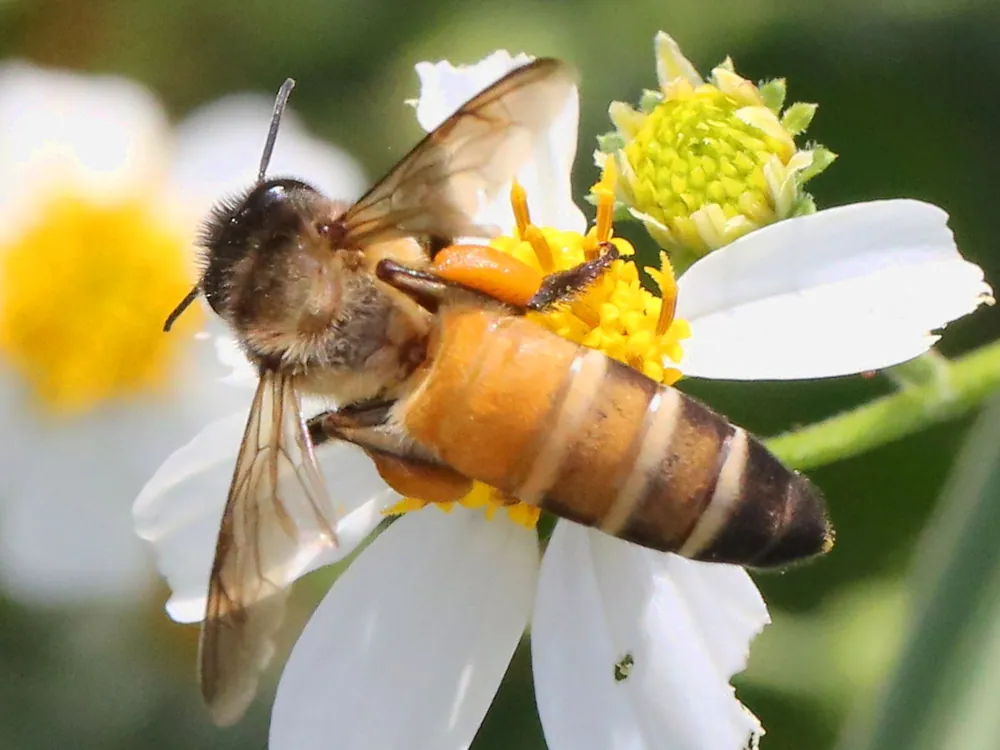
The giant honey bee is a large honey bee that lives in South and Southeast Asia. It builds its nests in open, high places, such as tree branches, cliff overhangs and buildings. It is known for fierce defence when its nest is disturbed.1


 Paano ito makikilala
- Typically 17 to 20 mm long1
- Builds a single vertical comb of wax, hanging from above1
- The comb is covered by a dense mass of bees in several layers1
- Nests can reach up to 1 metre across and are often grouped, with up to 200 colonies in one tree1
- Aggressive when its nest is disturbed1
Madalas mapagkamalang: The Himalayan giant honey bee (A. laboriosa) is very similar in shape. It has a darker abdomen and longer thoracic hair, and is now treated as a separate species from the giant honey bee.1
Lakas ng kamandag
Lumalabas ang kamandag sa pamamagitan ng pantusok.
Gaano ito kapanganib sa tao?
Panganib sa tao: MalalaKailangang magpatingin sa doktor kapag natusok. Napakabihira ng namamatay.This bee is known for aggressive defensive behaviour and vicious attacks when disturbed. Workers also attack bees from other colonies, so it is wise to keep well away from nests.1
Ano ang ginagawa nito kapag natatakot?
When disturbed, colonies defend their nest aggressively, and they attack intruders from other colonies.1
 Kung tumusok ito
- Kayurin palabas ang naiwang pantusok ng bubuyog at palamigin ang lugar.
- Kung nahihirapang huminga ang tao, namamaga ang mukha o lalamunan, o parang hihimatayin, ito ay emergency sa allergy: tawagan ang numero pang-emergency at gamitin ang adrenaline pen niya kung mayroon siya.
Laging tawagan muna ang numero pang-emergency (112, 000, 911). Ito ay pangkalahatang gabay sa pangunang lunas, hindi payong medikal. Mga batayan ng pangunang lunas
 Mag-ingat
- Huwag kailanman hawakan, hulihin o asarin ang ligaw na hayop, kahit maliit, at kahit mukha itong tulog o patay.
- Bigyan ito ng espasyo. Kung makasalubong ka ng isa, manatiling kalmado, dahan-dahang umatras at hayaan itong umalis.
- Kung tusukin ka ng isa: manatiling kalmado, huwag gumalaw, tawagan ang numero pang-emergency (112, 000, 911) o pumunta agad sa ospital. Tandaan ang itsura nito, makakatulong ang litrato.
Hindi ka nito hinahabol. Ginagamit nito ang kamandag para manghuli ng pagkain o ipagtanggol ang sarili, at mas gusto pa nitong magtago. Higit pa tungkol sa pag-iingat
Gaano ito kalaki?
Gaano ito kahaba?
 halos kasinghaba ng paper clip
 kayang lumipad sa buong football field sa loob ng 15 segundo
Gaano kalaki si Giant honey bee kumpara sa IYO?
Math lang sa browser mo. Walang sine-save o ipinapadala kahit saan.
Gaano ito kabilis?


Mga fact
Unlike most honey bees, this species forages at night, and it is the only bee of its genus known to do so.1
The queen mates with many drones, and the Himalayan subspecies has the highest levels of polyandry of any social insect.1
Each colony can have up to 100,000 bees, and colonies are only a few centimetres apart in large groups.1
Colonies migrate between nesting sites with the seasons, usually staying about 3 to 4 months at each site.1
Bees use a waggle dance to show other bees the distance, direction and value of a food source.1
Indigenous peoples have traditionally harvested the honey and beeswax of this bee, a practice known as honey hunting.1
Para sa mga eksperto sa kamandag
Saan galing ang mga fact
- Apis dorsata (Wikipedia (CC BY-SA 4.0))
- Apis dorsata (iNaturalist): mga pangalan at klasipikasyon.
- Venom Wiki: sarili naming tantiya ang antas ng panganib, karaniwang laki at hula sa bilis. Tingnan kung paano namin ito kinukuwenta: Paano namin sinusukat ang panganib.
Bawat fact sa pahinang ito ay may numerong tumuturo sa pinagmulan nito. Kung may mali kami, pasensya na, mahilig lang kami sa hayop, hindi kami science journal. Sabihin sa amin sa [email protected] at aayusin namin.
 Gutom ang alakdan! Ang Venom Wiki ay proyekto ng iisang tao: libre, walang ads at walang trackers. Nakatutulong ang maliit na tip para manatili itong online.Pakainin ang alakdan
Higit pa mula sa parehong grupo: Mga bubuyog, putakti at hornet
 Asian giant hornetMga bubuyog, putakti at hornetPuwedeng pumatay
 Common waspMga bubuyog, putakti at hornetMasakit lang
 European hornetMga bubuyog, putakti at hornetMasakit lang
 Western honey beeMga bubuyog, putakti at hornetMasakit lang
 Asian hornetMga bubuyog, putakti at hornetMasakit lang
 European paper waspMga bubuyog, putakti at hornetMasakit lang
 Alakdang deathstalker
 Kobrang Indiyano
 Indian saw-scaled viper
 King cobra
 Puff adder
 Ulupong ni Russell