
 Aforika
 Asia
Asia Yuropa
 Amerika Borwa
 Australia le Oceania
 Antarctica
 Lewatle la Pacific
 Lewatle la Atlantic
 Lewatle la India
 Lewatle la Arctic
 Lewatle la Mediterranean
 Lewatle le Lehibidu
 Lewatle la Caribbean
 Lewatle la Coral
 Lewatle la China Borwa
 Lewatle la Philippines
 Lewatle la Andaman
 Lewatle la Bokone
 Lewatle la Timor le la Arafura
 Kou ya Bengal
 Gulf ya California
Colorado River toad
 Botlhole mo letlalong la yoneE ja: NamaE botlhole go e ama kgotsa go e ja, ga e tsenye botlhole
The Colorado River toad is a large toad of the deserts of the southwestern United States and northwestern Mexico. It is famous for the toxic, mind-altering secretions it releases from glands in its skin when threatened. These secretions can be deadly if swallowed, so it should be left alone.1


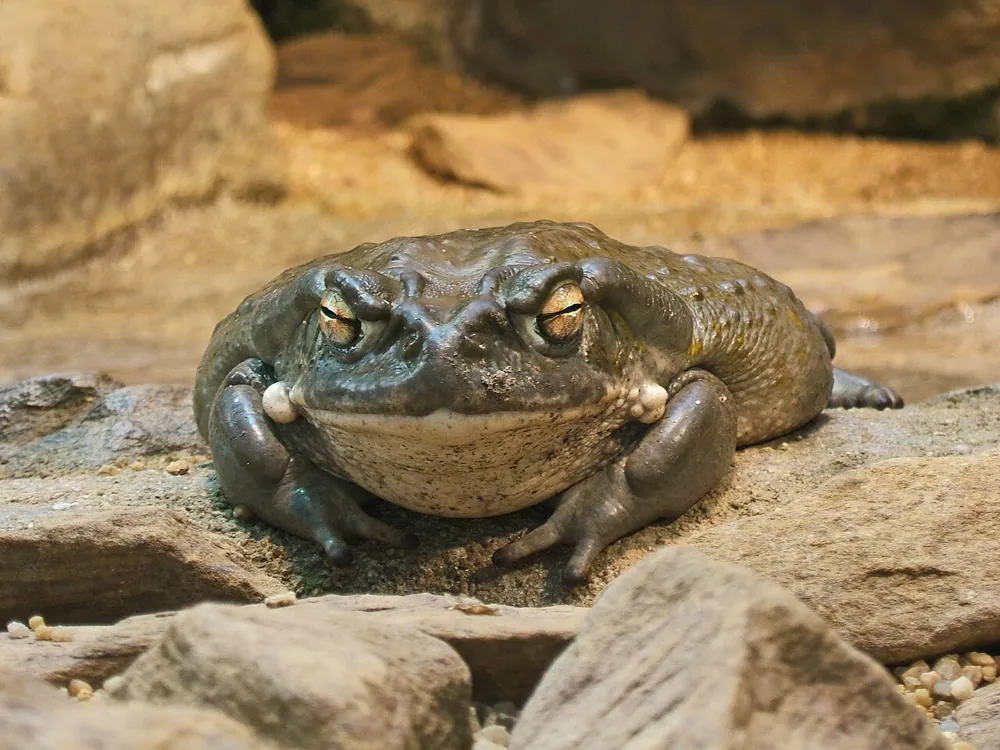
 Tsela ya go e lemoga
Maatla a botlhole
Letlalo la yone le botlhole. Go kotsi go e ama, go e latswa kgotsa go e ja.
Botlhole jwa yone (jwa go e ama kgotsa go e ja) bo dira eng?
The toad releases poison from glands in its skin, including the large parotoid glands behind the eyes. The poison contains psychoactive compounds, including 5-MeO-DMT and bufotenin, which affect the brain. It also contains digoxin-like cardiac glycosides, which act on the heart, and ingesting the poison can be fatal. In one reported case, a young woman who drank a tea made from toad preparation began vomiting and had difficulty breathing soon after, and died about two and a half hours later.1
E kotsi go le kae go batho?
Kotsi go batho: E masisiFa mongwe a e ama kgotsa a e ja, a ye kwa ngakeng. Go swa go seoka thata.The poison is potent enough to kill a grown dog, and dogs that attack toads have been paralysed or killed. Several cases of human poisoning from swallowing toad secretions or eggs have been reported, and at least one death from the ch'an su preparation has been recorded. The toad has also been linked to poisoning and at least one death from the use of related toad preparations as street drugs.1
E dira eng fa e tshogile?
When threatened, it releases toxins from glands in its skin.1
 Fa mongwe a e amile kgotsa a e jele
- Fa mongwe a amile e nngwe: tlhatswa diatla sentle mme o se ka wa ama matlho kgotsa molomo. Fa ngwana kgotsa phologolo ya gae e latswitse kgotsa e jele e nngwe: leletsa senthara ya botlhole kgotsa nomoro ya tshoganyetso.
Ka gale leletsa nomoro ya gago ya tshoganyetso pele (112, 000, 911). Se ke kaelo e e akaretsang ya thuso ya ntlha, ga se kgakololo ya bongaka. Motheo wa thuso ya ntlha
 Nna o babalesegile
- O se ka wa ama, wa tshwara kgotsa wa tshwenya phologolo ya naga, le fa e le e nnye, le fa e lebega e robetse kgotsa e sule.
- E fe sebaka. Fa o kopana le yone, ritibala, boela morago ka bonya mme o e tlogele e tsamaye ka tsela ya yone.
- Fa o e amile kgotsa o e jele: o se ka wa gotlha matlho kgotsa molomo wa gago, tlhatswa diatla mme o batle thuso ya bongaka.
Ga e go batle. Botlhole jwa yone bo teng fela gore sepe se se ka se e je. Go le gontsi ka go nna o babalesegile
Kae mo lefatsheng?
E kgolo go le kae?
E telele go le kae?
 boleele jo bo lekanang le diboloko tsa go aga tsa ditshamekisi di le 6 mo moleng
 e ka taboga dimetara di le 100 ka metsotswana e le 180 (motho yo o bonako go gaisa o tlhoka 9,6)
Colorado River toad e kgolo go le kae fa e bapisiwa le WENA?
Ke dipalo fela mo sefetleng sa gago (browser). Ga go sepe se se bolokwang kgotsa se se romelwang gope.
E bonako go le kae?


Dintlha
It is the only toad species in which bufotenin is present in large enough amounts to have a psychoactive effect.1
Raccoons have learned to pull a toad away from water by its back leg, turn it over and feed on its belly, which keeps them away from the poison glands.1
Unlike most vertebrates, it gets most of its water by absorbing it across its belly through a special area of skin called the seat patch.1
A female can lay up to 8,000 eggs.1
It is the largest toad in the United States, apart from the non-native cane toad.1
Mosenyi wa ditlhamane
Tlhamane: Licking or smoking the toad's secretions is a safe way to get high or to treat illness.
Nnete: Swallowing the secretions has caused poisonings and deaths. Claims about its therapeutic use are unverified, and the US National Park Service has warned people not to handle or lick the toad.1
Ya baitseanape ba botlhole
- Leina la saense
- Incilius alvarius
- Setlhopha
- Digwagwa tsa botlhole, digwagwa tse dingwe le dinewt
- Lelapa
- Bufonidae2
- Lekoko
- Anura
- Dikontinente
- Amerika Bokone
- Masea
- Females lay eggs in ponds, slow-moving streams, temporary pools or man-made structures that hold water, and can lay up to 8,000 eggs in a long tube of jelly.1
- Seemo sa yone kwa nageng
- Listed as threatened in New Mexico and California. A June 2025 study found that persistent trapping in Mexico has decimated several populations and put the species at risk of extinction.1
- Kotsi go batho
- 3 / 5: E masisi3
Kwa dintlha di tswang teng
- Colorado River toad (Wikipedia (CC BY-SA 4.0))
- Incilius alvarius (iNaturalist): maina le thulaganyo ya mefuta.
- Venom Wiki: seelo sa kotsi, bogolo jo bo tlwaelegileng le kakanyo ya lebelo ke tsa rona. Bona kafa re di balang ka teng: Kafa re lekanyang kotsi ka teng.
Ntlha nngwe le nngwe mo tsebeng e e na le nomoro e e supang motswedi wa yone. Fa re dirile phoso, maitshwarelo, re barati ba diphologolo, e seng kgatiso ya saense. Re bolelele kwa [email protected] mme re tla e baakanya.
 Phepheng e tshwerwe ke tlala! Venom Wiki ke porojeke ya motho a le mongwe: ke mahala, ga e na dipapatso le ditraka. Mpho e nnye e thusa go e tshegetsa mo inthaneteng.Fepa phepheng
Tse dingwe tsa setlhopha se se tshwanang: Digwagwa tsa botlhole, digwagwa tse dingwe le dinewt
 Cane toadDigwagwa tsa botlhole, digwagwa tse dingwe le dinewtE tlhoka ngakaO se ka wa ama
 Strawberry poison-dart frogDigwagwa tsa botlhole, digwagwa tse dingwe le dinewtE utlwisa botlhoko felaO se ka wa ama
 California newtDigwagwa tsa botlhole, digwagwa tse dingwe le dinewtE ka bolayaO se ka wa ama
 Rough-skinned newtDigwagwa tsa botlhole, digwagwa tse dingwe le dinewtE ka bolayaO se ka wa ama
 Panamanian golden frogDigwagwa tsa botlhole, digwagwa tse dingwe le dinewtE tlhoka ngakaO se ka wa ama
 Eastern newtDigwagwa tsa botlhole, digwagwa tse dingwe le dinewtE utlwisa botlhoko felaO se ka wa ama
E tshela gape kwa: Amerika Bokone
 TerciopeloDivaepara tsa mesima (pit vipers)E a bolaya
 Eastern coral snakeDinoga tsa khoraleE ka bolaya
 Eastern diamondback rattlesnakeDinoga tsa ratheleE ka bolaya
 Eyelash viperDivaepara tsa mesima (pit vipers)E ka bolaya
 Timber rattlesnakeDinoga tsa ratheleE ka bolaya
 Western diamondback rattlesnakeDinoga tsa ratheleE ka bolaya