
 Aforika
 Asia
Asia Yuropa
 Amerika Borwa
 Australia le Oceania
 Antarctica
 Lewatle la Pacific
 Lewatle la Atlantic
 Lewatle la India
 Lewatle la Arctic
 Lewatle la Mediterranean
 Lewatle le Lehibidu
 Lewatle la Caribbean
 Lewatle la Coral
 Lewatle la China Borwa
 Lewatle la Philippines
 Lewatle la Andaman
 Lewatle la Bokone
 Lewatle la Timor le la Arafura
 Kou ya Bengal
 Gulf ya California
Mali cobra
 E a fafatsa kgotsa e a tshwela
The Mali cobra is a spitting cobra from West Africa. It lives in grasslands, open forests and savannas, and it can spit venom at anything it sees as a threat. Knowing what it looks like and how it behaves helps people keep a safe distance.1
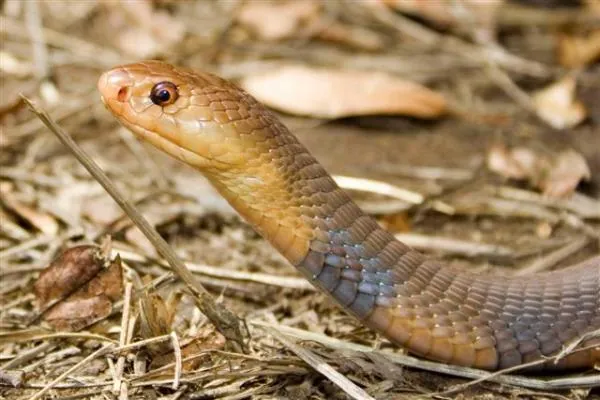
 Tsela ya go e lemoga
Maatla a botlhole
E fafatsa kgotsa e tshwela seedi se se fisang mo go ba ba e tlhaselang.
Botlhole jo e bo tsenyang bo dira eng?
Its venom is spat towards opponents, rather than being delivered only by a bite. The venom contains postsynaptic neurotoxins, which attack the nerves, and cardiotoxins, which harm the heart. Together they cause cytotoxic activity, meaning they damage cells.1
E kotsi go le kae go batho?
Kotsi go batho: E kotsi thataE ka bolaya motho yo o sa alafiweng.It will bite if it is handled or accidentally stepped on, and it will spit venom if it is provoked further.1
E dira eng fa e tshogile?
When disturbed it tries to escape quickly to cover. If cornered, it rears up and spreads its hood, and if provoked further it spits venom.1
 Fa e loma kgotsa e tshwela
- Dira gore motho a nne a sa tshikinyege a ritibetse, tlosa direng le dilo tse di tiileng, mme o mo ise bookelong ka bonako: antivenom ke yone kalafi.
- Fa botlhole bo tshwetswe mo matlhong, a tlhatswe ka metsi a mantsi a a phepa ka yone nako eo.
Ka gale leletsa nomoro ya gago ya tshoganyetso pele (112, 000, 911). Se ke kaelo e e akaretsang ya thuso ya ntlha, ga se kgakololo ya bongaka. Motheo wa thuso ya ntlha
 Nna o babalesegile
- O se ka wa ama, wa tshwara kgotsa wa tshwenya phologolo ya naga, le fa e le e nnye, le fa e lebega e robetse kgotsa e sule.
- E fe sebaka. Fa o kopana le yone, ritibala, boela morago ka bonya mme o e tlogele e tsamaye ka tsela ya yone.
- Fa e nngwe e go loma kgotsa e go tshwela botlhole mo matlhong: ritibala, o se ka wa tshikinyega, leletsa nomoro ya gago ya tshoganyetso (112, 000, 911) kgotsa o ye bookelong ka bonako. Gopola gore e ne e lebega jang, setshwantsho se a thusa.
Ga e go batle. E dirisa botlhole jwa yone go tshwara dijo kgotsa go itshireletsa, mme e rata go iphitlha go feta. Go le gontsi ka go nna o babalesegile
Kae mo lefatsheng?
E kgolo go le kae?
E telele go le kae?
 boleele jo bo lekanang le dikatse tsa ntlo di le 1,5 go tloga kwa nkong go ya mogatleng
 boleele jo bo lekanang le dipanana di le 4 di latelana
 e ka taboga dimetara di le 100 ka metsotswana e le 55 (motho yo o bonako go gaisa o tlhoka 9,6)
Mali cobra e kgolo go le kae fa e bapisiwa le WENA?
Ke dipalo fela mo sefetleng sa gago (browser). Ga go sepe se se bolokwang kgotsa se se romelwang gope.
E bonako go le kae?


Dintlha
The Mali cobra spits its venom at its opponents rather than relying only on biting.1
Its venom contains two kinds of toxin: one that attacks the nerves and one that harms the heart.1
Adults are active by both day and night, while juveniles come out only in daylight.1
It often climbs into small bushes, so it is not only a ground-dweller.1
Kwa dintlha di tswang teng
- Mali cobra (Wikipedia (CC BY-SA 4.0))
- Naja katiensis (iNaturalist): maina le thulaganyo ya mefuta.
- Venom Wiki: seelo sa kotsi, bogolo jo bo tlwaelegileng le kakanyo ya lebelo ke tsa rona. Bona kafa re di balang ka teng: Kafa re lekanyang kotsi ka teng.
Ntlha nngwe le nngwe mo tsebeng e e na le nomoro e e supang motswedi wa yone. Fa re dirile phoso, maitshwarelo, re barati ba diphologolo, e seng kgatiso ya saense. Re bolelele kwa [email protected] mme re tla e baakanya.
 Phepheng e tshwerwe ke tlala! Venom Wiki ke porojeke ya motho a le mongwe: ke mahala, ga e na dipapatso le ditraka. Mpho e nnye e thusa go e tshegetsa mo inthaneteng.Fepa phepheng
Tse dingwe tsa setlhopha se se tshwanang: Dikobra, dimamba le dikrait
 Black mambaDikobra, dimamba le dikraitE a bolaya
 Egyptian cobraDikobra, dimamba le dikraitE a bolaya
 Cape cobraDikobra, dimamba le dikraitE a bolaya
 Eastern green mambaDikobra, dimamba le dikraitE a bolaya
 Jameson's mambaDikobra, dimamba le dikraitE a bolaya
 Western green mambaDikobra, dimamba le dikraitE a bolaya
 Deathstalker
 Puff adder
 Boomslang
 Fat-tailed scorpion
 Gaboon viper
 Western honey bee