
 Aforika
 Asia
Asia Yuropa
 Amerika Borwa
 Australia le Oceania
 Antarctica
 Lewatle la Pacific
 Lewatle la Atlantic
 Lewatle la India
 Lewatle la Arctic
 Lewatle la Mediterranean
 Lewatle le Lehibidu
 Lewatle la Caribbean
 Lewatle la Coral
 Lewatle la China Borwa
 Lewatle la Philippines
 Lewatle la Andaman
 Lewatle la Bokone
 Lewatle la Timor le la Arafura
 Kou ya Bengal
 Gulf ya California
Mexican west coast rattlesnake
 Go loma
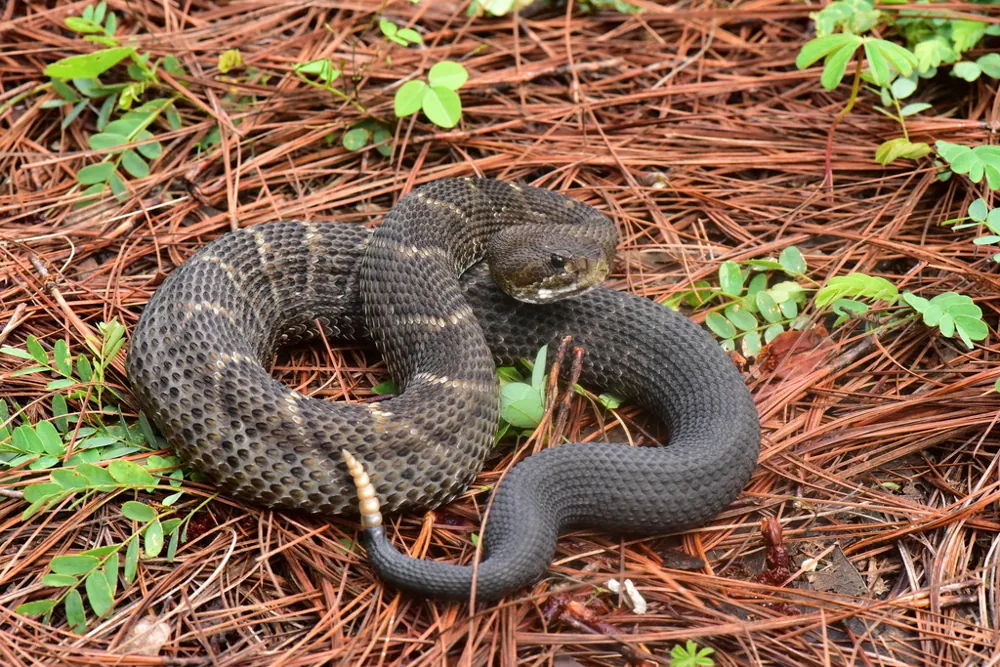
The Mexican west coast rattlesnake is a large venomous pit viper. It lives on the coastal plain of western Mexico. It is one of the largest rattlesnakes in the world, so its size and its strong venom make it one to respect.1

 Tsela ya go e lemoga
- Brown or grey body with 26 to 41 dark, diamond-shaped blotches that have light edges.1
- Within its range, it is the only rattlesnake with diamond-shaped markings on its back.1
- Head is a uniform greyish-brown, with lighter lip scales and a dark bar behind each eye.1
- Young snakes are mostly red, and adults become olive green.1
- Body is moderately stout and rather rectangular in cross section.1
Gantsi e tlhakanngwa le: It often lives in the same areas as C. molossus, and the two hybridise freely. The two species are easy to tell apart, but hybrid snakes are hard to identify.1
Maatla a botlhole
Botlhole bo tswa ka meno a yone fa e loma.
Botlhole jo e bo tsenyang bo dira eng?
Its venom is highly toxic and is produced in large amounts. The venom contains proteases, which are enzymes that break down proteins. In some populations, it may also contain a component related to Mojave toxin.1
E kotsi go le kae go batho?
Kotsi go batho: E kotsi thataE ka bolaya motho yo o sa alafiweng.Large specimens should be regarded as very dangerous. An average venom yield of 297 mg of dried venom has been recorded.1
 Dikgang tse di molemo: dingaka di na le molemo (antivenom) kgotsa kalafi ya se.1
 Fa e loma
- Dira gore motho a nne a sa tshikinyege a ritibetse, tshegetsa setho se se lomilweng mo boemong jwa pelo, tlosa direng le dilo tse di tiileng, mme o mo ise bookelong ka bonako.
Ka gale leletsa nomoro ya gago ya tshoganyetso pele (112, 000, 911). Se ke kaelo e e akaretsang ya thuso ya ntlha, ga se kgakololo ya bongaka. Motheo wa thuso ya ntlha
 Nna o babalesegile
- O se ka wa ama, wa tshwara kgotsa wa tshwenya phologolo ya naga, le fa e le e nnye, le fa e lebega e robetse kgotsa e sule.
- E fe sebaka. Fa o kopana le yone, ritibala, boela morago ka bonya mme o e tlogele e tsamaye ka tsela ya yone.
- Fa e nngwe e go loma: ritibala, o se ka wa tshikinyega, leletsa nomoro ya gago ya tshoganyetso (112, 000, 911) kgotsa o ye bookelong ka bonako. Gopola gore e ne e lebega jang, setshwantsho se a thusa.
Ga e go batle. E dirisa botlhole jwa yone go tshwara dijo kgotsa go itshireletsa, mme e rata go iphitlha go feta. Go le gontsi ka go nna o babalesegile
Kae mo lefatsheng?
E kgolo go le kae?
E telele go le kae?
E kima go le kae?
 boleele jo bo lekanang le dikatse tsa ntlo di le 4 go tloga kwa nkong go ya mogatleng
 boleele jo bo lekanang le dipanana di le 11 di latelana
 e ka taboga dimetara di le 100 ka metsotswana e le 86 (motho yo o bonako go gaisa o tlhoka 9,6)
Mexican west coast rattlesnake e kgolo go le kae fa e bapisiwa le WENA?
Ke dipalo fela mo sefetleng sa gago (browser). Ga go sepe se se bolokwang kgotsa se se romelwang gope.
E bonako go le kae?


Dintlha
It is one of the largest rattlesnake species, and specimens over 150 cm are not uncommon.1
Young snakes are red, and they turn olive green as they grow into adults.1
Its scientific name comes from the Greek word for king, a nod to its size and strong venom.1
It hybridises freely with C. molossus where their ranges overlap.1
Kwa dintlha di tswang teng
- Crotalus basiliscus (Wikipedia (CC BY-SA 4.0))
- Crotalus basiliscus (iNaturalist): maina le thulaganyo ya mefuta.
- Venom Wiki: seelo sa kotsi, bogolo jo bo tlwaelegileng le kakanyo ya lebelo ke tsa rona. Bona kafa re di balang ka teng: Kafa re lekanyang kotsi ka teng.
Ntlha nngwe le nngwe mo tsebeng e e na le nomoro e e supang motswedi wa yone. Fa re dirile phoso, maitshwarelo, re barati ba diphologolo, e seng kgatiso ya saense. Re bolelele kwa [email protected] mme re tla e baakanya.
 Phepheng e tshwerwe ke tlala! Venom Wiki ke porojeke ya motho a le mongwe: ke mahala, ga e na dipapatso le ditraka. Mpho e nnye e thusa go e tshegetsa mo inthaneteng.Fepa phepheng
Tse dingwe tsa setlhopha se se tshwanang: Dinoga tsa rathele
 Eastern diamondback rattlesnakeDinoga tsa ratheleE ka bolaya
 Timber rattlesnakeDinoga tsa ratheleE ka bolaya
 Western diamondback rattlesnakeDinoga tsa ratheleE ka bolaya
 SidewinderDinoga tsa ratheleE tlhoka ngaka
 Mojave rattlesnakeDinoga tsa ratheleE ka bolaya
 Aruba rattlesnakeDinoga tsa ratheleE tlhoka ngaka
E tshela gape kwa: Amerika Bokone
 TerciopeloDivaepara tsa mesima (pit vipers)E a bolaya
 Eastern coral snakeDinoga tsa khoraleE ka bolaya
 Eyelash viperDivaepara tsa mesima (pit vipers)E ka bolaya
 Arizona bark scorpionDiphephengE tlhoka ngaka
 Brown recluseDigokgoE tlhoka ngaka
 Cane toadDigwagwa tsa botlhole, digwagwa tse dingwe le dinewtE tlhoka ngakaO se ka wa ama