
 Aforika
 Asia
Asia Yuropa
 Amerika Borwa
 Australia le Oceania
 Antarctica
 Lewatle la Pacific
 Lewatle la Atlantic
 Lewatle la India
 Lewatle la Arctic
 Lewatle la Mediterranean
 Lewatle le Lehibidu
 Lewatle la Caribbean
 Lewatle la Coral
 Lewatle la China Borwa
 Lewatle la Philippines
 Lewatle la Andaman
 Lewatle la Bokone
 Lewatle la Timor le la Arafura
 Kou ya Bengal
 Gulf ya California
Tiger rattlesnake
 Go loma
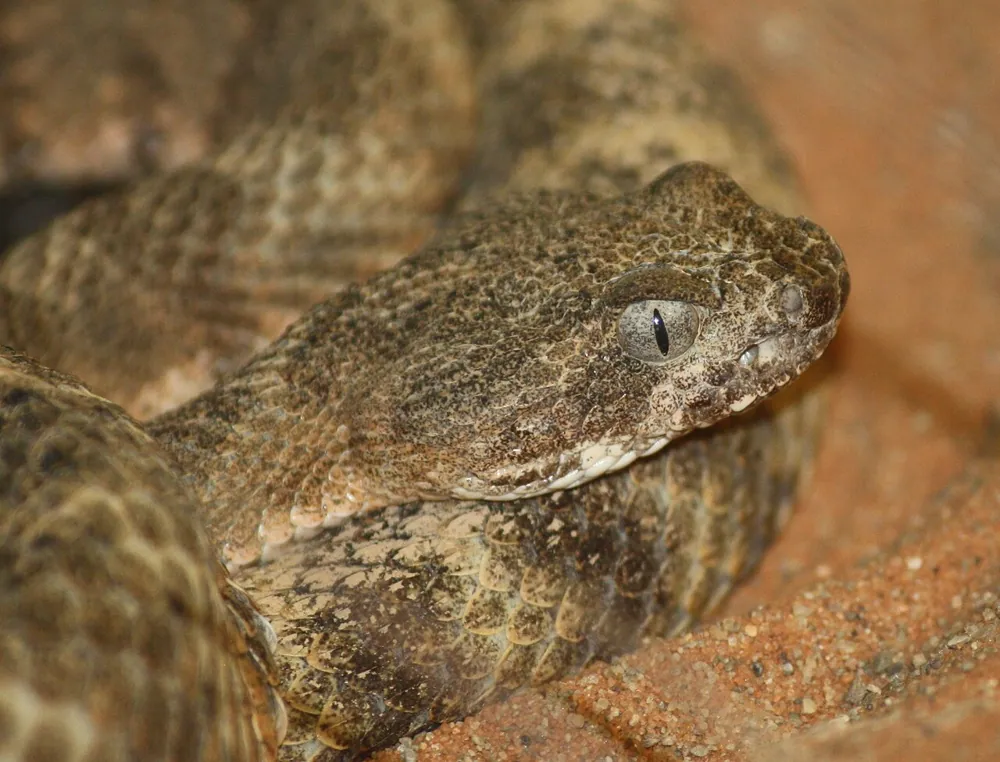
The tiger rattlesnake is a small rattlesnake with a very venomous bite. It lives in the deserts and rocky hills of the southwestern United States and northwestern Mexico. Its venom is among the most toxic of any rattlesnake, so it is important to recognise it and give the right first aid after a bite.1



 Tsela ya go e lemoga
- It has a small, spade-shaped head. It is the smallest head of any rattlesnake, and it is about 1/25 of its total body length.1
- It has 35 to 52 narrow gray, olive or brown crossbands along the back. These are the only crossbands on the front part of a rattlesnake's body, and they can look like vertical stripes from the side.1
- The ground colour is gray, lavender, blue-gray, pink or buff, and it often turns pink, pale orange or cream on the sides.1
- A dark cheek strip is the most distinct mark on the head.1
- It has a large rattle.1
Maatla a botlhole
Botlhole bo tswa ka meno a yone fa e loma.
Botlhole jo e bo tsenyang bo dira eng?
Its venom contains a myotoxin, which damages muscle tissue and can cause muscle necrosis (death of muscle cells). It also contains a neurotoxin, which attacks the nerves and is similar to Mojave toxin. In recorded human bites, there was little local pain or swelling, and no significant whole-body (systemic) symptoms.1
E kotsi go le kae go batho?
Kotsi go batho: E masisiGo lomiwa ke yone go tlhoka ngaka. Go swa go seoka thata.Human bites by this snake are infrequent, and few cases have been recorded. Its venom is very toxic, but its low venom yield and short fangs probably prevent severe envenoming in adults. The clinical picture could be much more serious for children or for people of slight build.1
 Dikgang tse di molemo: dingaka di na le molemo (antivenom) kgotsa kalafi ya se.1
E dira eng fa e tshogile?
If disturbed, it rapidly shakes its rattle and may strike in defence, and it has an irascible (easily angered) temperament.1
 Fa e loma
- Early use of antivenom is important if significant envenoming is suspected. Get medical help straight away after any bite, even if the bite seems mild.1
- Dira gore motho a nne a sa tshikinyege a ritibetse, tshegetsa setho se se lomilweng mo boemong jwa pelo, tlosa direng le dilo tse di tiileng, mme o mo ise bookelong ka bonako.
Ka gale leletsa nomoro ya gago ya tshoganyetso pele (112, 000, 911). Se ke kaelo e e akaretsang ya thuso ya ntlha, ga se kgakololo ya bongaka. Motheo wa thuso ya ntlha
 Nna o babalesegile
- O se ka wa ama, wa tshwara kgotsa wa tshwenya phologolo ya naga, le fa e le e nnye, le fa e lebega e robetse kgotsa e sule.
- E fe sebaka. Fa o kopana le yone, ritibala, boela morago ka bonya mme o e tlogele e tsamaye ka tsela ya yone.
- Fa e nngwe e go loma: ritibala, o se ka wa tshikinyega, leletsa nomoro ya gago ya tshoganyetso (112, 000, 911) kgotsa o ye bookelong ka bonako. Gopola gore e ne e lebega jang, setshwantsho se a thusa.
Ga e go batle. E dirisa botlhole jwa yone go tshwara dijo kgotsa go itshireletsa, mme e rata go iphitlha go feta. Go le gontsi ka go nna o babalesegile
Kae mo lefatsheng?
E kgolo go le kae?
E telele go le kae?
E kima go le kae?
 boleele jo bo lekanang le dikatse tsa ntlo di le 2 go tloga kwa nkong go ya mogatleng
 boleele jo bo lekanang le dipanana di le 5 di latelana
 e ka taboga dimetara di le 100 ka metsotswana e le 100 (motho yo o bonako go gaisa o tlhoka 9,6)
Tiger rattlesnake e kgolo go le kae fa e bapisiwa le WENA?
Ke dipalo fela mo sefetleng sa gago (browser). Ga go sepe se se bolokwang kgotsa se se romelwang gope.
E bonako go le kae?


Dintlha
Its venom yield is small, but its toxicity is considered second highest of all rattlesnake venoms, after the Mojave rattlesnake.1
It has the smallest head of any rattlesnake, which helps it reach into small crevices to pull out prey that has crawled into them.1
Although it is a ground-dweller, it swims readily and has been found in bushes about 60 cm above the ground.1
Rattlesnake venom is used in biomedical research into neurological diseases.1
It is nocturnal during the hot summer, but becomes active during the day and at dusk in the autumn.1
Mosenyi wa ditlhamane
Tlhamane: Its small head and short fangs mean its bite is harmless.
Nnete: Its venom is very toxic. Its small size and low venom yield probably prevent severe harm in adults, but children and slightly built people could be seriously affected.1
Ya baitseanape ba botlhole
- Leina la saense
- Crotalus tigris
- Setlhopha
- Dinoga tsa rathele
- Lelapa
- Viperidae2
- Lekoko
- Squamata
- Dikontinente
- Amerika Bokone
- Masea
- It gives birth to live young, with an average litter of five. The young develop inside eggs in a thin sac in the mother's body, and they are well developed at birth.1
- Seemo sa yone kwa nageng
- Least Concern1
- Kotsi go batho
- 3 / 5: E masisi3
Kwa dintlha di tswang teng
- Tiger rattlesnake (Wikipedia (CC BY-SA 4.0))
- Crotalus tigris (iNaturalist): maina le thulaganyo ya mefuta.
- Venom Wiki: seelo sa kotsi, bogolo jo bo tlwaelegileng le kakanyo ya lebelo ke tsa rona. Bona kafa re di balang ka teng: Kafa re lekanyang kotsi ka teng.
Ntlha nngwe le nngwe mo tsebeng e e na le nomoro e e supang motswedi wa yone. Fa re dirile phoso, maitshwarelo, re barati ba diphologolo, e seng kgatiso ya saense. Re bolelele kwa [email protected] mme re tla e baakanya.
 Phepheng e tshwerwe ke tlala! Venom Wiki ke porojeke ya motho a le mongwe: ke mahala, ga e na dipapatso le ditraka. Mpho e nnye e thusa go e tshegetsa mo inthaneteng.Fepa phepheng
Tse dingwe tsa setlhopha se se tshwanang: Dinoga tsa rathele
 Eastern diamondback rattlesnakeDinoga tsa ratheleE ka bolaya
 Timber rattlesnakeDinoga tsa ratheleE ka bolaya
 Western diamondback rattlesnakeDinoga tsa ratheleE ka bolaya
 SidewinderDinoga tsa ratheleE tlhoka ngaka
 Mojave rattlesnakeDinoga tsa ratheleE ka bolaya
 Aruba rattlesnakeDinoga tsa ratheleE tlhoka ngaka
E tshela gape kwa: Amerika Bokone
 TerciopeloDivaepara tsa mesima (pit vipers)E a bolaya
 Eastern coral snakeDinoga tsa khoraleE ka bolaya
 Eyelash viperDivaepara tsa mesima (pit vipers)E ka bolaya
 Arizona bark scorpionDiphephengE tlhoka ngaka
 Brown recluseDigokgoE tlhoka ngaka
 Cane toadDigwagwa tsa botlhole, digwagwa tse dingwe le dinewtE tlhoka ngakaO se ka wa ama