
 Afrika
 Osiyo
Osiyo Yevropa
 Janubiy Amerika
 Avstraliya va Okeaniya
 Antarktida
 Tinch okeani
 Atlantika okeani
 Hind okeani
 Shimoliy Muz okeani
 Oʻrta yer dengizi
 Qizil dengiz
 Karib dengizi
 Marjon dengizi
 Janubiy Xitoy dengizi
 Filippin dengizi
 Andaman dengizi
 Shimoliy dengiz
 Timor va Arafura dengizi
 Bengal koʻrfazi
 Kaliforniya koʻrfazi
Mamushi
 Chaqadi
The mamushi is a pit viper, a type of snake that has heat-sensing pits between its eyes and nostrils. It lives in Japan, in places such as swamps, meadows and farmland. It matters because its bite is one of the most dangerous of Japan's snakes.1



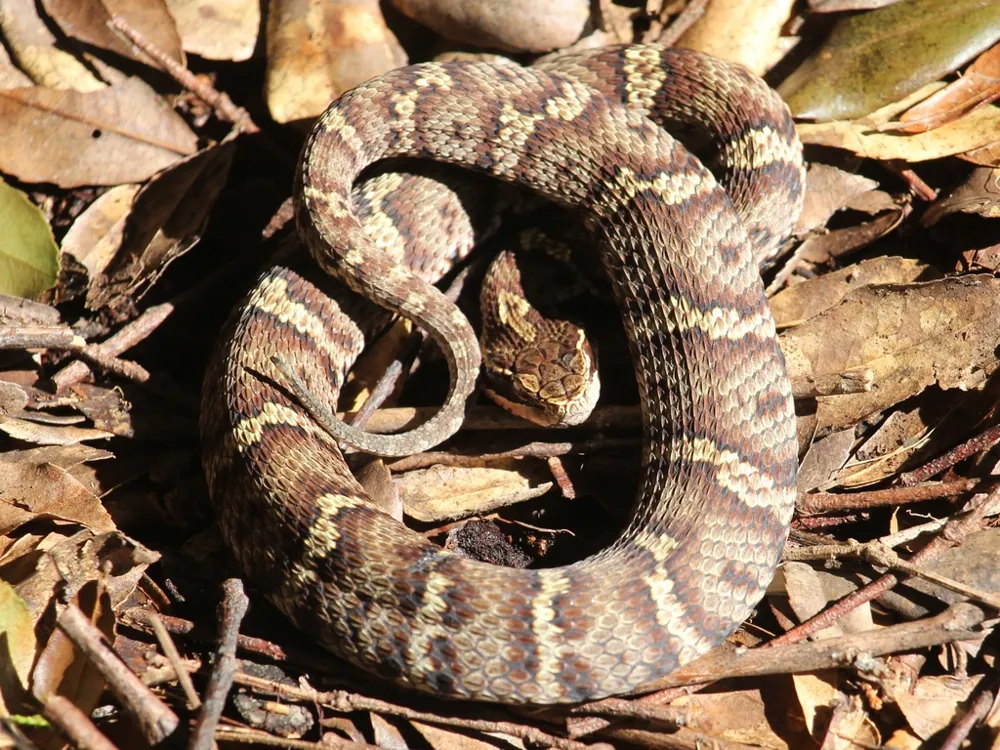
 Uni qanday tanish mumkin
- Background colour is pale grey, reddish-brown or yellow-brown.1
- A series of irregular blotches runs along the body. Each blotch has a black border and often a lighter centre.1
- The head is dark brown or black, with beige or pale-grey sides.1
- Adults are typically 45 to 81 cm long.1
- It has excellent camouflage and often hides among plants or leaf litter.1
Koʻpincha adashtiriladi: It is similar to the cottonmouths and copperheads (Agkistrodon) of the Americas, and it was long considered part of the same group.1
Zahar quvvati
Chaqqanda zahar zaharli tishlari yoki tishlari orqali chiqadi.
Uning zahari (chaqsa yoki nish ursa) nima qiladi?
Its venom is mostly haemolytic, meaning it breaks down red blood cells. It also contains two neurotoxins, which attack the nerves, and an anticoagulant, which stops blood from clotting. Reported effects include kidney failure, visual disturbances and palsy (paralysis).1
Odamlar uchun qanchalik xavfli?
Odamlar uchun xavf: Juda xavfliDavolanmagan odamni oʻldirishi mumkin.About 2000 to 3000 people in Japan are bitten by a mamushi each year. Approximately 10 die annually. Severe bites require intensive care, and typical bite victims need about one week of hospital treatment.1
 Yaxshi xabar: shifokorlarda buning uchun dori (zaharga qarshi zardob) yoki davolash usuli bor.1
 Agar chaqsa
- Treatment is given in hospital. It involves cutting the wound to remove venom and injecting mamushi antivenom. Pregnant women who are bitten have had miscarriages, so medical care is essential.1
- Odamni qimirlamay va xotirjam tut, chaqilgan qoʻl yoki oyoqni yurak balandligida ushla, uzuk va siquvchi narsalarni yechib ol va tezda kasalxonaga olib bor.
Har doim avval favqulodda yordam raqamiga qoʻngʻiroq qil (112, 000, 911). Bu birinchi yordam boʻyicha umumiy maslahat, tibbiy maslahat emas. Birinchi yordam asoslari
 Xavfsiz boʻl
- Hech qachon yovvoyi hayvonga tegma, uni tutma yoki jigʻiga tegma, hatto kichkina boʻlsa ham va hatto uxlayotgan yoki oʻlik koʻrinsa ham.
- Unga joy ber. Agar duch kelsang, xotirjam boʻl, sekin orqaga chekin va uni oʻz yoʻliga ketishiga qoʻy.
- Agar biri seni chaqsa: xotirjam boʻl, qimirlamay tur, favqulodda yordam raqamiga qoʻngʻiroq qil (112, 000, 911) yoki tezda kasalxonaga yet. U qanday koʻrinishda ekanini eslab qol, surat yordam beradi.
U seni ovlamoqchi emas. Zaharini ovqat tutish yoki oʻzini himoya qilish uchun ishlatadi va yashirinishni ancha afzal koʻradi. Xavfsiz qolish haqida batafsil
Dunyoning qayerida?
U qanchalik katta?
U qanchalik uzun?
 burnidan dumigacha tizilgan 1,5 ta uy mushugidek uzun
 ketma-ket qoʻyilgan 5 ta banandek uzun
 100 metrni 110 soniyada bosib oʻtishi mumkin (eng tez odamga 9,6 soniya kerak)
Mamushi SEN bilan solishtirganda qanchalik katta?
Faqat brauzeringdagi hisob-kitob. Hech narsa saqlanmaydi va hech qayerga yuborilmaydi.
U qanchalik tez?


Faktlar
Recovery takes a long time. Bite victims may need several months to fully recover, even after hospital treatment and weeks of follow-up care.1
It is highly resistant to its own venom because its blood contains neutralising factors, including phospholipase A2 (PLA2) inhibitors.1
Its beta-toxin acts before the nerve junction, so anticholinesterase drugs cannot block or treat its effects.1
Its venom contains a peptide called ablomin, which is very similar in amino acid sequence to helothermine, a venom peptide of the Mexican beaded lizard.1
It is considered one of the most venomous snakes in Japan, along with the yamakagashi and the Okinawan habu.1
Its venom varies very little across Japan in either potency or effects.1
Faktlar qayerdan olingan
- Mamushi (Wikipedia (CC BY-SA 4.0))
- Gloydius blomhoffii (iNaturalist): nomlar va tasnif.
- Venom Wiki: xavf darajasi, odatiy oʻlcham va taxminiy tezlik bizning oʻz baholarimiz. Ularni qanday hisoblashimizni koʻr: Xavfni qanday baholaymiz.
Bu sahifadagi har bir faktning manbasiga ishora qiluvchi raqami bor. Agar biror narsani xato yozgan boʻlsak, kechir, biz hayvon ixlosmandlarimiz, ilmiy jurnal emas. [email protected] manziliga yoz, tuzatamiz.
 Chayon och! Venom Wiki bir kishining loyihasi: bepul, reklamasiz va kuzatuvchilarsiz. Kichik xayriya uni internetda saqlab qolishga yordam beradi.Chayonni boq
Shu guruhdan yana: Chuqurboshli ilonlar
 Brown spotted pit viperChuqurboshli ilonlarOʻldirishi mumkin
 HabuChuqurboshli ilonlarOʻldirishi mumkin
 Hump-nosed viperChuqurboshli ilonlarOʻldirishi mumkin
 Hundred-pace viperChuqurboshli ilonlarOʻldirishi mumkin
 Malayan pit viperChuqurboshli ilonlarOʻldirishi mumkin
 Mangshan pit viperChuqurboshli ilonlarOʻldirishi mumkin
 Deathstalker
 Indian cobra
 Indian saw-scaled viper
 King cobra
 Puff adder
 Rassel qora iloni