
 Afrika
 Osiyo
Osiyo Yevropa
 Janubiy Amerika
 Avstraliya va Okeaniya
 Antarktida
 Tinch okeani
 Atlantika okeani
 Hind okeani
 Shimoliy Muz okeani
 Oʻrta yer dengizi
 Qizil dengiz
 Karib dengizi
 Marjon dengizi
 Janubiy Xitoy dengizi
 Filippin dengizi
 Andaman dengizi
 Shimoliy dengiz
 Timor va Arafura dengizi
 Bengal koʻrfazi
 Kaliforniya koʻrfazi
Moses sole
 Terisida zaharOvqati: GoʻshtTegish yoki yeyish xavfli, lekin chaqmaydi va nish urmaydi
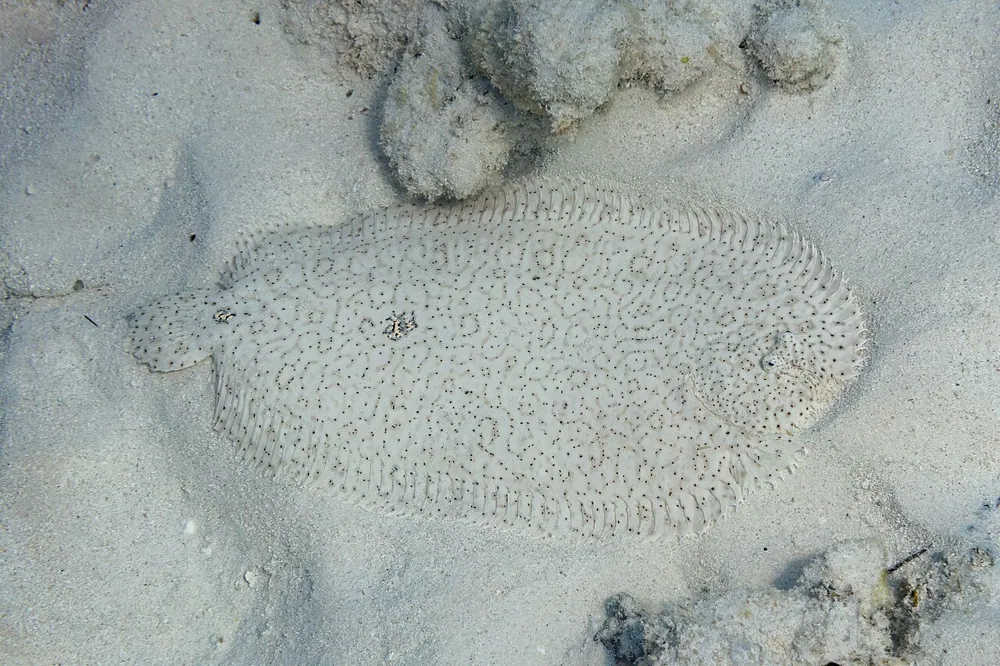
The Moses sole is a flatfish that lives in shallow coastal waters of the western Indian Ocean, from the Red Sea to Sri Lanka and along the east coast of Africa. It hides on the seabed and gives off a milky toxin from its fins to deter predators, including sharks.1
 Uni qanday tanish mumkin
- Colour is variable, often whitish, pale brown or pale grey, with irregular dark brown ring-shaped markings1
- Many dark brown spots cover the head, body and fins1
- Normally two brown dots containing yellow flecks sit along the lateral line1
- Adults have a highly compressed, flat-sided body, with both eyes on the right side of the head1
- The rounded tail fin is not joined to the dorsal or cloacal fin1
Koʻpincha adashtiriladi: Mimic octopuses copy the finless sole by adapting their shape, colour and texture. They can also mimic venomous sea snakes and fish.1
Zahar kuchi
Uning terisi zaharli. Unga tegish, uni yalash yoki yeyish xavfli.
Uning zahari (tegsa yoki yesa) nima qiladi?
The finless sole releases a milky toxin called an ichthyotoxin from the base of its dorsal and cloacal fins. The main toxin, pardaxin, damages cell membranes so that cells leak their contents. It irritates the sensitive gills of predator fish.1
Odamlar uchun qanchalik xavfli?
Odamlar uchun xavf: YengilAri nishidek yoki undan ham kam. Odamlar uchun deyarli zararsiz.It is caught for food and sold fresh, even though its skin secretion is poisonous.1
Qoʻrqqanda nima qiladi?
When threatened, it releases its toxic milky secretion from its fins, and its colour helps it blend in with sandy or pebbled seabeds.1
 Agar kimdir unga tegsa yoki uni yesa
- Agar kimdir uni yegan boʻlsa yoki yegandan keyin belgilar paydo boʻlsa: darhol favqulodda yordam raqamiga yoki zaharlanish markaziga qoʻngʻiroq qil.
Har doim avval favqulodda yordam raqamiga qoʻngʻiroq qil (112, 000, 911). Bu birinchi yordam boʻyicha umumiy maslahat, tibbiy maslahat emas. Birinchi yordam asoslari
 Xavfsiz boʻl
- Hech qachon yovvoyi hayvonga tegma, uni tutma yoki jigʻiga tegma, hatto kichkina boʻlsa ham va hatto uxlayotgan yoki oʻlik koʻrinsa ham.
- Unga joy ber. Agar duch kelsang, xotirjam boʻl, sekin orqaga chekin va uni oʻz yoʻliga ketishiga qoʻy.
- Agar unga tekkan yoki uni yegan boʻlsang: koʻzing yoki ogʻzingni ishqalama, qoʻllaringni yuv va tibbiy yordam ol.
U seni ovlamoqchi emas. Uning zahari faqat uni hech kim yemasligi uchun bor. Xavfsiz qolish haqida batafsil
Dunyoning qayerida?
U qanchalik katta?
U qanchalik uzun?
 qator terilgan 6 ta oʻyinchoq gʻishtdek uzun
Moses sole SEN bilan solishtirganda qanchalik katta?
Faqat brauzeringdagi hisob-kitob. Hech narsa saqlanmaydi va hech qayerga yuborilmaydi.
U qanchalik tez?


,_Zanz%C3%ADbar,_Tanzania,_2024-05-31,_DD_32.jpg)
Faktlar
One of its toxins, pardaxin-1, is 5 to 10 times more toxic than pardaxin-2 and has unusual shark-repelling properties.1
Its toxin, pardaxin, is used by the fish as a defence against sharks.1
Mimic octopuses copy its shape, colour and texture, and can also copy venomous sea snakes and fish.1
Juveniles have one eye on each side of the head, but as they mature the left eye moves to the right side.1
Eugenie Clark carried out much of the early research on this species.1
Faktlar qayerdan olingan
- Pardachirus marmoratus (Wikipedia (CC BY-SA 4.0))
- Pardachirus marmoratus (iNaturalist): nomlar va tasnif.
- Venom Wiki: xavf darajasi, odatiy oʻlcham va taxminiy tezlik bizning oʻz baholarimiz. Ularni qanday hisoblashimizni koʻr: Xavfni qanday baholaymiz.
Bu sahifadagi har bir faktning manbasiga ishora qiluvchi raqami bor. Agar biror narsani xato yozgan boʻlsak, kechir, biz hayvon ixlosmandlarimiz, ilmiy jurnal emas. [email protected] manziliga yoz, tuzatamiz.
 Chayon och! Venom Wiki bir kishining loyihasi: bepul, reklamasiz va kuzatuvchilarsiz. Kichik xayriya uni internetda saqlab qolishga yordam beradi.Chayonni boq
Shu guruhdan yana: Boshqa zaharli hayvonlar (tegish yoki yeyish xavfli)
 Japanese pufferfishBoshqa zaharli hayvonlar (tegish yoki yeyish xavfli)Halokatli
 Hawksbill sea turtleBoshqa zaharli hayvonlar (tegish yoki yeyish xavfli)Oʻldirishi mumkin
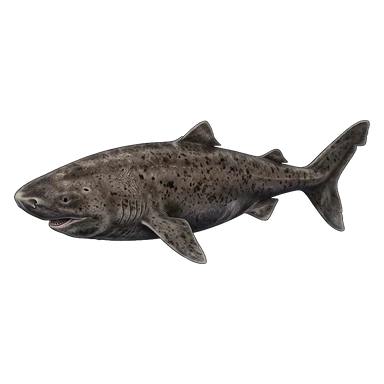 Greenland sharkBoshqa zaharli hayvonlar (tegish yoki yeyish xavfli)Faqat ogʻritadi
 Silver-cheeked toadfishBoshqa zaharli hayvonlar (tegish yoki yeyish xavfli)Halokatli
 Blackspotted pufferBoshqa zaharli hayvonlar (tegish yoki yeyish xavfli)Oʻldirishi mumkin
 White-spotted pufferBoshqa zaharli hayvonlar (tegish yoki yeyish xavfli)Oʻldirishi mumkin
Yana shu yerlarda yashaydi: Tinch okeani
 Australian box jellyfishMeduzalar va dengizdagi nish urarlarHalokatliTegma
 Geography coneKonus shilliqqurtlar va sakkizoyoqlarHalokatli
 Greater blue-ringed octopusKonus shilliqqurtlar va sakkizoyoqlarHalokatli
 Southern blue-ringed octopusKonus shilliqqurtlar va sakkizoyoqlarHalokatli
 Irukandji jellyfishMeduzalar va dengizdagi nish urarlarOʻldirishi mumkinTegma
 Reef stonefishZaharli baliqlarOʻldirishi mumkinTegma