
 Afrika
 Osiyo
Osiyo Yevropa
 Janubiy Amerika
 Avstraliya va Okeaniya
 Antarktida
 Tinch okeani
 Atlantika okeani
 Hind okeani
 Shimoliy Muz okeani
 Oʻrta yer dengizi
 Qizil dengiz
 Karib dengizi
 Marjon dengizi
 Janubiy Xitoy dengizi
 Filippin dengizi
 Andaman dengizi
 Shimoliy dengiz
 Timor va Arafura dengizi
 Bengal koʻrfazi
 Kaliforniya koʻrfazi
New Guinea small-eyed snake
 Chaqadi
The New Guinea small-eyed snake, Micropechis ikaheka, is a highly venomous snake that lives on New Guinea and nearby islands. It is the only species in its genus, and it is known for causing many deadly bites, especially on Karkar Island in Papua New Guinea. Its bites are a serious medical concern in the places where it lives.1



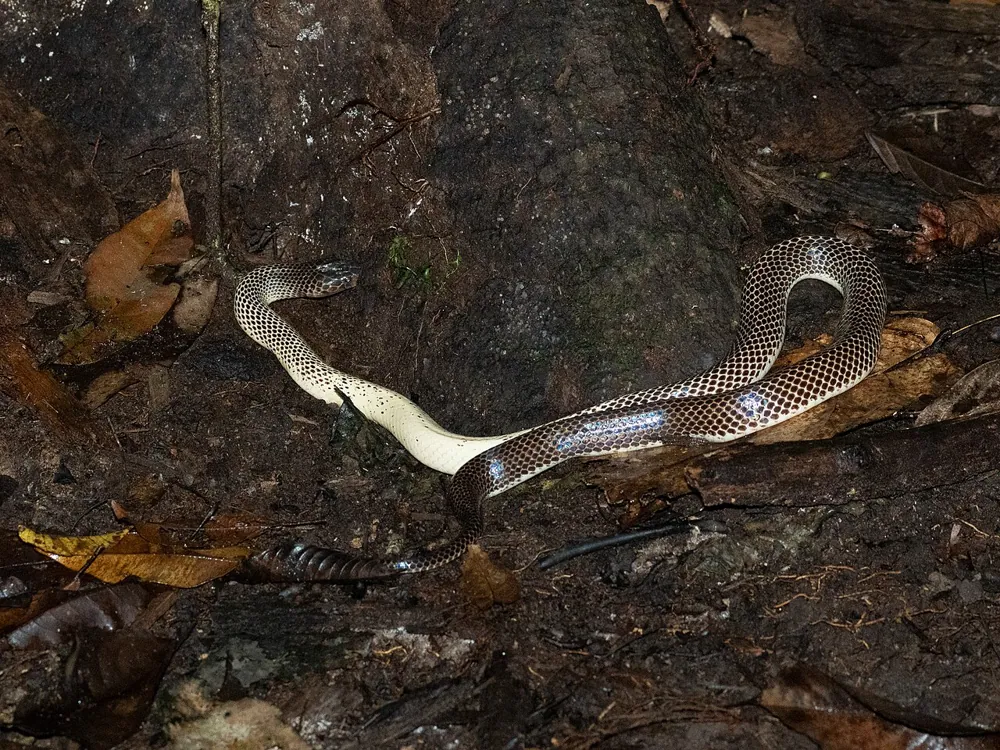
 Uni qanday tanish mumkin
Zahar quvvati
Chaqqanda zahar zaharli tishlari yoki tishlari orqali chiqadi.
Uning zahari (chaqsa yoki nish ursa) nima qiladi?
Its venom is strong enough that it is considered a dangerous snake. Common symptoms include local muscle pain and tenderness, fever, abdominal pain, vomiting, dizziness, headache, low blood pressure and spontaneous bleeding. In severe cases, the venom also affects the nerves and muscles, causing drooping eyelids, slurred speech and jaw locking, and death can result from respiratory paralysis (when the muscles used for breathing stop working).1
Odamlar uchun qanchalik xavfli?
Odamlar uchun xavf: Juda xavfliDavolanmagan odamni oʻldirishi mumkin.This snake has been linked to many fatal bites. The first proven human death occurred in 1958 in Wau, Papua New Guinea, where a young man died 36 hours after being bitten on the base of the thumb while handling the snake. It causes about 40% of snake envenomations on Karkar Island, but less than 10% on the mainland, where death adders cause most snakebites. Plantation workers are most at risk, especially when moving husk piles, cutting grass, walking on plantation tracks or harvesting cocoa beans.1
 Yaxshi xabar: shifokorlarda buning uchun dori (zaharga qarshi zardob) yoki davolash usuli bor.1
Qoʻrqqanda nima qiladi?
Although it is normally shy, it becomes highly aggressive when disturbed, for example if it is handled or stepped on, and then it strikes quickly and readily. Its bite is tenacious and chewing, and it is not easily released.1
 Agar chaqsa
- Bosim bilan harakatsizlantirish: chaqilgan joy ustidan mahkam elastik bint oʻra, keyin butun qoʻl yoki oyoq boʻylab yuqoriga oʻrab chiq, shina qoʻy va yordam kelguncha odamni butunlay qimirlatmay tut.
- Chaqilgan joyni yuvma: kasalxonada teridagi zaharni tekshirib, toʻgʻri zaharga qarshi zardobni tanlashlari mumkin.
Har doim avval favqulodda yordam raqamiga qoʻngʻiroq qil (112, 000, 911). Bu birinchi yordam boʻyicha umumiy maslahat, tibbiy maslahat emas. Birinchi yordam asoslari
 Xavfsiz boʻl
- Hech qachon yovvoyi hayvonga tegma, uni tutma yoki jigʻiga tegma, hatto kichkina boʻlsa ham va hatto uxlayotgan yoki oʻlik koʻrinsa ham.
- Unga joy ber. Agar duch kelsang, xotirjam boʻl, sekin orqaga chekin va uni oʻz yoʻliga ketishiga qoʻy.
- Agar biri seni chaqsa: xotirjam boʻl, qimirlamay tur, favqulodda yordam raqamiga qoʻngʻiroq qil (112, 000, 911) yoki tezda kasalxonaga yet. U qanday koʻrinishda ekanini eslab qol, surat yordam beradi.
U seni ovlamoqchi emas. Zaharini ovqat tutish yoki oʻzini himoya qilish uchun ishlatadi va yashirinishni ancha afzal koʻradi. Xavfsiz qolish haqida batafsil
Dunyoning qayerida?
U qanchalik katta?
U qanchalik uzun?
 burnidan dumigacha tizilgan 4 ta uy mushugidek uzun
 ketma-ket qoʻyilgan 12 ta banandek uzun
 100 metrni 46 soniyada bosib oʻtishi mumkin (eng tez odamga 9,6 soniya kerak)
New Guinea small-eyed snake SEN bilan solishtirganda qanchalik katta?
Faqat brauzeringdagi hisob-kitob. Hech narsa saqlanmaydi va hech qayerga yuborilmaydi.
U qanchalik tez?


Faktlar
A bite from this snake was linked to a human death in 1958, when a young man died 36 hours after being bitten on the thumb while handling it.1
It is cannibalistic, and it also hunts rodents, lizards and other snakes.1
On Karkar Island, where it is common, it is called the "white snake" because of its pale colouring.1
Its name, ikaheca, means "land eel" in a local West Papuan language.1
Afsonalarni fosh qiluvchi
Afsona: A dead snake is harmless and cannot bite.
Haqiqat: A villager was bitten on the thumb by a snake he had reportedly killed, possibly because of a reflex action after death. Dead snakes can still bite, so they should be handled with care.1
Zahar mutaxassislari uchun
Faktlar qayerdan olingan
- Micropechis (Wikipedia (CC BY-SA 4.0))
- Micropechis ikaheka (iNaturalist): nomlar va tasnif.
- Venom Wiki: xavf darajasi, odatiy oʻlcham va taxminiy tezlik bizning oʻz baholarimiz. Ularni qanday hisoblashimizni koʻr: Xavfni qanday baholaymiz.
Bu sahifadagi har bir faktning manbasiga ishora qiluvchi raqami bor. Agar biror narsani xato yozgan boʻlsak, kechir, biz hayvon ixlosmandlarimiz, ilmiy jurnal emas. [email protected] manziliga yoz, tuzatamiz.
 Chayon och! Venom Wiki bir kishining loyihasi: bepul, reklamasiz va kuzatuvchilarsiz. Kichik xayriya uni internetda saqlab qolishga yordam beradi.Chayonni boq
Shu guruhdan yana: Avstraliya ilonlari
 Coastal taipan
 Common death adder
 Eastern brown snake
 Ichki taypan
 Yo'lbars ilon
 Collett's snake
Yana shu yerlarda yashaydi: Avstraliya va Okeaniya
 Sydney funnel-web spiderTarantullar va voronka toʻrli oʻrgimchaklarHalokatli
 Redback spiderOʻrgimchaklarShifokor kerak
 Brown tree snakeOrqa tishli ilonlarFaqat ogʻritadi
 Hooded pitohuiBoshqa zaharli hayvonlar (tegish yoki yeyish xavfli)Faqat ogʻritadiTegma
 PlatypusZaharli sutemizuvchilarFaqat ogʻritadi
 Northern tree-dwelling funnel-web spiderTarantullar va voronka toʻrli oʻrgimchaklarHalokatli