
 Afrika
 Osiyo
Osiyo Yevropa
 Janubiy Amerika
 Avstraliya va Okeaniya
 Antarktida
 Tinch okeani
 Atlantika okeani
 Hind okeani
 Shimoliy Muz okeani
 Oʻrta yer dengizi
 Qizil dengiz
 Karib dengizi
 Marjon dengizi
 Janubiy Xitoy dengizi
 Filippin dengizi
 Andaman dengizi
 Shimoliy dengiz
 Timor va Arafura dengizi
 Bengal koʻrfazi
 Kaliforniya koʻrfazi
Pine processionary
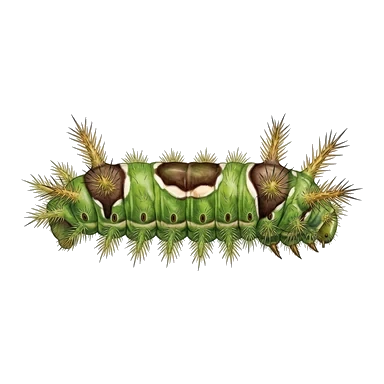 Achishtiruvchi tuklar
The pine processionary is a moth whose caterpillars are famous for marching in long, nose-to-tail lines through pine woods. Their hairs cause painful rashes and eye irritation, and they can strip the needles from whole trees. It lives around the Mediterranean and is spreading north.1
 Uni qanday tanish mumkin
- Caterpillars are orange-brown and hairy, with blue bands.1
- Large silken nests in pine trees, often with several in one tree and signs of stripped needles.1
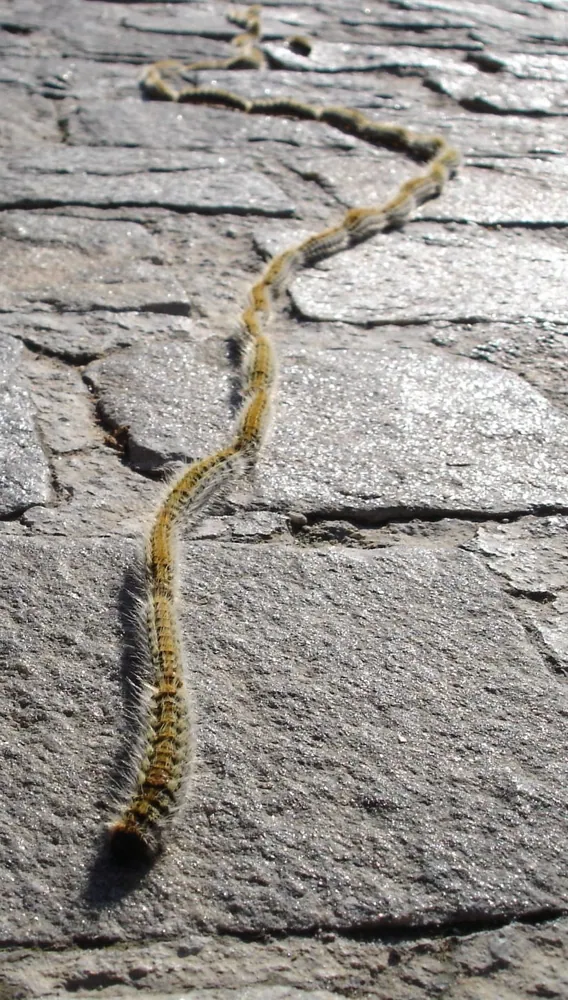
- Caterpillars move in single-file processions, usually at night and when leaving the tree to pupate.1
- Adults have predominantly light brown forewings with brown markings and white hindwings.1
- Adult males have a crescent marking on the wings and are larger than the oak processionary.1
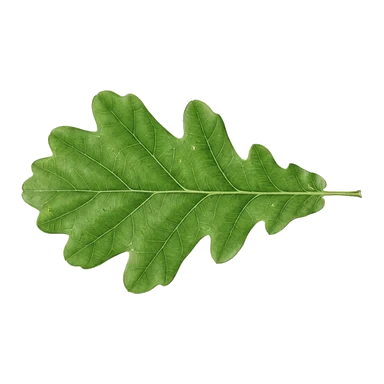
Koʻpincha adashtiriladi: The oak processionary (Thaumetopoea processionea) is smaller as an adult, has an indistinct wing marking rather than a crescent, and lives in broad-leaved rather than coniferous forests. The pale eggar moth has no crescent marking on its wings.1
Zahar quvvati
Mitti tuklar yoki qillar teriga kirib sinadi va achishtiradi.
Uning zahari (chaqsa yoki nish ursa) nima qiladi?
The species is not venomous. Its caterpillars have hairs containing an irritant chemical called thaumetopoein, which causes skin rashes (urticaria) and eye irritation on contact. Some people may have an allergic reaction. The hairs of fifth-stage larvae can also break off and spread across nearby exposed skin.1
Odamlar uchun qanchalik xavfli?
Odamlar uchun xavf: OgʻriqliJuda ogʻritishi mumkin, lekin deyarli hech qachon jiddiy emas.Simple contact with the caterpillar hairs can cause severe rashes and eye irritation in humans and other mammals. Some individuals may have an allergic reaction.1
Qoʻrqqanda nima qiladi?
When stressed or threatened, fifth-stage caterpillars eject harpoon-shaped hairs that irritate any exposed skin nearby.1
 Agar tuklariga tegsang
- Nish uradigan qurt tuklari uchun: ularni yopishqoq lenta bilan olib tashla, keyin terini yuv. Ishqalama.
- Chaqishda: yuv va sovut. Agar odam oʻzini yomon his qilsa yoki qoni oson oqsa, tibbiy yordam ol.
Har doim avval favqulodda yordam raqamiga qoʻngʻiroq qil (112, 000, 911). Bu birinchi yordam boʻyicha umumiy maslahat, tibbiy maslahat emas. Birinchi yordam asoslari
 Xavfsiz boʻl
- Hech qachon yovvoyi hayvonga tegma, uni tutma yoki jigʻiga tegma, hatto kichkina boʻlsa ham va hatto uxlayotgan yoki oʻlik koʻrinsa ham.
- Unga joy ber. Agar duch kelsang, xotirjam boʻl, sekin orqaga chekin va uni oʻz yoʻliga ketishiga qoʻy.
- Agar tuklariga tegsang: xotirjam boʻl, qimirlamay tur, favqulodda yordam raqamiga qoʻngʻiroq qil (112, 000, 911) yoki tezda kasalxonaga yet. U qanday koʻrinishda ekanini eslab qol, surat yordam beradi.
U seni ovlamoqchi emas. Zaharini ovqat tutish yoki oʻzini himoya qilish uchun ishlatadi va yashirinishni ancha afzal koʻradi. Xavfsiz qolish haqida batafsil
Dunyoning qayerida?
U qanchalik katta?
U qanchalik uzun?
 taxminan qogʻoz qisqichday uzun
 bogʻ shilliqqurtidan sekin
Pine processionary SEN bilan solishtirganda qanchalik katta?
Faqat brauzeringdagi hisob-kitob. Hech narsa saqlanmaydi va hech qayerga yuborilmaydi.
U qanchalik tez?


Faktlar
Caterpillars in a procession hold together through touch from the caterpillar in front, which takes priority over the trail pheromone or silk.1
The caterpillars are one of the few temperate-zone insects whose larvae develop through the winter, living in silk nests high in pine trees.1
Adults live for only a single day, during which they mate and lay eggs.1
The Greek physician Dioscorides described the itching caused by this caterpillar in the 1st century AD, and Pliny the Elder recorded a treatment for it.1
Outbreaks are somewhat cyclical, with a period of 7 to 9 years.1
Afsonalarni fosh qiluvchi
Afsona: Fabre's caterpillars marched in a circle around a flower pot only because they were trapped on its rim.
Haqiqat: Young caterpillars' circular trails continue for as long as 12 hours even when they are free on a flat surface.1
Zahar mutaxassislari uchun
- Ilmiy nomi
- Thaumetopoea pityocampa
- Guruh
- Qurtlar va hasharotlar
- Oila
- Notodontidae2
- Tartib
- Lepidoptera
- Qitʼalar
- Yevropa, Afrika, Osiyo
- Chaqaloqlar
- Each female lays an enormous number of eggs near the tops of pine trees, in cylindrical egg masses 4 to 5 cm long covered with scales that mimic pine shoots.1
- Odamlar uchun xavf
- 2 / 5: Ogʻriqli3
Faktlar qayerdan olingan
- Pine processionary (Wikipedia (CC BY-SA 4.0))
- Thaumetopoea pityocampa (iNaturalist): nomlar va tasnif.
- Venom Wiki: xavf darajasi, odatiy oʻlcham va taxminiy tezlik bizning oʻz baholarimiz. Ularni qanday hisoblashimizni koʻr: Xavfni qanday baholaymiz.
Bu sahifadagi har bir faktning manbasiga ishora qiluvchi raqami bor. Agar biror narsani xato yozgan boʻlsak, kechir, biz hayvon ixlosmandlarimiz, ilmiy jurnal emas. [email protected] manziliga yoz, tuzatamiz.
 Chayon och! Venom Wiki bir kishining loyihasi: bepul, reklamasiz va kuzatuvchilarsiz. Kichik xayriya uni internetda saqlab qolishga yordam beradi.Chayonni boq
Shu guruhdan yana: Qurtlar va hasharotlar
 Oak processionaryQurtlar va hasharotlarFaqat ogʻritadiTegma
 White-spotted assassin bugQurtlar va hasharotlarFaqat ogʻritadi
 Common bombardier beetleQurtlar va hasharotlarZararsiz
 Asian giant water bugQurtlar va hasharotlarFaqat ogʻritadi
 Blue-striped nettle grubQurtlar va hasharotlarFaqat ogʻritadiTegma
 Brown-tail mothQurtlar va hasharotlarFaqat ogʻritadiTegma
Yana shu yerlarda yashaydi: Yevropa
 Common European adderGadyukasimon ilonlarShifokor kerak
 Spanish flyBoshqa zaharli hayvonlar (tegish yoki yeyish xavfli)Shifokor kerakTegma
 Common waspArilar, qovoqarilar va shershenlarFaqat ogʻritadi
 European hornetArilar, qovoqarilar va shershenlarFaqat ogʻritadi
 Fire salamanderZaharli qurbaqalar, baqalar va tritonlarFaqat ogʻritadiTegma
 Western honey beeArilar, qovoqarilar va shershenlarFaqat ogʻritadi