
 Afrig
Afrig Asi
Asi Tugal
Tugal Amerig gu Bëj-saalum
 Ostarali ak Oseyani
 Antarktig
 Mbàmbulaanu Pasifik
 Mbàmbulaanu Atlantig
 Mbàmbulaanu End
 Mbàmbulaanu Arktik
 Géeju Mediteraane
 Géej gu Xonq
 Géeju Karayib
 Géeju Koraay
 Géeju Siin gu Bëj-saalum
 Géeju Filipin
 Géeju Andaman
 Géeju Bëj-gànnaar
 Géeju Timor ak Arafura
 Golfu Bengal
 Golfu Kaliforni
Eastern bloodsucking conenose
 Dafay màtt
The eastern bloodsucking conenose is a winged insect that feeds on blood. It belongs to the group called kissing bugs and lives across North America and Latin America, especially in the southeastern United States. It matters because it can carry the parasite that causes Chagas disease.1



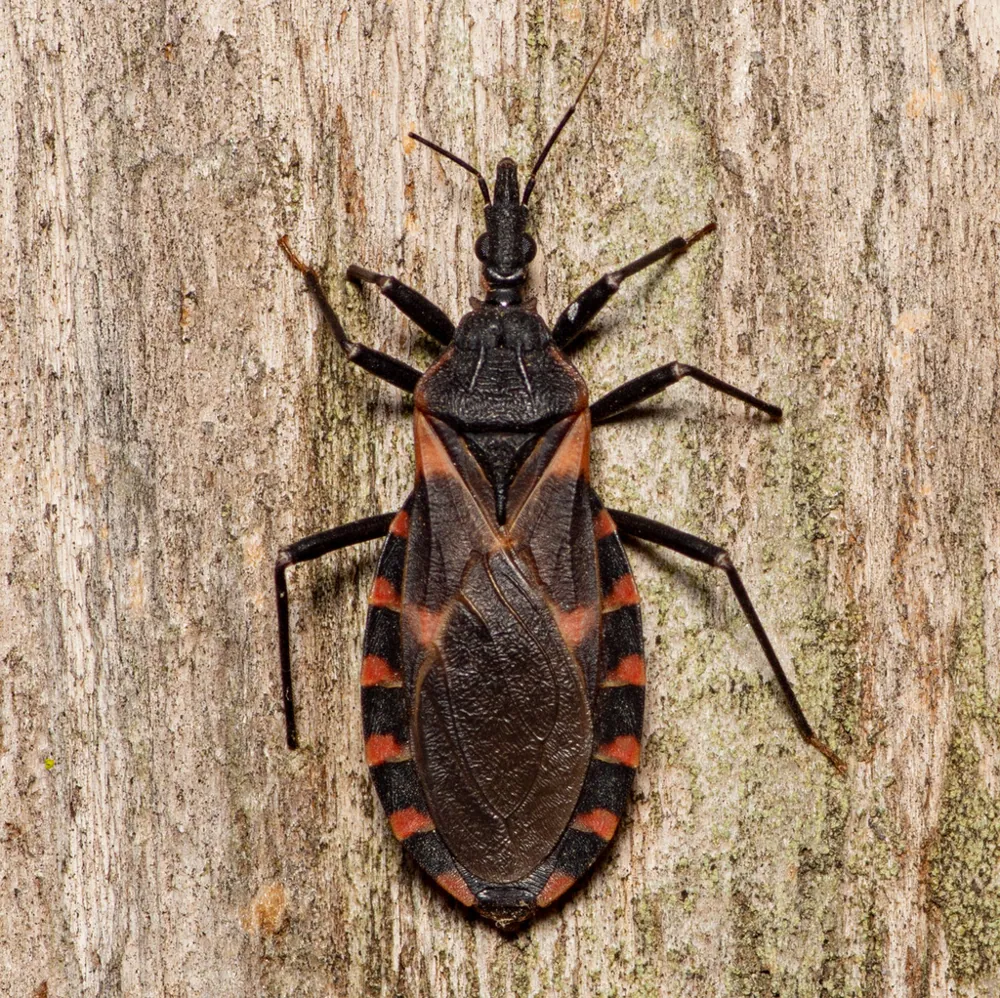
 Ni ngay ko xàmmee
Kàttanu daŋar
Daŋar bi dafay génn ci bëñam yi su màttee.
Ni mu lore nit ñi?
Musiba ci nit: Dafay mettiMën na metti lool, waaye lu bon du faral di am.Its bites are usually not particularly painful, but they are irritating. Bites can spread Trypanosoma cruzi, which causes Chagas disease. An estimated six to eight million people are currently infected, mainly in South America, with around 28,000 new cases each year. Documented cases in the United States are rare, with seven human infections from any Triatoma species reported in Texas, California, Tennessee and Louisiana.1
 Su màttee
- Ci kawaru chenille yuy jam: dindi leen ak scotch, ginnaaw gi raxas der bi. Bul ko moos.
- Ci màtt yi: raxas ko te sedal ko. Wutal ndimbal doktoor su yaramu nit ki baaxul walla deret di génn ci yomb.
Saa su nekk, woo jëkk sa nimerob urgence (112, 000, 911). Lii ay ndigal yu yaatu ci ndimbal yu jëkk la, du ndigalu doktoor. Li war a xam ci ndimbal yu jëkk
 Sàmmal sa bopp
- Bul laal mukk, bul jàpp, bul sonal ab rab bu àll, doonte bu ndaw la, te doonte dafa mel ni dafa nelaw walla dafa dee.
- May ko bérab. Su nga ko gisee, dalal, dellu ginnaaw ndànk-ndànk te bàyyi ko mu dem yoonam.
- Su benn màttee la: dalal, bul yëngu, woo sa nimerob urgence (112, 000, 911) walla dem lopitaan ci gaaw. Bul fàtte ni mu meloon, ab nataal dina dimbali.
Du la wut. Dafay jëfandikoo daŋaram ngir jàpp lu muy lekk walla ngir aar boppam, te nëbbu moo ko gën a neex. Yeneen ci ni ngay sàmme sa bopp
Ni mu réye?
Ni mu guddoo?
 guddu na lu tollu ci trombone
Eastern bloodsucking conenose ni mu réye ci wetu YOW?
Ay waññ rekk ci sa navigateur. Dara du denc te dara du yónnee fenn.
Ni mu gaawe?


Xibaar
It bites people in the face, usually around the mouth or eyes, most often while they are asleep.1
At one location in Louisiana, 40% of these bugs were found to carry Trypanosoma cruzi, and 38% of those had fed on humans.1
Annual new cases of Chagas disease fell from about 700,000 in 1990 to around 28,000 today.1
Tasukatu léeb
Xalaat bu juum: A bite from this bug directly gives you Chagas disease.
Dëgg: Infection usually happens when the bug's faeces get into the bite site, for example when a sleeping person scratches or rubs their face. This species does not defecate while feeding, which makes transmission much less likely.1
Ngir boroom xam-xam ci daŋar
- Turu xam-xam
- Triatoma sanguisuga
- Mbooloo
- Chenille ak gunóor
- Njaboot
- Reduviidae2
- Toftal
- Hemiptera
- Kontinaa yi
- Amerig gu Bëj-gànnaar
- Liir yi
- The female typically lays eggs four to six days after a blood meal, and one female may lay hundreds of eggs in her lifetime. After hatching, the young bug feeds on blood and moults eight times before it becomes an adult.1
- Musiba ci nit
- 2 / 5: Dafay metti3
Fa xibaar yi jóge
- Triatoma sanguisuga (Wikipedia (CC BY-SA 4.0))
- Triatoma sanguisuga (iNaturalist): tur ak ni ñu leen séddale.
- Venom Wiki: tolluwaayu musiba bi, réyaay bu yem bi ak xalaatu gaawaay bi, nun ñoo leen defar. Seetal ni nu leen waññe: Ni nuy natte musiba.
Xibaar bu nekk ci xët wii am na ab nimero buy won fa mu jóge. Su nu juumee, baal nu, nun ay nit ñu bëgg rab lanu, du ab jurnaalu xam-xam. Wax nu ko ci [email protected] te dinanu ko jubbanti.
 Jiit bi dafa xiif! Venom Wiki ab liggéeyu kenn la: amul pay, amul piblisite te amul traceur. Ab may bu tuuti dafay dimbali ngir mu des ci internet.Leel jiit bi
Yeneen ci mbooloo mi: Chenille ak gunóor
 Giant water bugChenille ak gunóorDafay metti rekk
 Puss caterpillarChenille ak gunóorDafay metti rekkBul laal
 Saddleback caterpillarChenille ak gunóorDafay metti rekkBul laal
 Wheel bugChenille ak gunóorDafay metti rekk
 Giant vinegaroonChenille ak gunóorAmul lor
 Rhodnius kissing bugChenille ak gunóorSoxla na doktoor
 Terciopelo
 Eastern coral snake
 Eastern diamondback rattlesnake
 Eyelash viper
 Timber rattlesnake
 Western diamondback rattlesnake