
 Afrig
Afrig Asi
Asi Tugal
Tugal Amerig gu Bëj-saalum
 Ostarali ak Oseyani
 Antarktig
 Mbàmbulaanu Pasifik
 Mbàmbulaanu Atlantig
 Mbàmbulaanu End
 Mbàmbulaanu Arktik
 Géeju Mediteraane
 Géej gu Xonq
 Géeju Karayib
 Géeju Koraay
 Géeju Siin gu Bëj-saalum
 Géeju Filipin
 Géeju Andaman
 Géeju Bëj-gànnaar
 Géeju Timor ak Arafura
 Golfu Bengal
 Golfu Kaliforni
Red imported fire ant
 Dafay jam
The red imported fire ant is an ant that comes from South America. It has spread to Australia, New Zealand, parts of Asia, the Caribbean, Europe and the United States, where it is seen as a serious pest. Its sting burns, and in some people it causes a dangerous allergic reaction.1



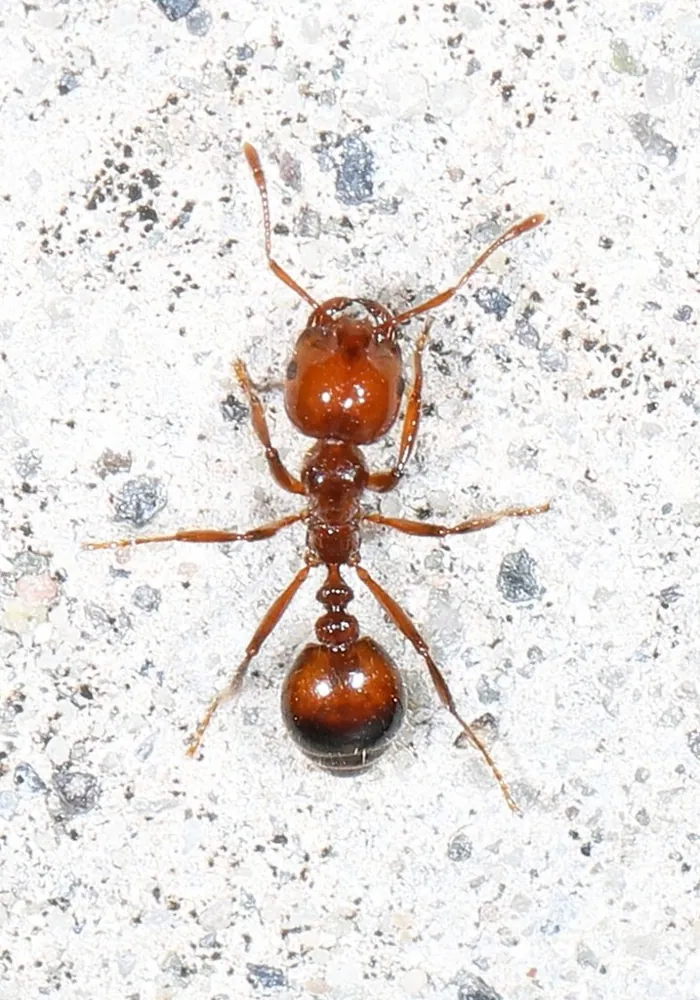
 Ni ngay ko xàmmee
Kàttanu daŋar
Daŋar bi dafay génn ci ab dag buy jam.
Lan la daŋar biy sóob di def?
About 95% of its venom is made of water-insoluble piperidine alkaloids called solenopsins, and the rest is a mixture of toxic proteins that can be especially strong in sensitive people. Most stings cause intense burning and swelling, followed by sterile pustules (small fluid-filled bumps) that can last several days. In some people, a severe allergic reaction called anaphylaxis can occur, with dizziness, chest pain, nausea, severe sweating, low blood pressure, shortness of breath and slurred speech.1
Ni mu lore nit ñi?
Musiba ci nit: Dafay mettiMën na metti lool, waaye lu bon du faral di am.More than 14 million people are stung by these ants each year in the United States, and many are expected to develop allergies to the venom. Between 0.6% and 6.0% of people may suffer anaphylaxis, which can be fatal if left untreated. More than 80 deaths have been recorded from attacks by this ant.1
 Xibaar bu baax: doktoor yi am nañu garab (sérum antivenimeux) walla ab paj ngir lii.1
Lan lay def bu tiitee?
It uses its venom and chemical signals (pheromones) to defend itself and its nest.1
 Su jamee
- People who only have pain and pustules need no medical attention. People who develop anaphylaxis need emergency treatment with adrenaline. Whole body extract immunotherapy is used to treat people who are allergic and is regarded as highly effective.1
- Raxas te sedal fa mu jam.
- Su nit ki am jafe-jafe ci noyyi, kanamam walla putam funki, walla mu bëgg a xëm, allergie bu metti la (urgence): woo sa nimerob urgence.
Saa su nekk, woo jëkk sa nimerob urgence (112, 000, 911). Lii ay ndigal yu yaatu ci ndimbal yu jëkk la, du ndigalu doktoor. Li war a xam ci ndimbal yu jëkk
 Sàmmal sa bopp
- Bul laal mukk, bul jàpp, bul sonal ab rab bu àll, doonte bu ndaw la, te doonte dafa mel ni dafa nelaw walla dafa dee.
- May ko bérab. Su nga ko gisee, dalal, dellu ginnaaw ndànk-ndànk te bàyyi ko mu dem yoonam.
- Su benn jamee la: dalal, bul yëngu, woo sa nimerob urgence (112, 000, 911) walla dem lopitaan ci gaaw. Bul fàtte ni mu meloon, ab nataal dina dimbali.
Du la wut. Dafay jëfandikoo daŋaram ngir jàpp lu muy lekk walla ngir aar boppam, te nëbbu moo ko gën a neex. Yeneen ci ni ngay sàmme sa bopp
Ni mu réye?
Ni mu guddoo?
 tuuti ba mën a toog ci sa wewu baaraam
Red imported fire ant ni mu réye ci wetu YOW?
Ay waññ rekk ci sa navigateur. Dara du denc te dara du yónnee fenn.
Ni mu gaawe?


Xibaar
When water levels rise, these ants build rafts to float on.1
A single mature colony can contain between 500,000 and 2,000,000 individuals.1
Over 1,800 scientific papers have been published using its name, and it is one of the most studied insects on the planet, rivalling the western honey bee.1
Workers dispose of scraps and dead ants on refuse piles outside the nest, a behaviour called necrophoric behaviour.1
Workers can live for several months, while queens can live for years.1
Tasukatu léeb
Xalaat bu juum: The name "fire ant" comes from fire or burning nests.
Dëgg: The name comes from the burning sensation caused by its sting.1
Ngir boroom xam-xam ci daŋar
- Turu xam-xam
- Solenopsis invicta
- Mbooloo
- Fourmi yi
- Njaboot
- Formicidae2
- Toftal
- Hymenoptera
- Kontinaa yi
- Amerig gu Bëj-saalum
- Liir yi
- Winged males and queens mate during a nuptial flight in the warm seasons. A colony can be started by a single queen or by a group of queens, which later compete for dominance once the first workers emerge.1
- Musiba ci nit
- 2 / 5: Dafay metti3
Fa xibaar yi jóge
- Red imported fire ant (Wikipedia (CC BY-SA 4.0))
- Solenopsis invicta (iNaturalist): tur ak ni ñu leen séddale.
- Venom Wiki: tolluwaayu musiba bi, réyaay bu yem bi ak xalaatu gaawaay bi, nun ñoo leen defar. Seetal ni nu leen waññe: Ni nuy natte musiba.
Xibaar bu nekk ci xët wii am na ab nimero buy won fa mu jóge. Su nu juumee, baal nu, nun ay nit ñu bëgg rab lanu, du ab jurnaalu xam-xam. Wax nu ko ci [email protected] te dinanu ko jubbanti.
 Jiit bi dafa xiif! Venom Wiki ab liggéeyu kenn la: amul pay, amul piblisite te amul traceur. Ab may bu tuuti dafay dimbali ngir mu des ci internet.Leel jiit bi
 Bullet ant
 Army ant
 Giant Amazonian ant
 Trap-jaw ant
 Black imported fire ant
 Dinosaur ant of Brazil
 Golden poison frog
 Terciopelo
 Brazilian wandering spider
 Eyelash viper
 Golden lancehead
 South American bushmaster