
 Afrig
Afrig Asi
Asi Tugal
Tugal Amerig gu Bëj-saalum
 Ostarali ak Oseyani
 Antarktig
 Mbàmbulaanu Pasifik
 Mbàmbulaanu Atlantig
 Mbàmbulaanu End
 Mbàmbulaanu Arktik
 Géeju Mediteraane
 Géej gu Xonq
 Géeju Karayib
 Géeju Koraay
 Géeju Siin gu Bëj-saalum
 Géeju Filipin
 Géeju Andaman
 Géeju Bëj-gànnaar
 Géeju Timor ak Arafura
 Golfu Bengal
 Golfu Kaliforni
Rock rattlesnake
 Dafay màtt
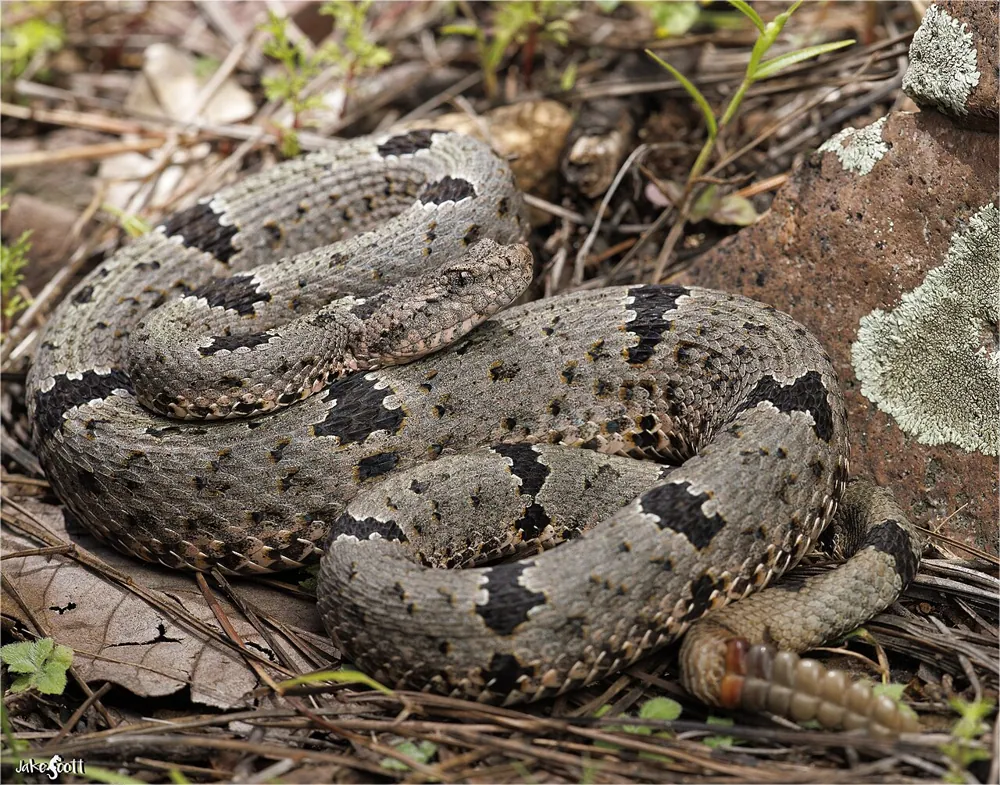
The rock rattlesnake is a small rattlesnake that lives in the south-western United States and northern central Mexico. It spends most of its life among rocks and hides well by blending in with its surroundings. It is venomous, so it is important to know what it looks like and to give it plenty of room.1



 Ni ngay ko xàmmee
- Usually light grey with darker grey banding, especially near areas of limestone1
- Snakes at higher altitudes tend to be darker1
- The mottled form from the Davis Mountains is often pinkish with dark-grey speckling rather than clear banding1
- The banded form has clean, distinct banding with little speckling or mottling1
- Has a large, rounded head, vertical pupils and a rattle on the tail. It rarely grows longer than 81.3 cm1
Kàttanu daŋar
Daŋar bi dafay génn ci bëñam yi su màttee.
Lan la daŋar biy sóob di def?
Its venom is mainly a hemotoxin, a type of venom that acts on the blood and body tissues. It can also have significant neurotoxic effects, which attack the nerves.1
Ni mu lore nit ñi?
Musiba ci nit: Lu bonMàtt laaj na doktoor. Ñi ciy dee dañoo néew lool.The snake is not aggressive and relies on camouflage, so it often will not strike or rattle unless it is harassed. However, if someone steps on it or touches it by accident, its immediate reaction is to bite. Most people bitten by this snake were hiking among rocks.1
 Xibaar bu baax: doktoor yi am nañu garab (sérum antivenimeux) walla ab paj ngir lii.1
Lan lay def bu tiitee?
It relies on camouflage and will often stay still rather than strike or rattle unless it is physically harassed.1
 Su màttee
- Def ba nit ki bañ a yëngu te dal, yemale cër bi ñu màtt ak kawewaayu xol bi, dindi jaaro yi ak lu xat lépp, te yóbbu ko lopitaan ci gaaw.
Saa su nekk, woo jëkk sa nimerob urgence (112, 000, 911). Lii ay ndigal yu yaatu ci ndimbal yu jëkk la, du ndigalu doktoor. Li war a xam ci ndimbal yu jëkk
 Sàmmal sa bopp
- Bul laal mukk, bul jàpp, bul sonal ab rab bu àll, doonte bu ndaw la, te doonte dafa mel ni dafa nelaw walla dafa dee.
- May ko bérab. Su nga ko gisee, dalal, dellu ginnaaw ndànk-ndànk te bàyyi ko mu dem yoonam.
- Su benn màttee la: dalal, bul yëngu, woo sa nimerob urgence (112, 000, 911) walla dem lopitaan ci gaaw. Bul fàtte ni mu meloon, ab nataal dina dimbali.
Du la wut. Dafay jëfandikoo daŋaram ngir jàpp lu muy lekk walla ngir aar boppam, te nëbbu moo ko gën a neex. Yeneen ci ni ngay sàmme sa bopp
Ni mu réye?
Ni mu guddoo?
 guddu na ni 1,5 muusu kër, bakkan ba geen
 guddu na ni 5 banaana yu ñu toftale
 mën na daw 100 meetar ci 110 segond (nit ki gën a gaaw soxla na 9,6)
Rock rattlesnake ni mu réye ci wetu YOW?
Ay waññ rekk ci sa navigateur. Dara du denc te dara du yónnee fenn.
Ni mu gaawe?


Xibaar
A new segment is added to the rattle each time the snake sheds its skin, but the rattle can break off, so segments do not give a reliable age.1
Its rattle is made of keratin, the same material as human fingernails.1
Its colour generally reflects the colour of the rock where it lives, which helps it stay hidden.1
The young take three or more years to mature.1
Tasukatu léeb
Xalaat bu juum: You can tell a rock rattlesnake's age by counting the segments on its rattle.
Dëgg: A segment is added each time the snake sheds, but the rattle is fragile and can break off, and shedding frequency varies. So the number of segments cannot tell you its age.1
Ngir boroom xam-xam ci daŋar
- Turu xam-xam
- Crotalus lepidus
- Mbooloo
- Serpent à sonnette
- Njaboot
- Viperidae2
- Toftal
- Squamata
- Kontinaa yi
- Amerig gu Bëj-gànnaar
- Liir yi
- It is ovoviviparous, so it gives birth to live young, six to eight at a time, about four months after breeding in spring. The young look like small versions of the parents.1
- Ni mu nekke ci àll bi
- Least Concern (IUCN Red List). It is listed as a threatened species by New Mexico.1
- Musiba ci nit
- 3 / 5: Lu bon3
Fa xibaar yi jóge
- Crotalus lepidus (Wikipedia (CC BY-SA 4.0))
- Crotalus lepidus (iNaturalist): tur ak ni ñu leen séddale.
- Venom Wiki: tolluwaayu musiba bi, réyaay bu yem bi ak xalaatu gaawaay bi, nun ñoo leen defar. Seetal ni nu leen waññe: Ni nuy natte musiba.
Xibaar bu nekk ci xët wii am na ab nimero buy won fa mu jóge. Su nu juumee, baal nu, nun ay nit ñu bëgg rab lanu, du ab jurnaalu xam-xam. Wax nu ko ci [email protected] te dinanu ko jubbanti.
 Jiit bi dafa xiif! Venom Wiki ab liggéeyu kenn la: amul pay, amul piblisite te amul traceur. Ab may bu tuuti dafay dimbali ngir mu des ci internet.Leel jiit bi
Yeneen ci mbooloo mi: Serpent à sonnette
 Eastern diamondback rattlesnakeSerpent à sonnetteMën na rey
 Timber rattlesnakeSerpent à sonnetteMën na rey
 Western diamondback rattlesnakeSerpent à sonnetteMën na rey
 SidewinderSerpent à sonnetteSoxla na doktoor
 Mojave rattlesnakeSerpent à sonnetteMën na rey
 Aruba rattlesnakeSerpent à sonnetteSoxla na doktoor
 Terciopelo
 Eastern coral snake
 Eyelash viper
 Arizona bark scorpion
 Brown recluse
 Cane toad