
 Afrig
Afrig Asi
Asi Tugal
Tugal Amerig gu Bëj-saalum
 Ostarali ak Oseyani
 Antarktig
 Mbàmbulaanu Pasifik
 Mbàmbulaanu Atlantig
 Mbàmbulaanu End
 Mbàmbulaanu Arktik
 Géeju Mediteraane
 Géej gu Xonq
 Géeju Karayib
 Géeju Koraay
 Géeju Siin gu Bëj-saalum
 Géeju Filipin
 Géeju Andaman
 Géeju Bëj-gànnaar
 Géeju Timor ak Arafura
 Golfu Bengal
 Golfu Kaliforni
Western rattlesnake
 Dafay màtt
The Western rattlesnake is a venomous pit viper that lives across western North America, from the Baja California Peninsula in Mexico to the southern interior of British Columbia in Canada. It is one of only three rattlesnake species still found in Canada, which is why its populations there matter.1



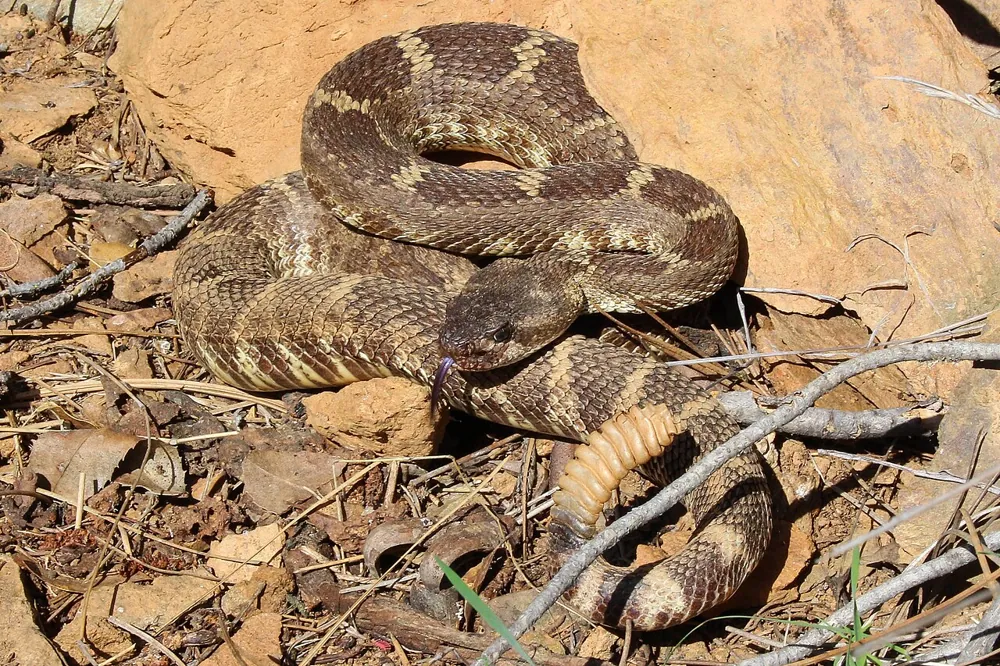
 Ni ngay ko xàmmee
- Ground colour is dark brown, dark grey, olive-brown, or sometimes black or pale yellowish.1
- Large dark blotches run along the back, with uneven white edges, and are wider than the gaps between them.1
- A dark brown stripe with a white border runs from the eye to the angle of the jaw.1
- The belly is pale yellow, usually with brown spots.1
- Juveniles have clearer patterns that fade as the snake matures. The last two tail rings, at the base of the tail, are usually black.1
Kàttanu daŋar
Daŋar bi dafay génn ci bëñam yi su màttee.
Lan la daŋar biy sóob di def?
Its venom is both hemotoxic, meaning it damages blood and tissue, and neurotoxic, meaning it affects the nerves. In prey, it can cause paralysis, which stops the animal escaping. In people it is linked with cardiovascular effects, internal bleeding and headaches.1
Ni mu lore nit ñi?
Musiba ci nit: Lu bonMàtt laaj na doktoor. Ñi ciy dee dañoo néew lool. Su màttee
- Def ba nit ki bañ a yëngu te dal, yemale cër bi ñu màtt ak kawewaayu xol bi, dindi jaaro yi ak lu xat lépp, te yóbbu ko lopitaan ci gaaw.
Saa su nekk, woo jëkk sa nimerob urgence (112, 000, 911). Lii ay ndigal yu yaatu ci ndimbal yu jëkk la, du ndigalu doktoor. Li war a xam ci ndimbal yu jëkk
 Sàmmal sa bopp
- Bul laal mukk, bul jàpp, bul sonal ab rab bu àll, doonte bu ndaw la, te doonte dafa mel ni dafa nelaw walla dafa dee.
- May ko bérab. Su nga ko gisee, dalal, dellu ginnaaw ndànk-ndànk te bàyyi ko mu dem yoonam.
- Su benn màttee la: dalal, bul yëngu, woo sa nimerob urgence (112, 000, 911) walla dem lopitaan ci gaaw. Bul fàtte ni mu meloon, ab nataal dina dimbali.
Du la wut. Dafay jëfandikoo daŋaram ngir jàpp lu muy lekk walla ngir aar boppam, te nëbbu moo ko gën a neex. Yeneen ci ni ngay sàmme sa bopp
Ni mu réye?
Ni mu guddoo?
 guddu na ni 3 muusu kër, bakkan ba geen
 guddu na ni 9 banaana yu ñu toftale
 mën na daw 100 meetar ci 97 segond (nit ki gën a gaaw soxla na 9,6)
Western rattlesnake ni mu réye ci wetu YOW?
Ay waññ rekk ci sa navigateur. Dara du denc te dara du yónnee fenn.
Ni mu gaawe?


Xibaar
Its size depends on where it lives and on its diet. Snakes that eat lizards are much smaller than those that eat birds and mammals.1
The largest recorded Western rattlesnake measured 162.6 cm, but mainland adults often reach about 100 cm.1
It makes seasonal migrations between winter and summer habitats to follow its prey.1
Mating snakes are very sensitive to disturbance and quickly separate.1
Most females breed every two years, although about 10% breed in two years in a row.1
Ngir boroom xam-xam ci daŋar
- Turu xam-xam
- Crotalus oreganus
- Mbooloo
- Serpent à sonnette
- Njaboot
- Viperidae2
- Toftal
- Squamata
- Kontinaa yi
- Amerig gu Bëj-gànnaar
- Liir yi
- It gives birth to live young, usually 3 to 8 per litter (1 to 15 is the range), in August or September. Newborns are about 19 to 28 cm long.1
- Ni mu nekke ci àll bi
- Threatened in Canada (Schedule 1 federally threatened under Canada's Species at Risk Act). Previously listed as Least Concern on the IUCN Red List.1
- Musiba ci nit
- 3 / 5: Lu bon3
Fa xibaar yi jóge
- Crotalus oreganus (Wikipedia (CC BY-SA 4.0))
- Crotalus oreganus (iNaturalist): tur ak ni ñu leen séddale.
- Venom Wiki: tolluwaayu musiba bi, réyaay bu yem bi ak xalaatu gaawaay bi, nun ñoo leen defar. Seetal ni nu leen waññe: Ni nuy natte musiba.
Xibaar bu nekk ci xët wii am na ab nimero buy won fa mu jóge. Su nu juumee, baal nu, nun ay nit ñu bëgg rab lanu, du ab jurnaalu xam-xam. Wax nu ko ci [email protected] te dinanu ko jubbanti.
 Jiit bi dafa xiif! Venom Wiki ab liggéeyu kenn la: amul pay, amul piblisite te amul traceur. Ab may bu tuuti dafay dimbali ngir mu des ci internet.Leel jiit bi
Yeneen ci mbooloo mi: Serpent à sonnette
 Eastern diamondback rattlesnakeSerpent à sonnetteMën na rey
 Timber rattlesnakeSerpent à sonnetteMën na rey
 Western diamondback rattlesnakeSerpent à sonnetteMën na rey
 SidewinderSerpent à sonnetteSoxla na doktoor
 Mojave rattlesnakeSerpent à sonnetteMën na rey
 Aruba rattlesnakeSerpent à sonnetteSoxla na doktoor
 Terciopelo
 Eastern coral snake
 Eyelash viper
 Arizona bark scorpion
 Brown recluse
 Cane toad