
 IAfrika
 IAsiya
 IYurophu
 uMzantsi Melika
 IOstreliya neOceania
 IAntarctica
 uLwandlekazi lwePasifiki
 uLwandlekazi lweAtlantiki
 uLwandlekazi lwaseIndiya
 uLwandlekazi lweArctic
 uLwandle lweMeditera
 uLwandle oluBomvu
 uLwandle lweKharibhiya
 uLwandle lweCoral
 uLwandle lwaseMzantsi China
 uLwandle lwePhilippines
 uLwandle lweAndaman
 uLwandle lwaseMntla (North Sea)
 uLwandle lweTimor ne-Arafura
 iBhayi yaseBengal
 iGulf yaseCalifornia
Giant desert centipede
 Ukuluma
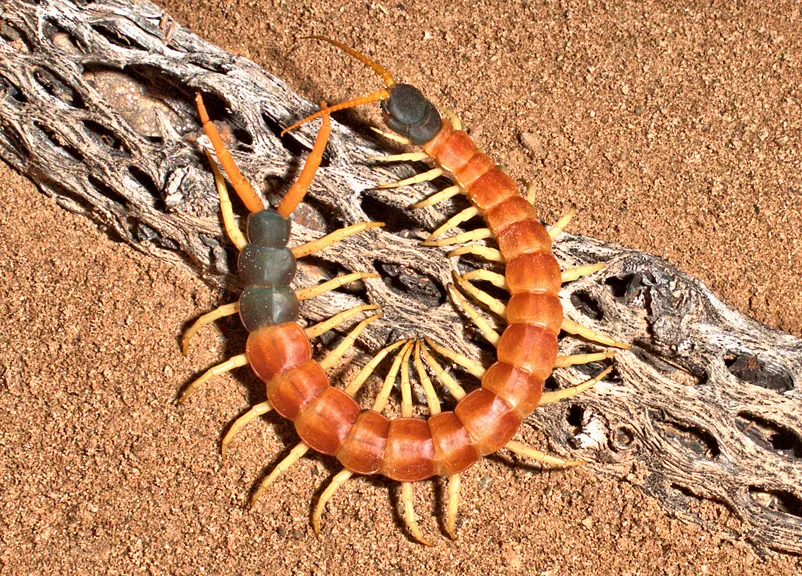
The giant desert centipede is the largest centipede in North America. It lives in dry deserts and rocky woodlands in the southwestern United States and northern Mexico. Its bright colours warn predators to keep away, and its bite is very painful.1



 Indlela yokusiqaphela
Amandla etyhefu yokuluma nokuhlaba
Ityhefu iphuma ngamazinyo aso etyhefu okanye ngamazinyo aso xa siluma.
Ityhefu yaso yokuluma okanye yokuhlaba yenza ntoni?
Its venom is similar to that of other Scolopendra centipedes. It acts as a cytolysin, which damages cell membranes and ruptures cells, and it contains heart-affecting (cardiotoxic) proteins. The exact effects of the venom have not been fully studied, because it is hard to collect in useful amounts and breaks down quickly once processed.1
Siyingozi kangakanani ebantwini?
Ingozi ebantwini: KubuhlunguKunokuba buhlungu ngokwenene, kodwa phantse akusoze kube kubi kakhulu.Bites cause sharp, searing pain and swelling in people, and there have never been any confirmed deaths from this species. Occasional symptoms include nausea, headache and localised skin death (necrosis). Severe cases, including kidney failure from muscle breakdown and heart attack, have been reported from Scolopendra bites in general.1
Senza ntoni xa soyika?
Its bright warning colours are a signal to predators to leave it alone.1
 Ukuba siyaluma
- Hlamba indawo elunyiweyo, uyipholise okanye uyifake emanzini afudumeleyo ngenxa yeentlungu, kwaye ufumane uncedo lwezonyango ukuba iya isiba mbi ngakumbi.
Soloko utsalela inombolo kaxakeka kuqala (112, 000, 911). Esi sisikhokelo soncedo lokuqala ngokubanzi, asilocebiso lwezonyango. Iziseko zoncedo lokuqala
 Hlala ukhuselekile
- Ungaze uchukumise, ubambe okanye uqhule isilwanyana sasendle, nokuba sincinci, kwaye nokuba sibonakala silele okanye sifile.
- Sinike indawo. Ukuba udibana naso, hlala uzolile, buyela umva kancinci kwaye usiyeke sihambe ngendlela yaso.
- Ukuba siyakuluma: hlala uzolile, musa ukushukuma, tsalela inombolo kaxakeka (112, 000, 911) okanye uye esibhedlele ngokukhawuleza. Khumbula ukuba sasikhangeleka njani, ifoto iyanceda.
Asikuzingeli. Sisebenzisa ityhefu yaso ukubamba ukutya okanye ukuzikhusela, kwaye singakhetha ukuzimela. Okungakumbi malunga nokuhlala ukhuselekile
Sikhulu kangakanani?
Side kangakanani?
 ubude obulingana neebhloko zokudlala zokwakha eziyi-6 zilandelelana
 singagqiba iimitha ezili-100 ngemizuzwana eyi-190 (owona mntu ukhawulezayo udinga i-9,6)
U-Giant desert centipede mkhulu kangakanani xa uthelekisa NAWE?
Zizibalo nje kwibhrawuza yakho. Akukho nto igcinwayo okanye ithunyelwa naphi na.
Sikhawuleza kangakanani?


Iinyaniso
It can grab small flying insects out of the air.1
It is the largest centipede found in North America.1
Its colours change between variants, and the red-headed form found in Arkansas, Missouri and Texas is especially well known.1
It is a slow-growing species that can live for more than a decade.1
It grows slowly, and it keeps the same number of body segments for its whole life.1
Umqhekezi weentsomi
Intsomi: A bite from this centipede is deadly.
Inyaniso: No deaths from its bites have been confirmed. For people, the bite usually causes sharp pain and swelling in the area bitten.1
Apho iinyaniso zivela khona
- Scolopendra heros (Wikipedia (CC BY-SA 4.0))
- Scolopendra heros (iNaturalist): amagama nokuhlelwa.
- Venom Wiki: inqanaba lengozi, ubungakanani obuqhelekileyo noqikelelo lwesantya zezethu. Bona indlela esizifumana ngayo: Indlela esilinganisa ngayo ingozi.
Inyaniso nganye kweli phepha inenombolo ebonisa umthombo wayo. Ukuba senze impazamo, uxolo, sithanda izilwanyana, asiyomagazini yenzululwazi. Sixelele ku-[email protected] kwaye siza kuyilungisa.
 Unomadudwane ulambile! I-Venom Wiki yiprojekthi yomntu omnye: isimahla, ayinazibhengezo kwaye ayinazilandeli. Isipho esincinci sinceda ukuyigcina ikwi-intanethi.Yondla unomadudwane
 Common desert centipede
 Green centipede
 Haitian giant centipede
 Eastern red centipede
 Florida blue centipede
 Peruvian giant centipede
 Terciopelo
 Eastern coral snake
 Eastern diamondback rattlesnake
 Eyelash viper
 Timber rattlesnake
 Western diamondback rattlesnake