
 IAfrika
 IAsiya
 IYurophu
 uMzantsi Melika
 IOstreliya neOceania
 IAntarctica
 uLwandlekazi lwePasifiki
 uLwandlekazi lweAtlantiki
 uLwandlekazi lwaseIndiya
 uLwandlekazi lweArctic
 uLwandle lweMeditera
 uLwandle oluBomvu
 uLwandle lweKharibhiya
 uLwandle lweCoral
 uLwandle lwaseMzantsi China
 uLwandle lwePhilippines
 uLwandle lweAndaman
 uLwandle lwaseMntla (North Sea)
 uLwandle lweTimor ne-Arafura
 iBhayi yaseBengal
 iGulf yaseCalifornia
Giant desert hairy scorpion
 Ukuhlaba
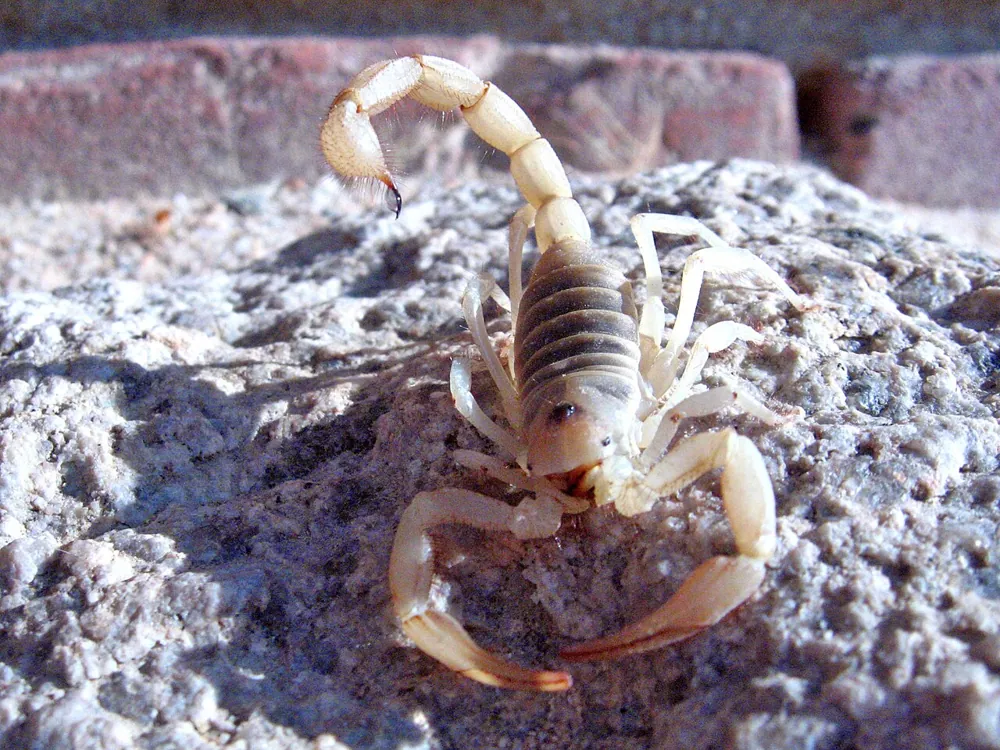
The giant desert hairy scorpion is the largest scorpion in North America. It lives in the hot deserts of the southwest United States and northwest Mexico. Its sting is painful, but its venom is not strong enough to be fatal.1


 Indlela yokusiqaphela
- Usually tan to olive-green, with a darker back and yellow pedipalps, legs and tail1
- Body covered in brown hairs, which give it its common name1
- Crab-like pincers1
- Length of 10 to 18 cm, with an average of 15 cm1
- Females have wider, stockier bodies; males have larger pincers1
Sidla ngokubhidaniswa no: A similar species is Hadrurus spadix. Hadrurus is a genus of large hairy scorpions found in the United States.1
Amandla etyhefu yokuluma nokuhlaba
Ityhefu iphuma ngenaliti yokuhlaba.
Ityhefu yaso yokuluma okanye yokuhlaba yenza ntoni?
Its venom is not very potent, but the sting is commonly compared in pain to a honeybee sting. The venom is used to immobilise prey. Allergic reactions are uncommon, but they can cause difficulty breathing, excessive swelling and prolonged pain.1
Siyingozi kangakanani ebantwini?
Ingozi ebantwini: KuthambileNjengokuhlatywa yinyosi okanye ngaphantsi. Phantse asinangozi ebantwini.Its venom is not potent enough to be fatal. Most stings are compared to a honeybee sting in pain. Serious allergic reactions are uncommon but possible.1
Senza ntoni xa soyika?
When provoked, it is active and aggressive, and it stings more often when it senses a predator such as a Norway rat by smell.1
 Ukuba siyahlaba
- Pholisa indawo ehlatyiweyo ngepakethi yomkhenkce kwaye ugcine umntu engashukumi. Fumana uncedo lwezonyango ngokukhawuleza, ingakumbi kubantwana: abanye oonomadudwane bayabulala kubantwana.
Soloko utsalela inombolo kaxakeka kuqala (112, 000, 911). Esi sisikhokelo soncedo lokuqala ngokubanzi, asilocebiso lwezonyango. Iziseko zoncedo lokuqala
 Hlala ukhuselekile
- Ungaze uchukumise, ubambe okanye uqhule isilwanyana sasendle, nokuba sincinci, kwaye nokuba sibonakala silele okanye sifile.
- Sinike indawo. Ukuba udibana naso, hlala uzolile, buyela umva kancinci kwaye usiyeke sihambe ngendlela yaso.
- Ukuba siyakuhlaba: hlala uzolile, musa ukushukuma, tsalela inombolo kaxakeka (112, 000, 911) okanye uye esibhedlele ngokukhawuleza. Khumbula ukuba sasikhangeleka njani, ifoto iyanceda.
Asikuzingeli. Sisebenzisa ityhefu yaso ukubamba ukutya okanye ukuzikhusela, kwaye singakhetha ukuzimela. Okungakumbi malunga nokuhlala ukhuselekile
Sikhulu kangakanani?
Side kangakanani?
Sinzima kangakanani?

 ubude obulingana neebhloko zokudlala zokwakha eziyi-6 zilandelelana
 silula kangangokuba ubungayi kusiva esandleni sakho
 singagqiba iimitha ezili-100 ngemizuzwana eyi-140 (owona mntu ukhawulezayo udinga i-9,6)
U-Giant desert hairy scorpion mkhulu kangakanani xa uthelekisa NAWE?
Zizibalo nje kwibhrawuza yakho. Akukho nto igcinwayo okanye ithunyelwa naphi na.
Sikhawuleza kangakanani?


Iinyaniso
Small snakes may make up to 10% of its diet, according to field observations.1
Its blood-like fluid, called hemolymph, can kill some bacteria within 1 to 2 minutes in favourable conditions, according to a 2021 study.1
It is the largest scorpion in North America.1
It digs deep burrows, up to 2.5 m long, and comes out at night to hunt and find mates.1
It can sense vibrations in the soil through its brown hairs.1
Umqhekezi weentsomi
Intsomi: Big scorpions have dangerous venom.
Inyaniso: Although this scorpion is big, its venom is not very potent and is not fatal.1
Apho iinyaniso zivela khona
- Hadrurus arizonensis (Wikipedia (CC BY-SA 4.0))
- Hadrurus arizonensis (iNaturalist): amagama nokuhlelwa.
- Venom Wiki: inqanaba lengozi, ubungakanani obuqhelekileyo noqikelelo lwesantya zezethu. Bona indlela esizifumana ngayo: Indlela esilinganisa ngayo ingozi.
Inyaniso nganye kweli phepha inenombolo ebonisa umthombo wayo. Ukuba senze impazamo, uxolo, sithanda izilwanyana, asiyomagazini yenzululwazi. Sixelele ku-[email protected] kwaye siza kuyilungisa.
 Unomadudwane ulambile! I-Venom Wiki yiprojekthi yomntu omnye: isimahla, ayinazibhengezo kwaye ayinazilandeli. Isipho esincinci sinceda ukuyigcina ikwi-intanethi.Yondla unomadudwane
 Arizona bark scorpion
 Cuban blue scorpion
 Striped bark scorpion
 Colima scorpion
 Durango scorpion
 Mexican bark scorpion
 Terciopelo
 Eastern coral snake
 Eastern diamondback rattlesnake
 Eyelash viper
 Timber rattlesnake
 Western diamondback rattlesnake