
 IAfrika
 IAsiya
 IYurophu
 uMzantsi Melika
 IOstreliya neOceania
 IAntarctica
 uLwandlekazi lwePasifiki
 uLwandlekazi lweAtlantiki
 uLwandlekazi lwaseIndiya
 uLwandlekazi lweArctic
 uLwandle lweMeditera
 uLwandle oluBomvu
 uLwandle lweKharibhiya
 uLwandle lweCoral
 uLwandle lwaseMzantsi China
 uLwandle lwePhilippines
 uLwandle lweAndaman
 uLwandle lwaseMntla (North Sea)
 uLwandle lweTimor ne-Arafura
 iBhayi yaseBengal
 iGulf yaseCalifornia
Six-eyed sand spider
 Ukuluma
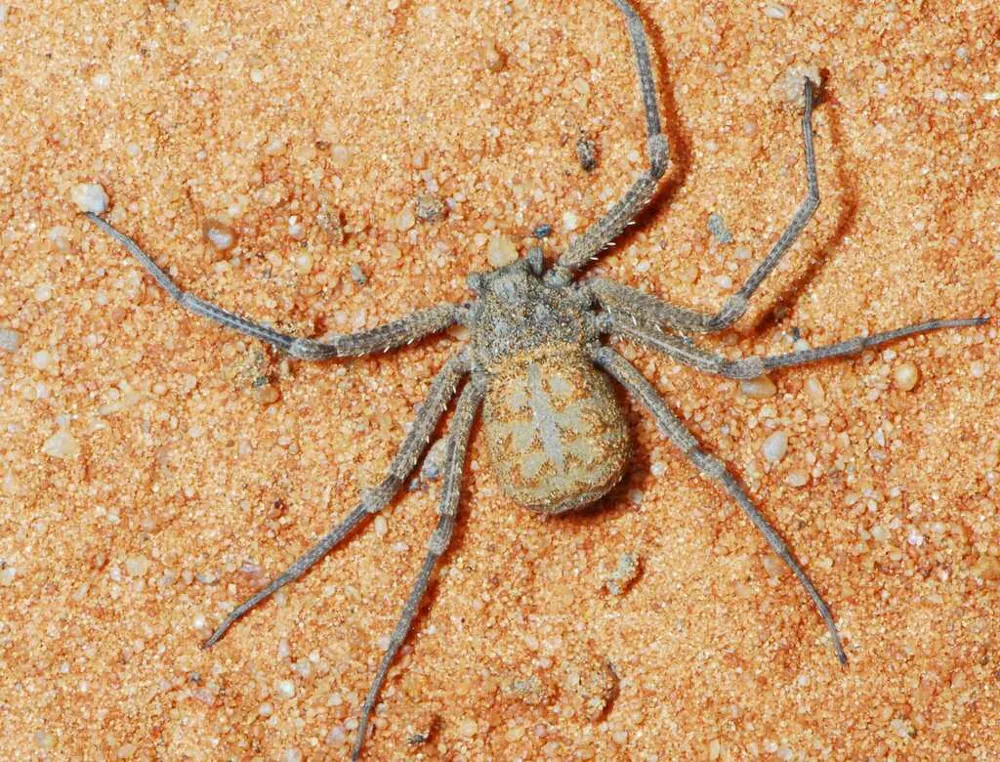
Hahn's six-eyed sand spider is a medium-to-large spider that lives in deserts and sandy places in southern Africa. It rests flat against the ground or under a little loose soil, and its velvety hairs let it blend in almost perfectly. Its bite can be medically significant, but people rarely come across it.1
 Indlela yokusiqaphela
Amandla etyhefu yokuluma nokuhlaba
Ityhefu iphuma ngamazinyo aso etyhefu okanye ngamazinyo aso xa siluma.
Ityhefu yaso yokuluma okanye yokuhlaba yenza ntoni?
All Hexophthalma spiders produce venom with dermonecrotic effects, which means it can destroy skin and tissue. The damage is caused by proteins related to sphingomyelinase D, which are found in the venom of all sicariid spiders. For this species, the detailed effects on humans are unknown, because its venom has mainly been studied in the laboratory.1
Siyingozi kangakanani ebantwini?
Ingozi ebantwini: Kubi kakhuluUkulunywa kufuna ugqirha. Ukufa kunqabe kakhulu.The spider is capable of a medically significant bite. Serious or even life-threatening wounds are possible, especially if the wound becomes infected or the venom spreads through the body. No bites from this spider in southern Africa have been proven, and contact with people is considered unlikely.1
Senza ntoni xa soyika?
It relies on stillness and camouflage rather than running, and it can shift quickly across loose sand when disturbed.1
 Ukuba siyaluma
- Hlamba indawo elunyiweyo uze ubeke ipakethi yomkhenkce kuyo ngenxa yeentlungu. Fumana uncedo lwezonyango ukuba iintlungu zinamandla, ziyasasazeka okanye umntu uziva engaphilanga kakuhle.
Soloko utsalela inombolo kaxakeka kuqala (112, 000, 911). Esi sisikhokelo soncedo lokuqala ngokubanzi, asilocebiso lwezonyango. Iziseko zoncedo lokuqala
 Hlala ukhuselekile
- Ungaze uchukumise, ubambe okanye uqhule isilwanyana sasendle, nokuba sincinci, kwaye nokuba sibonakala silele okanye sifile.
- Sinike indawo. Ukuba udibana naso, hlala uzolile, buyela umva kancinci kwaye usiyeke sihambe ngendlela yaso.
- Ukuba siyakuluma: hlala uzolile, musa ukushukuma, tsalela inombolo kaxakeka (112, 000, 911) okanye uye esibhedlele ngokukhawuleza. Khumbula ukuba sasikhangeleka njani, ifoto iyanceda.
Asikuzingeli. Sisebenzisa ityhefu yaso ukubamba ukutya okanye ukuzikhusela, kwaye singakhetha ukuzimela. Okungakumbi malunga nokuhlala ukhuselekile
Sikhulu kangakanani?
Side kangakanani?
 mfutshane kunomnwe wakho omncinci
 singagqiba iimitha ezili-100 ngemizuzwana eyi-330 (owona mntu ukhawulezayo udinga i-9,6)
U-Six-eyed sand spider mkhulu kangakanani xa uthelekisa NAWE?
Zizibalo nje kwibhrawuza yakho. Akukho nto igcinwayo okanye ithunyelwa naphi na.
Sikhawuleza kangakanani?


Iinyaniso
Apho iinyaniso zivela khona
- Hexophthalma hahni (Wikipedia (CC BY-SA 4.0))
- Hexophthalma hahni (iNaturalist): amagama nokuhlelwa.
- Venom Wiki: inqanaba lengozi, ubungakanani obuqhelekileyo noqikelelo lwesantya zezethu. Bona indlela esizifumana ngayo: Indlela esilinganisa ngayo ingozi.
Inyaniso nganye kweli phepha inenombolo ebonisa umthombo wayo. Ukuba senze impazamo, uxolo, sithanda izilwanyana, asiyomagazini yenzululwazi. Sixelele ku-[email protected] kwaye siza kuyilungisa.
 Unomadudwane ulambile! I-Venom Wiki yiprojekthi yomntu omnye: isimahla, ayinazibhengezo kwaye ayinazilandeli. Isipho esincinci sinceda ukuyigcina ikwi-intanethi.Yondla unomadudwane
 Mediterranean black widow
 Brown widow
 Noble false widow
 Darwin's bark spider
 Wasp spider
 Black button spider
 Black mamba
 Deathstalker
 Egyptian cobra
 Puff adder
 Boomslang
 Fat-tailed scorpion