
 IAfrika
 IAsiya
 IYurophu
 uMzantsi Melika
 IOstreliya neOceania
 IAntarctica
 uLwandlekazi lwePasifiki
 uLwandlekazi lweAtlantiki
 uLwandlekazi lwaseIndiya
 uLwandlekazi lweArctic
 uLwandle lweMeditera
 uLwandle oluBomvu
 uLwandle lweKharibhiya
 uLwandle lweCoral
 uLwandle lwaseMzantsi China
 uLwandle lwePhilippines
 uLwandle lweAndaman
 uLwandle lwaseMntla (North Sea)
 uLwandle lweTimor ne-Arafura
 iBhayi yaseBengal
 iGulf yaseCalifornia
Sonoran lyre snake
 Ukuluma
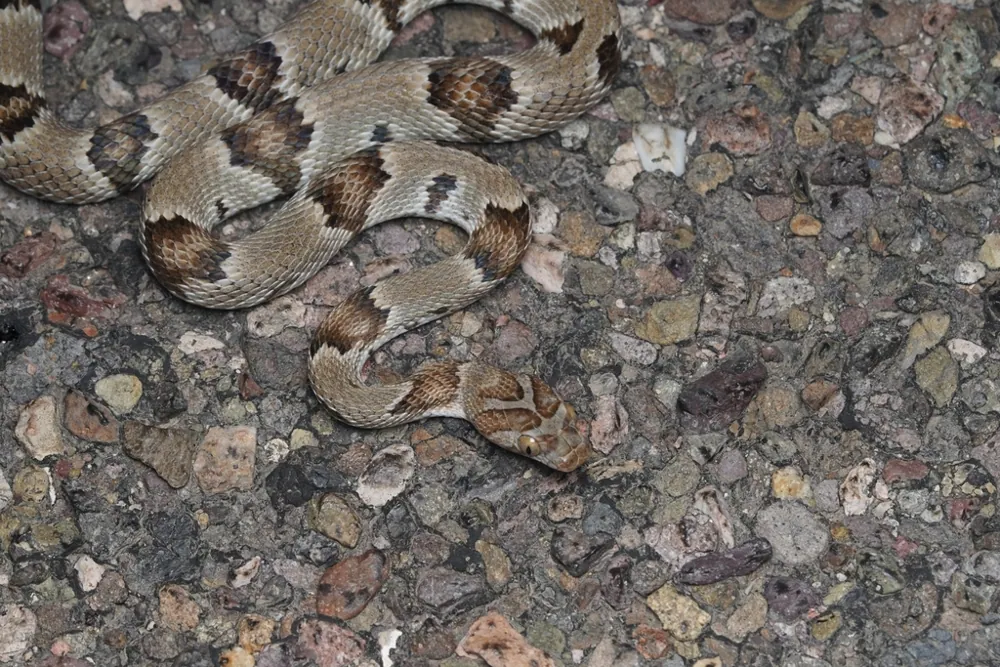
The Sonoran lyre snake is a slender, medium to large snake with a distinctive V-shaped mark on top of its head. It lives among rocks in the American Southwest and northwestern Mexico. It is a rear-fanged snake, so its fangs sit at the back of its mouth.1



 Indlela yokusiqaphela
- A V-shaped or lyre-like mark on the top of the head, which gives it its name1
- Pale grey, tan or light brown ground colour1
- 18 to 31 dark brown saddles or blotches along the back, with pale edges1
- A dark bar across the snout between the eyes1
- A broad, flat head that is clearly wider than its slim neck, with large eyes that have vertical pupils1
Amandla etyhefu yokuluma nokuhlaba
Ityhefu iphuma ngamazinyo aso etyhefu okanye ngamazinyo aso xa siluma.
Ityhefu yaso yokuluma okanye yokuhlaba yenza ntoni?
It is a rear-fanged (opisthoglyphous) snake, meaning its fangs are at the back of the mouth. Its venom is relatively mild and is adapted to subdue small, fast lizards and mammals. Because the fangs are at the back, it usually has to chew on its target to inject enough venom.1
Siyingozi kangakanani ebantwini?
Ingozi ebantwini: KuthambileNjengokuhlatywa yinyosi okanye ngaphantsi. Phantse asinangozi ebantwini.The venom is generally considered harmless to people. A bite may cause mild pain and swelling around the bite, but it is not medically significant.1
 Ukuba siyaluma
- Hlamba indawo elunyiweyo, gcina umntu ezolile kwaye ufumane uncedo lwezonyango. Ezinye iintlobo (njenge-boomslang) zinokubulala kwiiyure ezininzi kamva.
Soloko utsalela inombolo kaxakeka kuqala (112, 000, 911). Esi sisikhokelo soncedo lokuqala ngokubanzi, asilocebiso lwezonyango. Iziseko zoncedo lokuqala
 Hlala ukhuselekile
- Ungaze uchukumise, ubambe okanye uqhule isilwanyana sasendle, nokuba sincinci, kwaye nokuba sibonakala silele okanye sifile.
- Sinike indawo. Ukuba udibana naso, hlala uzolile, buyela umva kancinci kwaye usiyeke sihambe ngendlela yaso.
- Ukuba siyakuluma: hlala uzolile, musa ukushukuma, tsalela inombolo kaxakeka (112, 000, 911) okanye uye esibhedlele ngokukhawuleza. Khumbula ukuba sasikhangeleka njani, ifoto iyanceda.
Asikuzingeli. Sisebenzisa ityhefu yaso ukubamba ukutya okanye ukuzikhusela, kwaye singakhetha ukuzimela. Okungakumbi malunga nokuhlala ukhuselekile
Sikhulu kangakanani?
Side kangakanani?
 ubude obulingana neekati zasekhaya eziyi-2 ukusuka empumlweni ukuya emsileni
 ubude obulingana neebhanana eziyi-5 zilandelelana
 singagqiba iimitha ezili-100 ngemizuzwana eyi-71 (owona mntu ukhawulezayo udinga i-9,6)
U-Sonoran lyre snake mkhulu kangakanani xa uthelekisa NAWE?
Zizibalo nje kwibhrawuza yakho. Akukho nto igcinwayo okanye ithunyelwa naphi na.
Sikhawuleza kangakanani?


Iinyaniso
Its front teeth are long and curved, its middle teeth are shorter, and its rear fangs are long and grooved.1
Its genus name, Trimorphodon, means 'three-shaped teeth', because it has three kinds of teeth in its upper jaw.1
Although it is mostly a rock dweller, it can climb steep cliffs and sometimes trees or shrubs.1
Kwiingcali zetyhefu
- Igama lenzululwazi
- Trimorphodon lambda
- Iqela
- Iinyoka ezinamazinyo etyhefu ngasemva
- Usapho
- Colubridae2
- Ucwangco
- Squamata
- Amazwekazi
- uMntla Melika
- Iintsana
- It lays eggs. A female lays a clutch of 7 to 20 eggs in summer, and the young hatch in late summer to early fall.1
- Imeko yaso endle
- Least Concern (IUCN Red List)1
- Ingozi ebantwini
- 1 / 5: Kuthambile3
Apho iinyaniso zivela khona
- Trimorphodon lambda (Wikipedia (CC BY-SA 4.0))
- Trimorphodon lambda (iNaturalist): amagama nokuhlelwa.
- Venom Wiki: inqanaba lengozi, ubungakanani obuqhelekileyo noqikelelo lwesantya zezethu. Bona indlela esizifumana ngayo: Indlela esilinganisa ngayo ingozi.
Inyaniso nganye kweli phepha inenombolo ebonisa umthombo wayo. Ukuba senze impazamo, uxolo, sithanda izilwanyana, asiyomagazini yenzululwazi. Sixelele ku-[email protected] kwaye siza kuyilungisa.
 Unomadudwane ulambile! I-Venom Wiki yiprojekthi yomntu omnye: isimahla, ayinazibhengezo kwaye ayinazilandeli. Isipho esincinci sinceda ukuyigcina ikwi-intanethi.Yondla unomadudwane
Okungakumbi kwiqela elinye: Iinyoka ezinamazinyo etyhefu ngasemva
 Western hognose snakeIinyoka ezinamazinyo etyhefu ngasemvaAsinangozi
 Brown vine snakeIinyoka ezinamazinyo etyhefu ngasemvaAsinangozi
 Eastern hognose snakeIinyoka ezinamazinyo etyhefu ngasemvaAsinangozi
 Green vine snakeIinyoka ezinamazinyo etyhefu ngasemvaAsinangozi
 Desert night snakeIinyoka ezinamazinyo etyhefu ngasemvaAsinangozi
 Night snakeIinyoka ezinamazinyo etyhefu ngasemvaAsinangozi
 Terciopelo
 Eastern coral snake
 Eastern diamondback rattlesnake
 Eyelash viper
 Timber rattlesnake
 Western diamondback rattlesnake