
 Áfíríkà
 Éṣíà
Éṣíà Yúróòpù
 Gúúsù Amẹ́ríkà
 Ọsirélíà àti Òṣéáníà
 Antáktíkà
 Òkun Pàsífíìkì
 Òkun Àtìláńtíìkì
 Òkun Íńdíà
 Òkun Áktíkì
 Òkun Mẹditaréníà
 Òkun Pupa
 Òkun Káríbíànù
 Òkun Coral
 Òkun Gúúsù Ṣáínà
 Òkun Fílípínì
 Òkun Andaman
 Òkun Àríwá
 Òkun Tímọ̀ àti Òkun Àráfúrà
 Ìyawọlẹ̀ Òkun Bẹ̀ngál
 Ìyawọlẹ̀ Òkun Kalifọ́níà
Giant desert centipede
 Ìbùjẹ
ÌbùjẹThe giant desert centipede is the largest centipede in North America. It lives in dry deserts and rocky woodlands in the southwestern United States and northern Mexico. Its bright colours warn predators to keep away, and its bite is very painful.1



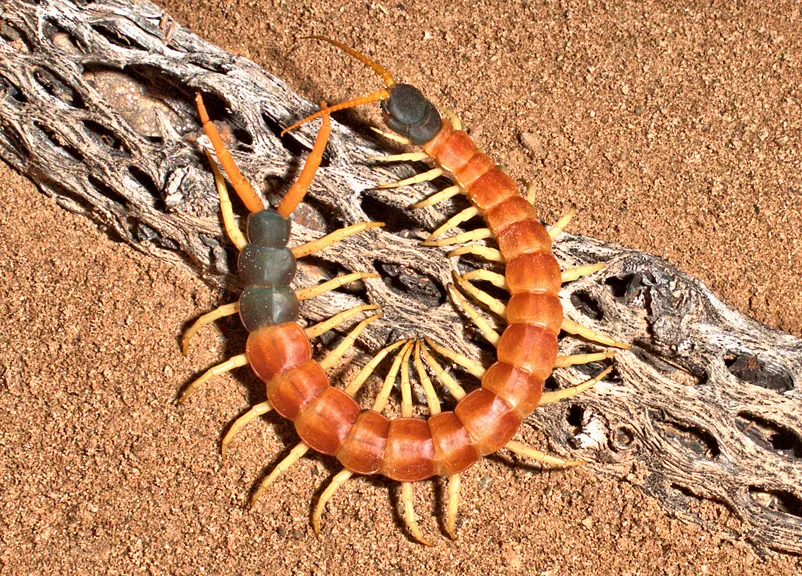
 Bí o ṣe lè dá a mọ̀
Agbára oró
Oró ń jáde láti inú eyín oró tàbí eyín rẹ̀ nígbà tí ó bá bùjẹ.
Kí ni oró rẹ̀ máa ń ṣe?
Its venom is similar to that of other Scolopendra centipedes. It acts as a cytolysin, which damages cell membranes and ruptures cells, and it contains heart-affecting (cardiotoxic) proteins. The exact effects of the venom have not been fully studied, because it is hard to collect in useful amounts and breaks down quickly once processed.1
Báwo ló ṣe léwu tó fún ènìyàn?
Ewu fún ènìyàn: Ó ń dunniÓ lè dunni gan-an, ṣùgbọ́n kì í fẹ́rẹ̀ẹ́ le rárá.Bites cause sharp, searing pain and swelling in people, and there have never been any confirmed deaths from this species. Occasional symptoms include nausea, headache and localised skin death (necrosis). Severe cases, including kidney failure from muscle breakdown and heart attack, have been reported from Scolopendra bites in general.1
Kí ni ó máa ń ṣe nígbà tí ẹ̀rù bá bà á?
Its bright warning colours are a signal to predators to leave it alone.1
 Bí ó bá bùjẹ
- Fọ ibi ìbùjẹ náà, tù ú tàbí rì í sínú omi lílọ́wọ́ọ́wọ́ fún ìrora, kí o sì wá ìrànlọ́wọ́ ìṣègùn bí ó bá ń burú sí i.
Máa kọ́kọ́ pe nọ́ńbà pàjáwìrì rẹ nígbà gbogbo (112, 000, 911). Èyí jẹ́ ìtọ́sọ́nà ìtọ́jú àkọ́kọ́ gbogbogbò, kì í ṣe ìmọ̀ràn ìṣègùn. Ìpìlẹ̀ ìtọ́jú àkọ́kọ́
 Wà láìléwu
- Má ṣe fọwọ́ kan, mú tàbí yọ ẹranko igbó lẹ́nu láéláé, kódà bí ó bá kéré, kódà bí ó bá dà bí ẹni pé ó ń sùn tàbí ó ti kú.
- Fún un ní àyè. Bí o bá pàdé ọ̀kan, farabalẹ̀, sẹ́yìn díẹ̀díẹ̀ kí o sì jẹ́ kí ó máa bá ọ̀nà rẹ̀ lọ.
- Bí ọ̀kan bá bù ọ́ jẹ: farabalẹ̀, má ṣe mira, pe nọ́ńbà pàjáwìrì rẹ (112, 000, 911) tàbí lọ sí ilé ìwòsàn kíákíá. Rántí bí ó ṣe rí, fọ́tò máa ń ṣèrànwọ́.
Kò wá ọ kiri láti ṣe ọ́ léṣe. Ó ń lo oró rẹ̀ láti mú oúnjẹ tàbí láti dáàbò bo ara rẹ̀, ó sì fẹ́ràn láti farapamọ́ jù. Sí i nípa wíwà láìléwu
Báwo ló ṣe tóbi tó?
Báwo ló ṣe gùn tó?
 ó gùn tó bíríkì ìṣeré 6 tí a tò sí ìlà kan
 lè sáré mítà 100 ní ìṣẹ́jú-àáyá 190 (ènìyàn tó yára jùlọ nílò 9.6)
Báwo ni Giant desert centipede ṣe tóbi tó tí a bá fi wé ÌWỌ?
Ìṣirò nìkan nínú bráwúsà rẹ. A kò fi ohunkóhun pamọ́, a kò sì fi ránṣẹ́ sí ibikíbi.
Báwo ló ṣe yára tó?


Òtítọ́
It can grab small flying insects out of the air.1
It is the largest centipede found in North America.1
Its colours change between variants, and the red-headed form found in Arkansas, Missouri and Texas is especially well known.1
It is a slow-growing species that can live for more than a decade.1
It grows slowly, and it keeps the same number of body segments for its whole life.1
Olùfọ́ àròsọ
Àròsọ: A bite from this centipede is deadly.
Òtítọ́: No deaths from its bites have been confirmed. For people, the bite usually causes sharp pain and swelling in the area bitten.1
Ibi tí àwọn òtítọ́ ti wá
- Scolopendra heros (Wikipedia (CC BY-SA 4.0))
- Scolopendra heros (iNaturalist): orúkọ àti ìpínsísọ̀rí.
- Venom Wiki: ìpele ewu, ìtóbi déédé àti àfojúbù ìyára jẹ́ tiwa. Wo bí a ṣe ń ṣírò wọn: Bí a ṣe ń díwọ̀n ewu.
Gbogbo òtítọ́ ojú-ìwé yìí ní nọ́ńbà tó tọ́ka sí orísun rẹ̀. Bí a bá ṣe àṣìṣe, má bínú, olólùfẹ́ ẹranko ni wá, kì í ṣe ìwé ìròyìn sáyẹ́ǹsì. Sọ fún wa ní [email protected] a ó sì tún un ṣe.
 Ebi ń pa àkekèé! Iṣẹ́ akanṣe ẹnì kan ṣoṣo ni Venom Wiki: ọ̀fẹ́ ni, kò sí ìpolówó, kò sì sí olùtọpinpin. Ẹ̀bùn kékeré ń ràn án lọ́wọ́ láti wà lórí íńtánẹ́ẹ̀tì.Bọ́ àkekèé
Sí i láti inú ẹgbẹ́ kan náà: Àwọn centipede (ọ̀kùn olóró)
 Common desert centipedeÀwọn centipede (ọ̀kùn olóró)Ó kàn ń dunni
 Green centipedeÀwọn centipede (ọ̀kùn olóró)Ó kàn ń dunni
 Haitian giant centipedeÀwọn centipede (ọ̀kùn olóró)Ó kàn ń dunni
 Eastern red centipedeÀwọn centipede (ọ̀kùn olóró)Aláìléwu
 Florida blue centipedeÀwọn centipede (ọ̀kùn olóró)Aláìléwu
 Peruvian giant centipedeÀwọn centipede (ọ̀kùn olóró)Ó nílò dókítà
 Terciopelo
 Eastern coral snake
 Eastern diamondback rattlesnake
 Eyelash viper
 Timber rattlesnake
 Western diamondback rattlesnake