
 Áfíríkà
 Éṣíà
Éṣíà Yúróòpù
 Gúúsù Amẹ́ríkà
 Ọsirélíà àti Òṣéáníà
 Antáktíkà
 Òkun Pàsífíìkì
 Òkun Àtìláńtíìkì
 Òkun Íńdíà
 Òkun Áktíkì
 Òkun Mẹditaréníà
 Òkun Pupa
 Òkun Káríbíànù
 Òkun Coral
 Òkun Gúúsù Ṣáínà
 Òkun Fílípínì
 Òkun Andaman
 Òkun Àríwá
 Òkun Tímọ̀ àti Òkun Àráfúrà
 Ìyawọlẹ̀ Òkun Bẹ̀ngál
 Ìyawọlẹ̀ Òkun Kalifọ́níà
Terciopelo
 Ìbùjẹ
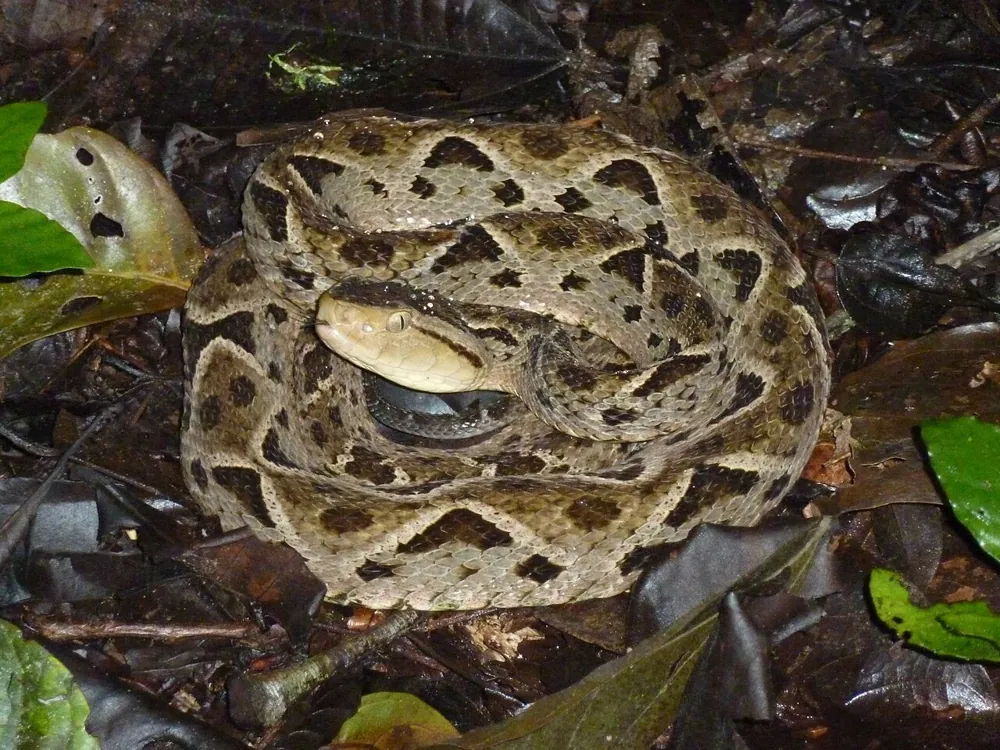
ÌbùjẹThe terciopelo is a large pit viper, one of the biggest vipers in the world. It lives from north-east Mexico through Central America to northern South America. It is important to know because it causes more envenomated snakebites than any other snake in its range.1



 Bí o ṣe lè dá a mọ̀
- Broad, flattened head that is clearly set apart from the neck1
- Light to dark brown, olive, grey or nearly black body1
- Often a yellowish zig-zag line on each side of the body1
- Dark triangles with pale edges along the sides of the body1
- Pale yellow, cream or whitish grey underside with dark blotches1
A sábà máa ń ṣì í mọ̀ sí: Bothrops atrox is similar in colour, but it usually has yellow or rust-like tones and rectangular or trapezoidal blotches. The terciopelo is often more uniformly brown or grey, with the zig-zag pattern on its sides.1
Agbára oró
Oró ń jáde láti inú eyín oró tàbí eyín rẹ̀ nígbà tí ó bá bùjẹ.
Báwo ló ṣe léwu tó fún ènìyàn?
Ewu fún ènìyàn: ApaniỌ̀kan lára àwọn ẹranko tó léwu jùlọ ní ayé.It is considered one of the most dangerous snakes in its range because it is large, has big fangs and a potent venom, and lives close to people. It is responsible for the most envenomated snakebites within its range. Bites usually happen only when the snake is cornered, pursued or threatened.1
Kí ni ó máa ń ṣe nígbà tí ẹ̀rù bá bà á?
When cornered or threatened, it may perform an S-shaped coiled display and can be very defensive, sometimes suddenly reversing direction to attack.1
 Bí ó bá bùjẹ
- Jẹ́ kí ẹni náà wà láìmira kí ó sì farabalẹ̀, jẹ́ kí apá tàbí ẹsẹ̀ tí ó bù jẹ wà ní ìpele ọkàn, yọ òrùka àti àwọn nǹkan tó há, kí ẹ sì lọ sí ilé ìwòsàn kíákíá.
Máa kọ́kọ́ pe nọ́ńbà pàjáwìrì rẹ nígbà gbogbo (112, 000, 911). Èyí jẹ́ ìtọ́sọ́nà ìtọ́jú àkọ́kọ́ gbogbogbò, kì í ṣe ìmọ̀ràn ìṣègùn. Ìpìlẹ̀ ìtọ́jú àkọ́kọ́
 Wà láìléwu
- Má ṣe fọwọ́ kan, mú tàbí yọ ẹranko igbó lẹ́nu láéláé, kódà bí ó bá kéré, kódà bí ó bá dà bí ẹni pé ó ń sùn tàbí ó ti kú.
- Fún un ní àyè. Bí o bá pàdé ọ̀kan, farabalẹ̀, sẹ́yìn díẹ̀díẹ̀ kí o sì jẹ́ kí ó máa bá ọ̀nà rẹ̀ lọ.
- Bí ọ̀kan bá bù ọ́ jẹ: farabalẹ̀, má ṣe mira, pe nọ́ńbà pàjáwìrì rẹ (112, 000, 911) tàbí lọ sí ilé ìwòsàn kíákíá. Rántí bí ó ṣe rí, fọ́tò máa ń ṣèrànwọ́.
Kò wá ọ kiri láti ṣe ọ́ léṣe. Ó ń lo oró rẹ̀ láti mú oúnjẹ tàbí láti dáàbò bo ara rẹ̀, ó sì fẹ́ràn láti farapamọ́ jù. Sí i nípa wíwà láìléwu
Báwo ló ṣe tóbi tó?
Báwo ló ṣe gùn tó?
Báwo ló ṣe wúwo tó?
 ó gùn tó ajá 2.5 láti imú dé ìrù
 ó gùn tó ọ̀gẹ̀dẹ̀ 14 tí a tò tẹ̀léra
 ó wúwo tó ológbò ilé
 lè sáré mítà 100 ní ìṣẹ́jú-àáyá 86 (ènìyàn tó yára jùlọ nílò 9.6)
Báwo ni Terciopelo ṣe tóbi tó tí a bá fi wé ÌWỌ?
Ìṣirò nìkan nínú bráwúsà rẹ. A kò fi ohunkóhun pamọ́, a kò sì fi ránṣẹ́ sí ibikíbi.
Báwo ló ṣe yára tó?


Òtítọ́
Juveniles can lure prey by waving brightly coloured tail tips. Only males have bright tail tips, though both sexes show this behaviour.1
It is one of the largest vipers in the world, and it is often called 'the ultimate pit-viper' by herpetologists.1
Females are much bigger than males. The two sexes are born the same size, but females grow much faster from about 7 to 12 months of age.1
Its home range is small for a pit viper, averaging between about 3.7 and 6 hectares.1
Olùfọ́ àròsọ
Àròsọ: Fer-de-lance is the name of one single snake species.
Òtítọ́: The name fer-de-lance has been used informally for several Bothrops species, including this one. Herpetologists now prefer the name terciopelo for Bothrops asper.1
Ibi tí àwọn òtítọ́ ti wá
- Bothrops asper (Wikipedia (CC BY-SA 4.0))
- Bothrops asper (iNaturalist): orúkọ àti ìpínsísọ̀rí.
- Venom Wiki: ìpele ewu, ìtóbi déédé àti àfojúbù ìyára jẹ́ tiwa. Wo bí a ṣe ń ṣírò wọn: Bí a ṣe ń díwọ̀n ewu.
Gbogbo òtítọ́ ojú-ìwé yìí ní nọ́ńbà tó tọ́ka sí orísun rẹ̀. Bí a bá ṣe àṣìṣe, má bínú, olólùfẹ́ ẹranko ni wá, kì í ṣe ìwé ìròyìn sáyẹ́ǹsì. Sọ fún wa ní [email protected] a ó sì tún un ṣe.
 Ebi ń pa àkekèé! Iṣẹ́ akanṣe ẹnì kan ṣoṣo ni Venom Wiki: ọ̀fẹ́ ni, kò sí ìpolówó, kò sì sí olùtọpinpin. Ẹ̀bùn kékeré ń ràn án lọ́wọ́ láti wà lórí íńtánẹ́ẹ̀tì.Bọ́ àkekèé
 Eyelash viper
 Golden lancehead
 South American bushmaster
 Cottonmouth
 Eastern copperhead
 Common lancehead
 Eastern coral snake
 Eastern diamondback rattlesnake
 Timber rattlesnake
 Western diamondback rattlesnake
 Arizona bark scorpion
 Brown recluse