
 Áfíríkà
 Éṣíà
Éṣíà Yúróòpù
 Gúúsù Amẹ́ríkà
 Ọsirélíà àti Òṣéáníà
 Antáktíkà
 Òkun Pàsífíìkì
 Òkun Àtìláńtíìkì
 Òkun Íńdíà
 Òkun Áktíkì
 Òkun Mẹditaréníà
 Òkun Pupa
 Òkun Káríbíànù
 Òkun Coral
 Òkun Gúúsù Ṣáínà
 Òkun Fílípínì
 Òkun Andaman
 Òkun Àríwá
 Òkun Tímọ̀ àti Òkun Àráfúrà
 Ìyawọlẹ̀ Òkun Bẹ̀ngál
 Ìyawọlẹ̀ Òkun Kalifọ́níà
Yellow-bellied sea snake
 Ìbùjẹ
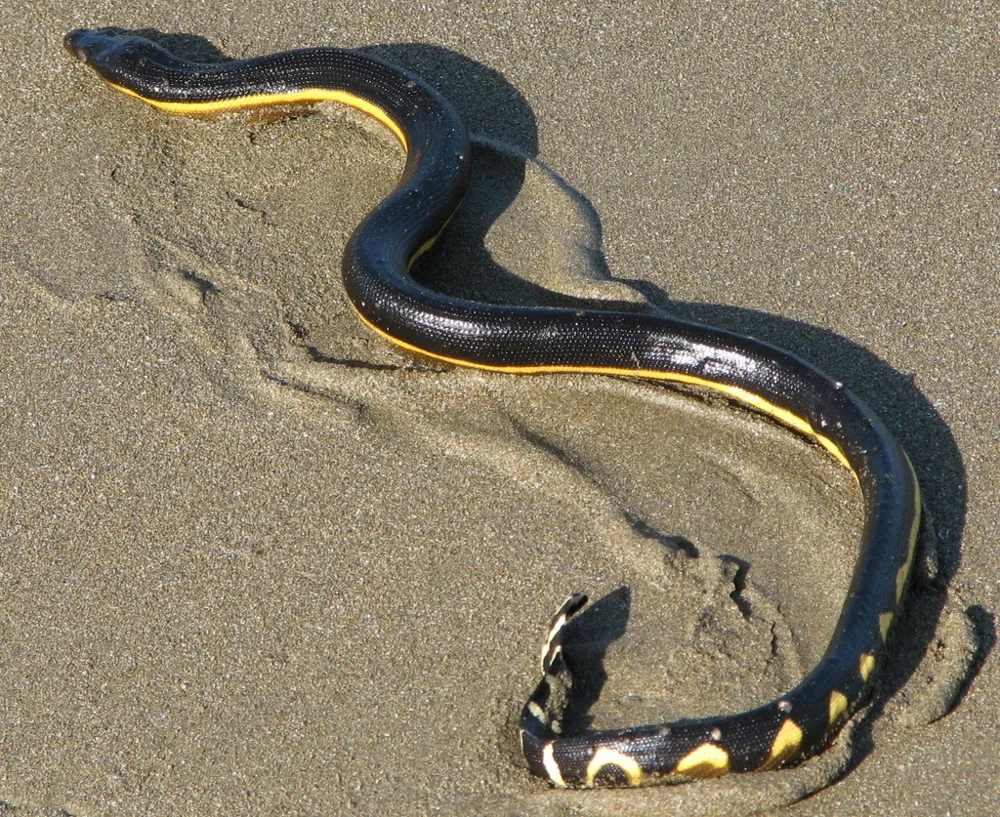
ÌbùjẹThe yellow-bellied sea snake is a sea snake with a strongly venomous bite. It lives in warm tropical oceans and spends its whole life at sea, floating on the surface. Its yellow belly and brown back make it easy to tell apart from most other sea snakes.1

 Bí o ṣe lè dá a mọ̀
- Sharply bicoloured: black or dark brown on the back, with a yellow or brown underside.1
- The yellow belly may have black spots, bars or crossbars, or a narrow black stripe along the back.1
- Has a flattened, paddle-shaped tail for swimming.1
- Adults are usually up to about 72 cm (males) or 88 cm (females) long.1
Agbára oró
Oró ń jáde láti inú eyín oró tàbí eyín rẹ̀ nígbà tí ó bá bùjẹ.
Kí ni oró rẹ̀ máa ń ṣe?
The venom is highly potent and contains several different neurotoxins, which attack the nerves, along with two other isotoxins. Sea snake venom can damage skeletal muscle, which may release myoglobin into the urine (myoglobinuria), and can cause neuromuscular paralysis or direct kidney damage. Juvenile venom is on average less concentrated than adult venom.1
Báwo ló ṣe léwu tó fún ènìyàn?
Ewu fún ènìyàn: Ó le gan-anÌbùjẹ nílò dókítà. Ikú kò wọ́pọ̀ rárá.Bites are rare. The most common victims are fishermen who try to remove the snakes from fishing nets. No deaths have been recorded from bites in Australian waters.1
 Ìròyìn ayọ̀: àwọn dókítà ní oògùn (antivenom) tàbí ìtọ́jú fún èyí.1
Kí ni ó máa ń ṣe nígbà tí ẹ̀rù bá bà á?
It is not considered aggressive but will defend itself if threatened.1
 Bí ó bá bùjẹ
- The venom is neutralised with sea snake antivenom (Enhydrina schistosa). If that is not available, tiger snake or polyvalent antivenom should be used.1
- Dídì pẹ̀lú ìfúnpá láìmira (pressure immobilisation): fi bándéèjì rọ́bà (elastic) tó le wé ibi ìbùjẹ náà, lẹ́yìn náà wé e sókè títí bo gbogbo apá tàbí ẹsẹ̀ náà, fi igi ìdábùú (splint) dì í, kí o sì jẹ́ kí ẹni náà wà láìmira rárá títí ìrànlọ́wọ́ yóò fi dé.
- Mú ẹni náà jáde kúrò nínú omi kí o sì gbé e lọ sí ilé ìwòsàn kíákíá.
Máa kọ́kọ́ pe nọ́ńbà pàjáwìrì rẹ nígbà gbogbo (112, 000, 911). Èyí jẹ́ ìtọ́sọ́nà ìtọ́jú àkọ́kọ́ gbogbogbò, kì í ṣe ìmọ̀ràn ìṣègùn. Ìpìlẹ̀ ìtọ́jú àkọ́kọ́
 Wà láìléwu
- Má ṣe fọwọ́ kan, mú tàbí yọ ẹranko igbó lẹ́nu láéláé, kódà bí ó bá kéré, kódà bí ó bá dà bí ẹni pé ó ń sùn tàbí ó ti kú.
- Fún un ní àyè. Bí o bá pàdé ọ̀kan, farabalẹ̀, sẹ́yìn díẹ̀díẹ̀ kí o sì jẹ́ kí ó máa bá ọ̀nà rẹ̀ lọ.
- Bí ọ̀kan bá bù ọ́ jẹ: farabalẹ̀, má ṣe mira, pe nọ́ńbà pàjáwìrì rẹ (112, 000, 911) tàbí lọ sí ilé ìwòsàn kíákíá. Rántí bí ó ṣe rí, fọ́tò máa ń ṣèrànwọ́.
Kò wá ọ kiri láti ṣe ọ́ léṣe. Ó ń lo oró rẹ̀ láti mú oúnjẹ tàbí láti dáàbò bo ara rẹ̀, ó sì fẹ́ràn láti farapamọ́ jù. Sí i nípa wíwà láìléwu
Níbo ní ayé?
Báwo ló ṣe tóbi tó?
Báwo ló ṣe gùn tó?
 ó gùn tó ológbò ilé 2 láti imú dé ìrù
 ó gùn tó ọ̀gẹ̀dẹ̀ 5 tí a tò tẹ̀léra
 lè lúwẹ̀ẹ́ gígùn adágún ìwẹ̀ ńlá (50 m) ní ìṣẹ́jú-àáyá 49
Báwo ni Yellow-bellied sea snake ṣe tóbi tó tí a bá fi wé ÌWỌ?
Ìṣirò nìkan nínú bráwúsà rẹ. A kò fi ohunkóhun pamọ́, a kò sì fi ránṣẹ́ sí ibikíbi.
Báwo ló ṣe yára tó?
Òtítọ́
It can swim backwards, which is an unusual ability and a distinguishing feature of this species.1
It breathes partly through its skin, taking oxygen from seawater while diving and swimming at the surface.1
It can survive severe dehydration for up to 7 months during seasonal drought.1
Large groups of thousands have been seen floating together on the surface in oceanic drift lines.1
It is the only sea snake known to have reached the Hawaiian Islands.1
Strays wash up so often on New Zealand's coasts that it is considered native to the country and protected under the Wildlife Act 1953.1
Olùfọ́ àròsọ
Àròsọ: Sea snakes drink seawater and filter out the salt through a special salt gland in the lower jaw.
Òtítọ́: Sea snakes drink only fresh water. The salt gland was once thought to filter salt, but it is not used for that purpose. The yellow-bellied sea snake likely drinks from freshwater lenses that form on the sea surface after heavy rain.1
Fún àwọn amòye oró
- Orúkọ sáyẹ́ǹsì
- Hydrophis platurus
- Ẹgbẹ́
- Ejò òkun
- Ìdílé
- Elapidae2
- Ètò
- Squamata
- Àwọn kọ́ńtínẹ́ńtì
- Òkun Pàsífíìkì, Òkun Íńdíà, Òkun Coral, Òkun Gúúsù Ṣáínà, Òkun Fílípínì, Òkun Andaman, Òkun Arébíà àti Ìyawọlẹ̀ Òkun Páṣíà, Òkun Tímọ̀ àti Òkun Àráfúrà, Ìyawọlẹ̀ Òkun Bẹ̀ngál, Ìyawọlẹ̀ Òkun Kalifọ́níà, Àwọn òkun ńlá
- Àwọn ọmọ
- It gives birth to live young (ovoviviparous) after a gestation period of around 6 months, and females bear them in tidal pools.1
- Ewu fún ènìyàn
- 3 / 5: Ó le gan-an3
Ibi tí àwọn òtítọ́ ti wá
- Yellow-bellied sea snake (Wikipedia (CC BY-SA 4.0))
- Hydrophis platurus (iNaturalist): orúkọ àti ìpínsísọ̀rí.
- Venom Wiki: ìpele ewu, ìtóbi déédé àti àfojúbù ìyára jẹ́ tiwa. Wo bí a ṣe ń ṣírò wọn: Bí a ṣe ń díwọ̀n ewu.
Gbogbo òtítọ́ ojú-ìwé yìí ní nọ́ńbà tó tọ́ka sí orísun rẹ̀. Bí a bá ṣe àṣìṣe, má bínú, olólùfẹ́ ẹranko ni wá, kì í ṣe ìwé ìròyìn sáyẹ́ǹsì. Sọ fún wa ní [email protected] a ó sì tún un ṣe.
 Ebi ń pa àkekèé! Iṣẹ́ akanṣe ẹnì kan ṣoṣo ni Venom Wiki: ọ̀fẹ́ ni, kò sí ìpolówó, kò sì sí olùtọpinpin. Ẹ̀bùn kékeré ń ràn án lọ́wọ́ láti wà lórí íńtánẹ́ẹ̀tì.Bọ́ àkekèé
Sí i láti inú ẹgbẹ́ kan náà: Ejò òkun
 Beaked sea snake
 Belcher's sea snake
 Black-banded sea krait
 Blue-lipped sea krait
 Dubois' sea snake
 Olive sea snake
Ó tún ń gbé ní: Òkun Pàsífíìkì
 Australian box jellyfishJellyfish àti àwọn ẹ̀dá òkun tó ń ta niApaniMá ṣe fọwọ́ kàn án
 Geography coneÌgbín cone àti octopusApani
 Greater blue-ringed octopusÌgbín cone àti octopusApani
 Japanese pufferfishÀwọn ẹranko onímájèlé mìírànApani
 Southern blue-ringed octopusÌgbín cone àti octopusApani
 Hawksbill sea turtleÀwọn ẹranko onímájèlé mìírànÓ lè pani