
 Áfíríkà
 Éṣíà
Éṣíà Yúróòpù
 Gúúsù Amẹ́ríkà
 Ọsirélíà àti Òṣéáníà
 Antáktíkà
 Òkun Pàsífíìkì
 Òkun Àtìláńtíìkì
 Òkun Íńdíà
 Òkun Áktíkì
 Òkun Mẹditaréníà
 Òkun Pupa
 Òkun Káríbíànù
 Òkun Coral
 Òkun Gúúsù Ṣáínà
 Òkun Fílípínì
 Òkun Andaman
 Òkun Àríwá
 Òkun Tímọ̀ àti Òkun Àráfúrà
 Ìyawọlẹ̀ Òkun Bẹ̀ngál
 Ìyawọlẹ̀ Òkun Kalifọ́níà
Greater blue-ringed octopus
 Ìbùjẹ
ÌbùjẹThe greater blue-ringed octopus is a small sea creature that lives in the warm shallow waters of the Indo-West Pacific, including around Australia. It is one of the most venomous marine animals in the world, so knowing what it looks like matters.1



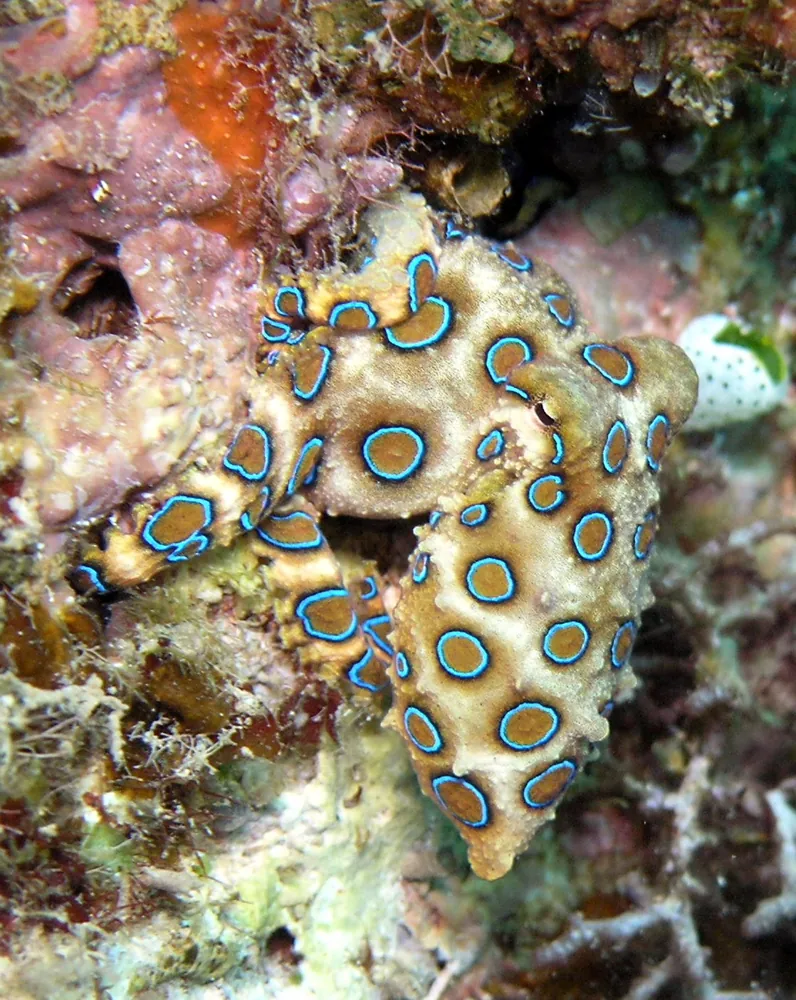
 Bí o ṣe lè dá a mọ̀
- A small octopus, up to 10 cm with its arms included, weighing about 80 grams on average.1
- Electric blue rings, about 7 to 8 mm across, roughly 60 of them, spread over its whole skin.1
- The rings flash iridescent blue as a warning signal, each flash lasting about a third of a second.1
- Its body colour varies from yellow ochre to light brown, or whitish when inactive.1
- Blue lines run through its eyes.1
Agbára oró
Oró ń jáde láti inú eyín oró tàbí eyín rẹ̀ nígbà tí ó bá bùjẹ.
Kí ni oró rẹ̀ máa ń ṣe?
Its venom contains tetrodotoxin (TTX), a powerful neurotoxin, which is a poison that attacks the nerves. It paralyses the muscles needed for movement, and in people it can lead to death through respiratory paralysis, which means the breathing muscles stop working. Symptoms include tingling and numbness of the face and lips, sweating, severe headaches, dizziness, speech problems, weakness and vomiting. Symptoms can appear between 15 minutes and four hours after a bite, and the victim stays conscious throughout.1
Báwo ló ṣe léwu tó fún ènìyàn?
Ewu fún ènìyàn: ApaniỌ̀kan lára àwọn ẹranko tó léwu jùlọ ní ayé.The bite is capable of being fatal to humans. The bite is painless, so a person may not notice it. Children are more sensitive to the toxin. Death can occur between 20 minutes and 24 hours after symptoms begin.1
Kí ni ó máa ń ṣe nígbà tí ẹ̀rù bá bà á?
It flashes its blue rings as a warning to predators, and it uses its venom to defend itself.1
 Bí ó bá bùjẹ
- Dídì pẹ̀lú ìfúnpá láìmira (pressure immobilisation): fi bándéèjì rọ́bà (elastic) tó le wé ibi ìbùjẹ náà, lẹ́yìn náà wé e sókè títí bo gbogbo apá tàbí ẹsẹ̀ náà, fi igi ìdábùú (splint) dì í, kí o sì jẹ́ kí ẹni náà wà láìmira rárá títí ìrànlọ́wọ́ yóò fi dé.
- Octopus olórùka búlúù tàbí ìgbín cone lè dá èémí ènìyàn dúró nígbà tí ó ṣì wà lójúfò: pe fún ìrànlọ́wọ́, kí o sì múra láti fún un ní èémí ìgbàlà (fífẹ́ atẹ́gùn sí ẹnu rẹ̀) títí ọkọ̀ aláìsàn yóò fi dé tí wọn yóò sì gba iṣẹ́ náà.
Máa kọ́kọ́ pe nọ́ńbà pàjáwìrì rẹ nígbà gbogbo (112, 000, 911). Èyí jẹ́ ìtọ́sọ́nà ìtọ́jú àkọ́kọ́ gbogbogbò, kì í ṣe ìmọ̀ràn ìṣègùn. Ìpìlẹ̀ ìtọ́jú àkọ́kọ́
 Wà láìléwu
- Má ṣe fọwọ́ kan, mú tàbí yọ ẹranko igbó lẹ́nu láéláé, kódà bí ó bá kéré, kódà bí ó bá dà bí ẹni pé ó ń sùn tàbí ó ti kú.
- Fún un ní àyè. Bí o bá pàdé ọ̀kan, farabalẹ̀, sẹ́yìn díẹ̀díẹ̀ kí o sì jẹ́ kí ó máa bá ọ̀nà rẹ̀ lọ.
- Bí ọ̀kan bá bù ọ́ jẹ: farabalẹ̀, má ṣe mira, pe nọ́ńbà pàjáwìrì rẹ (112, 000, 911) tàbí lọ sí ilé ìwòsàn kíákíá. Rántí bí ó ṣe rí, fọ́tò máa ń ṣèrànwọ́.
Kò wá ọ kiri láti ṣe ọ́ léṣe. Ó ń lo oró rẹ̀ láti mú oúnjẹ tàbí láti dáàbò bo ara rẹ̀, ó sì fẹ́ràn láti farapamọ́ jù. Sí i nípa wíwà láìléwu
Níbo ní ayé?
Báwo ló ṣe tóbi tó?
Báwo ló ṣe gùn tó?
 ó gùn tó bíríkì ìṣeré 3 tí a tò sí ìlà kan
 lè lúwẹ̀ẹ́ gígùn adágún ìwẹ̀ ńlá (50 m) ní ìṣẹ́jú-àáyá 7.2
Báwo ni Greater blue-ringed octopus ṣe tóbi tó tí a bá fi wé ÌWỌ?
Ìṣirò nìkan nínú bráwúsà rẹ. A kò fi ohunkóhun pamọ́, a kò sì fi ránṣẹ́ sí ibikíbi.
Báwo ló ṣe yára tó?

Òtítọ́
The greater blue-ringed octopus is one of the most venomous marine animals in the world, despite being small.1
Its venom contains tetrodotoxin, the same toxin found in pufferfish.1
There is no known antidote or antitoxin for tetrodotoxin, and the toxin does not break down when heated or boiled.1
Its blue rings are a warning signal to predators, showing that it is highly venomous.1
Males die after mating, and females die after guarding their eggs because they refuse to eat.1
Olùfọ́ àròsọ
Àròsọ: A small octopus is harmless.
Òtítọ́: Despite its small size, its bite can be deadly to humans.1
Fún àwọn amòye oró
- Orúkọ sáyẹ́ǹsì
- Hapalochlaena lunulata
- Ẹgbẹ́
- Ìgbín cone àti octopus
- Ìdílé
- Octopodidae2
- Ètò
- Octopoda
- Àwọn kọ́ńtínẹ́ńtì
- Òkun Íńdíà, Òkun Pàsífíìkì, Òkun Coral, Òkun Fílípínì, Òkun Tímọ̀ àti Òkun Àráfúrà, Àwọn òkun ńlá
- Àwọn ọmọ
- The female lays 50 to 100 eggs, which she carries under her arms for about a month. The young hatch as tiny planktonic paralarvae, about the size of a pea.1
- Ọjọ́ ayé
- nǹkan bí ọdún 21
- Ewu fún ènìyàn
- 5 / 5: Apani3
Ibi tí àwọn òtítọ́ ti wá
- Greater blue-ringed octopus (Wikipedia (CC BY-SA 4.0))
- Hapalochlaena lunulata (iNaturalist): orúkọ àti ìpínsísọ̀rí.
- Venom Wiki: ìpele ewu, ìtóbi déédé àti àfojúbù ìyára jẹ́ tiwa. Wo bí a ṣe ń ṣírò wọn: Bí a ṣe ń díwọ̀n ewu.
Gbogbo òtítọ́ ojú-ìwé yìí ní nọ́ńbà tó tọ́ka sí orísun rẹ̀. Bí a bá ṣe àṣìṣe, má bínú, olólùfẹ́ ẹranko ni wá, kì í ṣe ìwé ìròyìn sáyẹ́ǹsì. Sọ fún wa ní [email protected] a ó sì tún un ṣe.
 Ebi ń pa àkekèé! Iṣẹ́ akanṣe ẹnì kan ṣoṣo ni Venom Wiki: ọ̀fẹ́ ni, kò sí ìpolówó, kò sì sí olùtọpinpin. Ẹ̀bùn kékeré ń ràn án lọ́wọ́ láti wà lórí íńtánẹ́ẹ̀tì.Bọ́ àkekèé
Sí i láti inú ẹgbẹ́ kan náà: Ìgbín cone àti octopus
 Geography cone
 Southern blue-ringed octopus
 Blue sea dragon
 Common octopus
 Giant Pacific octopus
 Blue-lined octopus
Ó tún ń gbé ní: Òkun Íńdíà
 Australian box jellyfishJellyfish àti àwọn ẹ̀dá òkun tó ń ta niApaniMá ṣe fọwọ́ kàn án
 Hawksbill sea turtleÀwọn ẹranko onímájèlé mìírànÓ lè pani
 Irukandji jellyfishJellyfish àti àwọn ẹ̀dá òkun tó ń ta niÓ lè paniMá ṣe fọwọ́ kàn án
 Reef stonefishẸja olóróÓ lè paniMá ṣe fọwọ́ kàn án
 Crown-of-thorns starfishSea urchin, ẹja ìràwọ̀ àti kòkòrò inú òkunÓ nílò dókítàMá ṣe fọwọ́ kàn án
 Portuguese man o' warJellyfish àti àwọn ẹ̀dá òkun tó ń ta niÓ nílò dókítàMá ṣe fọwọ́ kàn án