
 I-Afrika
 I-Asia
 I-Yurophu
 INingizimu Melika
 I-Australia ne-Oceania
 I-Antarctica
 ULwandlekazi iPacific
 ULwandlekazi i-Atlantic
 ULwandlekazi i-India
 ULwandlekazi i-Arctic
 Ulwandle iMediterranean
 Ulwandle Olubomvu
 Ulwandle iCaribbean
 Ulwandle iCoral
 Ulwandle lwaseNingizimu China
 Ulwandle lwasePhilippines
 Ulwandle i-Andaman
 Ulwandle i-North Sea
 Ulwandle lwaseTimor ne-Arafura
 Ichweba laseBengal
 Ichweba laseCalifornia
Brazilian black tarantula
 Ukuluma
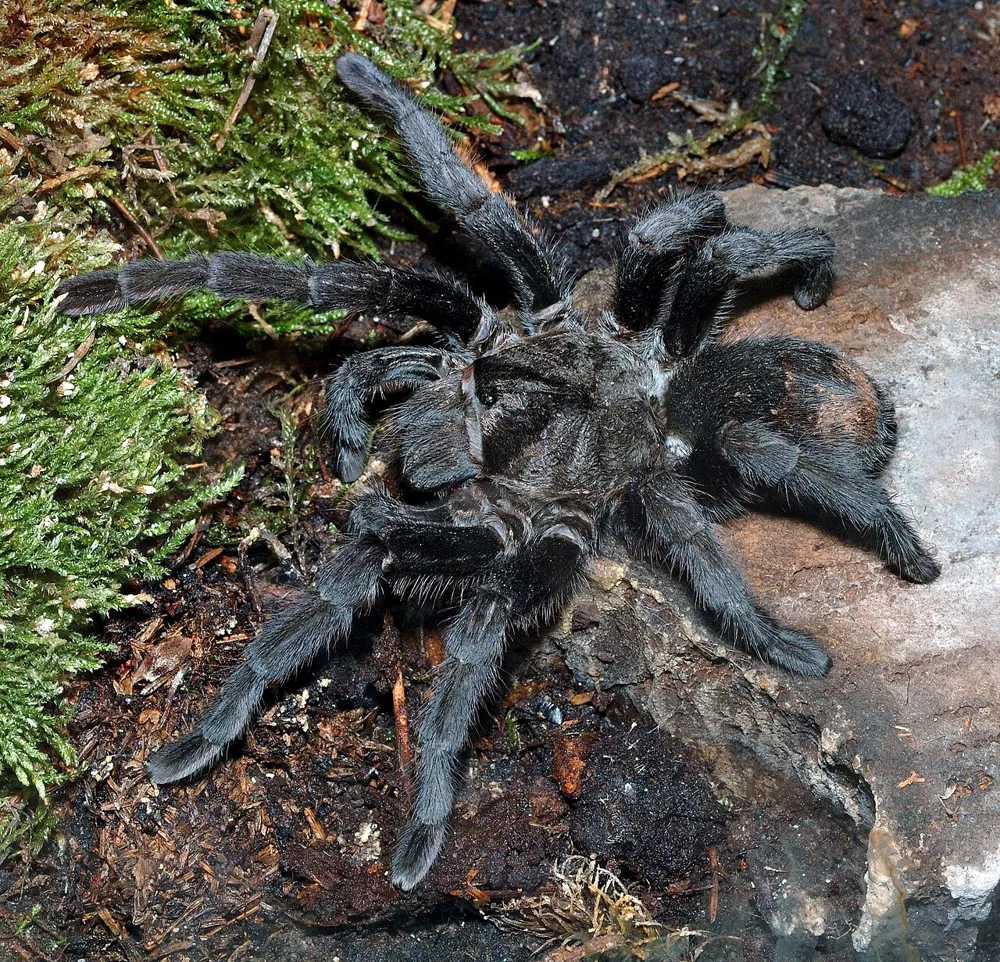
The Brazilian black tarantula is a large, spider-like animal from Brazil. Mature adults are almost entirely black, which makes them a popular and fairly expensive choice for the pet trade. It is a slow-growing species, and its long-lived females are especially prized.1

 Indlela yokusibona
- Mature specimens are almost entirely black.1
- Reaches up to 18 cm (7 in) when fully grown.1
- Grows slowly, taking up to eight years to reach maturity.1
- As a juvenile in captivity, it tends to burrow when given the chance.1
Ivamise ukudidaniswa ne: Many animals sold as Brazilian black tarantulas are actually Grammostola quirogai, the Uruguayan black tarantula. It has a nearly identical appearance and was only identified as a separate species in 2015.1
Amandla obuthi
Ubuthi buphuma ngamazinyo aso obuthi noma ngamazinyo uma siluma.
Ubuthi baso benzani?
Its venom is less irritating than that of many other tarantula species. Like most New World tarantulas, it has urticating hairs, which it can release from its body when provoked.1
Siyingozi kangakanani ebantwini?
Ingozi ebantwini: KuncaneNjengokuhlatshwa yinyosi noma ngaphansi. Cishe akunangozi ebantwini.Senzani uma sesabile?
If provoked, it would much rather flee than attack.1
 Uma siluma
- Geza inxeba lokulunywa bese ulipholisa. Thola usizo lwezokwelapha uma ubuhlungu bunamandla noma umuntu ezizwa engaphilile.
Njalo shayela kuqala inombolo yezimo eziphuthumayo (112, 000, 911). Lokhu kuyiseluleko sosizo lokuqala esijwayelekile, akusona iseluleko sezokwelapha. Izisekelo zosizo lokuqala
 Hlala uphephile
- Ungalokothi uthinte, ubambe noma ugcone isilwane sasendle, ngisho noma sincane, futhi ngisho noma sibukeka silele noma sifile.
- Sinike isikhala. Uma uhlangana naso, hlala uzolile, uhlehle kancane bese usiyeka sihambe ngendlela yaso.
- Uma sikuluma: hlala uzolile, ungashukumi, shayela inombolo yezimo eziphuthumayo (112, 000, 911) noma uye esibhedlela ngokushesha. Khumbula ukuthi besibukeka kanjani, isithombe siyasiza.
Asikuzingeli wena. Sisebenzisa ubuthi baso ukuze sibambe ukudla noma ukuzivikela, futhi singancamela ukucasha. Okwengeziwe mayelana nokuhlala uphephile
Sikhulu kangakanani?
Side kangakanani?
 side njengezitini zamathoyizi ezingu-6 ezilandelanayo
 singahamba amamitha ali-100 ngemizuzwana engu-200 (umuntu oshesha kunabo bonke udinga engu-9,6)
Brazilian black tarantula mkhulu kangakanani uma uqhathanisa NAWE?
Yizibalo nje kusiphequluli sakho. Akukho okulondolozwayo noma okuthunyelwa ndawo.
Sishesha kangakanani?


Amaqiniso
It is a slow grower, taking up to eight years to reach maturity.1
Females of this species will almost always outlive males by many years.1
Many of its urticating hairs stay put, so it often does not spread them around its home, unlike some other tarantula species.1
Its solid black body makes it an appealing tarantula for the pet trade.1
Umqothuli wezinganekwane
Inganekwane: Every black tarantula sold as a Brazilian black tarantula comes from Brazil.
Iqiniso: Many animals sold under this name are actually Grammostola quirogai, the Uruguayan black tarantula.1
Lapho amaqiniso evela khona
- Grammostola pulchra (Wikipedia (CC BY-SA 4.0))
- Grammostola pulchra (iNaturalist): amagama nokuhlelwa ngezigaba.
- Venom Wiki: izinga lengozi, usayizi ojwayelekile nesiqagela sejubane kungokwethu. Bona ukuthi sikubala kanjani: Indlela esilinganisa ngayo ingozi.
Iqiniso ngalinye kuleli khasi linenombolo ekhomba umthombo walo. Uma senze iphutha, uxolo, singabathandi bezilwane, hhayi iphephabhuku lesayensi. Sitshele ku-[email protected] futhi sizolilungisa.
 Ufezela ulambile! I-Venom Wiki iwumsebenzi womuntu oyedwa: imahhala, ayinazo izikhangiso noma izilandeli. Isipho esincane sisiza ukuyigcina ku-inthanethi.Phakela ufezela
Okunye okuvela eqenjini elifanayo: Ama-tarantula nama-funnel-web
 Goliath birdeaterAma-tarantula nama-funnel-webKubuhlungu nje
 Brazilian salmon pink birdeaterAma-tarantula nama-funnel-webAkunangozi
 Chilean rose tarantulaAma-tarantula nama-funnel-webAkunangozi
 Greenbottle blue tarantulaAma-tarantula nama-funnel-webAkunangozi
 Pinktoe tarantulaAma-tarantula nama-funnel-webAkunangozi
 Brazilian funnel-web spiderAma-tarantula nama-funnel-webKudinga udokotela
 Golden poison frog
 Terciopelo
 Brazilian wandering spider
 Eyelash viper
 Golden lancehead
 South American bushmaster
.jpg)