
 I-Afrika
 I-Asia
 I-Yurophu
 INingizimu Melika
 I-Australia ne-Oceania
 I-Antarctica
 ULwandlekazi iPacific
 ULwandlekazi i-Atlantic
 ULwandlekazi i-India
 ULwandlekazi i-Arctic
 Ulwandle iMediterranean
 Ulwandle Olubomvu
 Ulwandle iCaribbean
 Ulwandle iCoral
 Ulwandle lwaseNingizimu China
 Ulwandle lwasePhilippines
 Ulwandle i-Andaman
 Ulwandle i-North Sea
 Ulwandle lwaseTimor ne-Arafura
 Ichweba laseBengal
 Ichweba laseCalifornia
Golden poison frog
 Ushevu esikhumbeni sasoSidla: IzinambuzaneSinoshevu, asinabo ubuthi bokuluma noma bokuhlaba
The golden poison frog is a small, bright frog from the rainforests of Colombia. It is considered the most poisonous animal species on Earth, even though it is small. Its bright colours warn predators to stay away.1


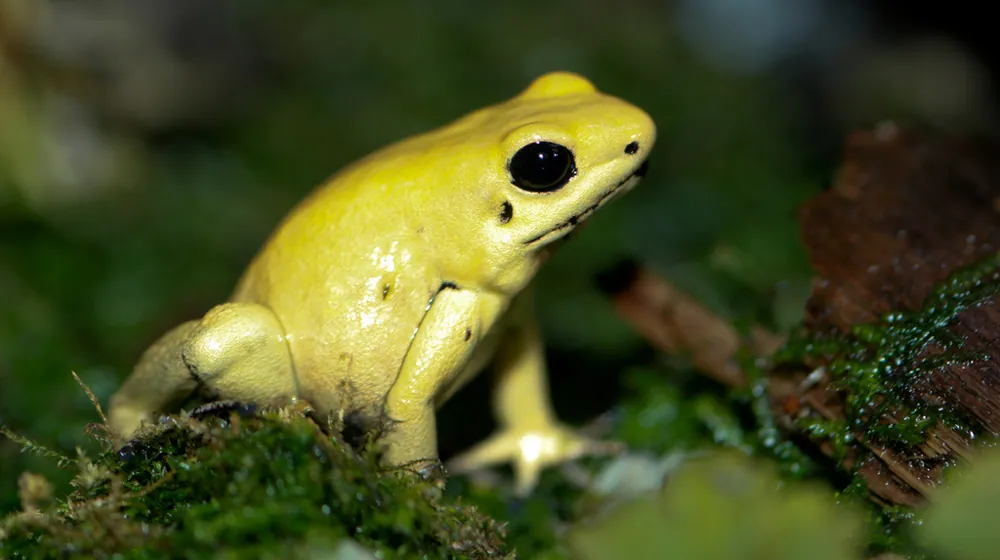
 Indlela yokusibona
- Adults are brightly coloured, in yellow, mint green, orange or golden yellow forms.1
- Juveniles are mostly black with two golden-yellow stripes along their backs.1
- Juveniles become fully coloured at about 18 weeks of age.1
- It is the largest species in the poison dart frog family.1
- Females are typically larger than males.1
Amandla oshevu
Isikhumba saso sinoshevu. Kuyingozi ukusithinta, ukusikhotha noma ukusidla.
Ushevu waso wenzani?
The frog's skin glands produce batrachotoxin, a very strong alkaloid poison. It affects the sodium channels of nerve cells, leaving muscles stuck in a contracted state. This can lead to paralysis, heart fibrillation, heart failure and death.1
Siyingozi kangakanani ebantwini?
Ingozi ebantwini: KuyabulalaEsinye sezilwane eziyingozi kakhulu emhlabeni.An average wild frog is estimated to carry about one milligram of poison, enough to kill 10 to 20 humans. A predator usually has to try to eat the frog to be poisoned, but contact with the skin is also dangerous. Captive-bred frogs are not toxic.1
Senzani uma sesabile?
Its bright colours warn predators of its toxicity, a pattern called aposematic coloration.1
 Uma umuntu esithintile noma esidlile
- Uma umuntu esithintile: geza izandla kahle futhi ungathinti amehlo noma umlomo. Uma ingane noma isilwane sasekhaya sisikhothile noma sisidlile: shayela isikhungo soshevu noma inombolo yezimo eziphuthumayo.
Njalo shayela kuqala inombolo yezimo eziphuthumayo (112, 000, 911). Lokhu kuyiseluleko sosizo lokuqala esijwayelekile, akusona iseluleko sezokwelapha. Izisekelo zosizo lokuqala
 Hlala uphephile
- Ungalokothi uthinte, ubambe noma ugcone isilwane sasendle, ngisho noma sincane, futhi ngisho noma sibukeka silele noma sifile.
- Sinike isikhala. Uma uhlangana naso, hlala uzolile, uhlehle kancane bese usiyeka sihambe ngendlela yaso.
- Uma usithintile noma usidlile: ungahlikihli amehlo noma umlomo wakho, geza izandla zakho futhi uthole usizo lwezokwelapha.
Asikuzingeli wena. Ushevu waso ukhona nje ukuze kungabikho okusidlayo. Okwengeziwe mayelana nokuhlala uphephile
Sikhulu kangakanani?
Side kangakanani?
Sisinda kangakanani?

 side njengezitini zamathoyizi ezingu-2 ezilandelanayo
 singahamba amamitha ali-100 ngemizuzwana engu-90 (umuntu oshesha kunabo bonke udinga engu-9,6)
Golden poison frog mkhulu kangakanani uma uqhathanisa NAWE?
Yizibalo nje kusiphequluli sakho. Akukho okulondolozwayo noma okuthunyelwa ndawo.
Sishesha kangakanani?


Amaqiniso
Local indigenous peoples, such as the Emberá and Cofán, use the frog's poison on the tips of hunting darts and arrows. The poison stays deadly for two years or longer.1
The frog gets its toxicity from its diet. Frogs fed commercial feeder insects in captivity lose their toxicity over time.1
Scientists think a small beetle from the family Melyridae may be a key prey item that supplies the poison.1
The Leimadophis epinephelus snake has shown resistance to several frog toxins and has been seen eating juvenile frogs without harm.1
The frog's colour varies. The yellow form gives it its common name, but the species also has mint green, orange and orange blackfoot forms.1
Umqothuli wezinganekwane
Inganekwane: All golden poison frogs are always poisonous.
Iqiniso: The frog only becomes toxic when it eats the right prey in the wild. Captive-bred frogs raised without their natural food are non-toxic.1
Okongoti bobuthi
- Igama lesayensi
- Phyllobates terribilis
- Iqembu
- Amaxoxo anoshevu, amaxoxo e-toad nama-newt
- Umndeni
- Dendrobatidae2
- Ukuhleleka
- Anura
- Amazwekazi
- INingizimu Melika
- Izinsana
- The eggs are laid on the ground, hidden under leaf litter. Tadpoles stick to the mucus on the parent's back, and the parent carries them to water pools in the canopy.1
- Simo saso endle
- Endangered1
- Ingozi ebantwini
- 5 / 5: Kuyabulala3
Lapho amaqiniso evela khona
- Golden poison frog (Wikipedia (CC BY-SA 4.0))
- Phyllobates terribilis (iNaturalist): amagama nokuhlelwa ngezigaba.
- Venom Wiki: izinga lengozi, usayizi ojwayelekile nesiqagela sejubane kungokwethu. Bona ukuthi sikubala kanjani: Indlela esilinganisa ngayo ingozi.
Iqiniso ngalinye kuleli khasi linenombolo ekhomba umthombo walo. Uma senze iphutha, uxolo, singabathandi bezilwane, hhayi iphephabhuku lesayensi. Sitshele ku-[email protected] futhi sizolilungisa.
 Ufezela ulambile! I-Venom Wiki iwumsebenzi womuntu oyedwa: imahhala, ayinazo izikhangiso noma izilandeli. Isipho esincane sisiza ukuyigcina ku-inthanethi.Phakela ufezela
Okunye okuvela eqenjini elifanayo: Amaxoxo anoshevu, amaxoxo e-toad nama-newt
 Cane toadAmaxoxo anoshevu, amaxoxo e-toad nama-newtKudinga udokotelaUngathinti
 Dyeing poison dart frogAmaxoxo anoshevu, amaxoxo e-toad nama-newtKubuhlungu njeUngathinti
 Black-legged poison frogAmaxoxo anoshevu, amaxoxo e-toad nama-newtKungabulalaUngathinti
 Bruno's casque-headed frogAmaxoxo anoshevu, amaxoxo e-toad nama-newtKudinga udokotelaUngathinti
 Harlequin poison frogAmaxoxo anoshevu, amaxoxo e-toad nama-newtKudinga udokotelaUngathinti
 Giant leaf frogAmaxoxo anoshevu, amaxoxo e-toad nama-newtKubuhlungu njeUngathinti
 Terciopelo
 Brazilian wandering spider
 Eyelash viper
 Golden lancehead
 South American bushmaster
 Peruvian giant centipede