
 I-Afrika
 I-Asia
 I-Yurophu
 INingizimu Melika
 I-Australia ne-Oceania
 I-Antarctica
 ULwandlekazi iPacific
 ULwandlekazi i-Atlantic
 ULwandlekazi i-India
 ULwandlekazi i-Arctic
 Ulwandle iMediterranean
 Ulwandle Olubomvu
 Ulwandle iCaribbean
 Ulwandle iCoral
 Ulwandle lwaseNingizimu China
 Ulwandle lwasePhilippines
 Ulwandle i-Andaman
 Ulwandle i-North Sea
 Ulwandle lwaseTimor ne-Arafura
 Ichweba laseBengal
 Ichweba laseCalifornia
Bullet ant
 Ukuhlaba
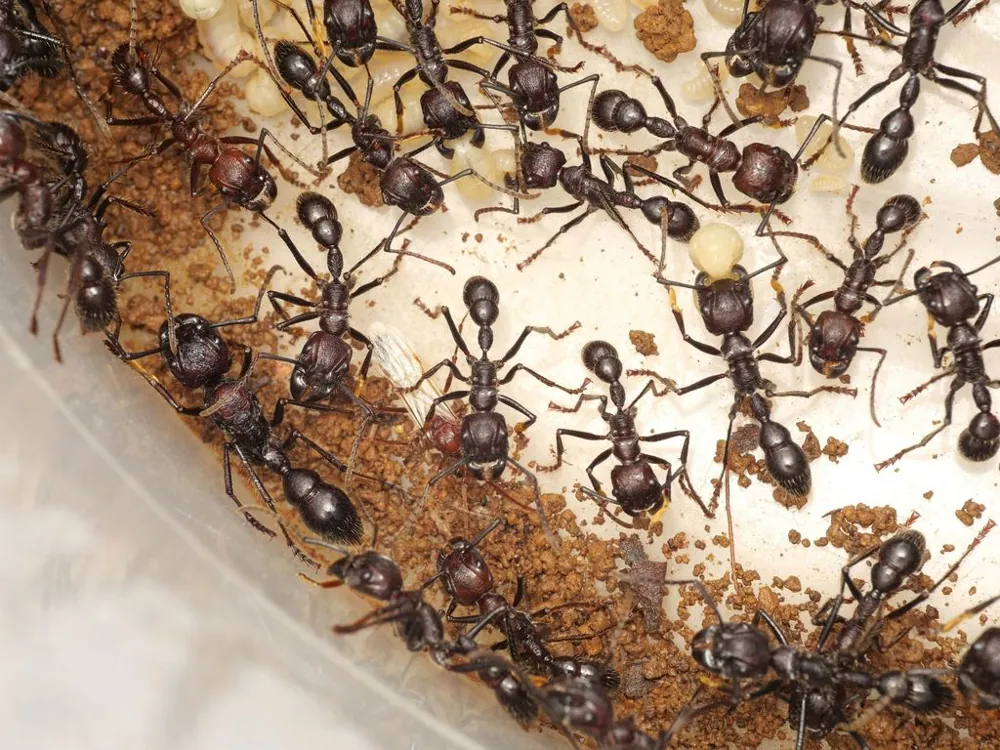
The bullet ant is a large rainforest ant with a sting that is famously painful. It lives in humid lowland rainforests in Central and South America. Its sting ranks as the most painful of all insect stings on one informal pain scale.1

 Indlela yokusibona
Amandla obuthi
Ubuthi buphuma ngodosi.
Ubuthi baso benzani?
The sting delivers poneratoxin, a paralysing neurotoxic peptide (a small protein that attacks the nerves). It affects sodium ion channels, which are needed to send nerve signals, and blocks signal transmission in the central nervous system. Common symptoms from even one sting include swollen lymph nodes, swelling (oedema), a fast heartbeat (tachycardia) and fresh blood in the faeces.1
Siyingozi kangakanani ebantwini?
Ingozi ebantwini: KubuhlunguKungaba buhlungu ngempela, kodwa cishe akukaze kube kubi kakhulu.The pain is described as burning, throbbing and all-consuming, and it can last for up to 24 hours. Workers are vicious when defending the nest, so people who disturb a nest risk being stung.1
Senzani uma sesabile?
The ants are not aggressive in general, but they defend the nest viciously, producing a stridulating sound and stinging with ferocity.1
 Uma sihlaba
- Geza bese upholisa izindawo ezihlatshiwe.
- Uma umuntu ephefumula kanzima, ebuso noma emphinjeni kuvuvukala, noma ezizwa ezoquleka, lesi yisimo esiphuthumayo se-allergy: shayela inombolo yezimo eziphuthumayo.
Njalo shayela kuqala inombolo yezimo eziphuthumayo (112, 000, 911). Lokhu kuyiseluleko sosizo lokuqala esijwayelekile, akusona iseluleko sezokwelapha. Izisekelo zosizo lokuqala
 Hlala uphephile
- Ungalokothi uthinte, ubambe noma ugcone isilwane sasendle, ngisho noma sincane, futhi ngisho noma sibukeka silele noma sifile.
- Sinike isikhala. Uma uhlangana naso, hlala uzolile, uhlehle kancane bese usiyeka sihambe ngendlela yaso.
- Uma sikuhlaba: hlala uzolile, ungashukumi, shayela inombolo yezimo eziphuthumayo (112, 000, 911) noma uye esibhedlela ngokushesha. Khumbula ukuthi besibukeka kanjani, isithombe siyasiza.
Asikuzingeli wena. Sisebenzisa ubuthi baso ukuze sibambe ukudla noma ukuzivikela, futhi singancamela ukucasha. Okwengeziwe mayelana nokuhlala uphephile
Sikhulu kangakanani?
Side kangakanani?
 side cishe njengesibophi sephepha
Bullet ant mkhulu kangakanani uma uqhathanisa NAWE?
Yizibalo nje kusiphequluli sakho. Akukho okulondolozwayo noma okuthunyelwa ndawo.
Sishesha kangakanani?


Amaqiniso
Its sting is compared to walking over flaming charcoal with a three-inch nail in your heel, and some victims say it feels like being shot, which gives the ant its name.1
The Sateré-Mawé people of Brazil use bullet ant stings in initiation rites for becoming warriors or leaders. Ants are sedated and woven into gloves, and the initiate wears them for 5 to 10 minutes or longer.1
A flying fly parasite, Apocephalus paraponerae, lays eggs in injured bullet ants, and a crushed ant can attract flies within two to three minutes.1
Poneratoxin from its venom is being investigated for possible medical uses.1
The glasswing butterfly, Greta oto, is a predator of the bullet ant. Its larvae make chemical extracts that these ants find unpalatable.1
Fossils of relatives were found in Dominican amber. The extinct Paraponera dieteri lived 15 to 45 million years ago in the Early Miocene.1
Lapho amaqiniso evela khona
- Paraponera clavata (Wikipedia (CC BY-SA 4.0))
- Paraponera clavata (iNaturalist): amagama nokuhlelwa ngezigaba.
- Venom Wiki: izinga lengozi, usayizi ojwayelekile nesiqagela sejubane kungokwethu. Bona ukuthi sikubala kanjani: Indlela esilinganisa ngayo ingozi.
Iqiniso ngalinye kuleli khasi linenombolo ekhomba umthombo walo. Uma senze iphutha, uxolo, singabathandi bezilwane, hhayi iphephabhuku lesayensi. Sitshele ku-[email protected] futhi sizolilungisa.
 Ufezela ulambile! I-Venom Wiki iwumsebenzi womuntu oyedwa: imahhala, ayinazo izikhangiso noma izilandeli. Isipho esincane sisiza ukuyigcina ku-inthanethi.Phakela ufezela
 Red imported fire ant
 Army ant
 Giant Amazonian ant
 Maricopa harvester ant
 Trap-jaw ant
 Acacia ant
 Terciopelo
 Eastern coral snake
 Eastern diamondback rattlesnake
 Eyelash viper
 Timber rattlesnake
 Western diamondback rattlesnake