
 I-Afrika
 I-Asia
 I-Yurophu
 INingizimu Melika
 I-Australia ne-Oceania
 I-Antarctica
 ULwandlekazi iPacific
 ULwandlekazi i-Atlantic
 ULwandlekazi i-India
 ULwandlekazi i-Arctic
 Ulwandle iMediterranean
 Ulwandle Olubomvu
 Ulwandle iCaribbean
 Ulwandle iCoral
 Ulwandle lwaseNingizimu China
 Ulwandle lwasePhilippines
 Ulwandle i-Andaman
 Ulwandle i-North Sea
 Ulwandle lwaseTimor ne-Arafura
 Ichweba laseBengal
 Ichweba laseCalifornia
Giant vinegaroon
 Siyafafaza noma sikhafula
The giant vinegaroon is a large, harmless-to-people relative of the scorpion, known for the vinegar smell it gives off when threatened. It lives in the southern United States and Mexico, where it hunts insects and other small creatures at night. It is useful to people because it eats scorpions and other pests.1



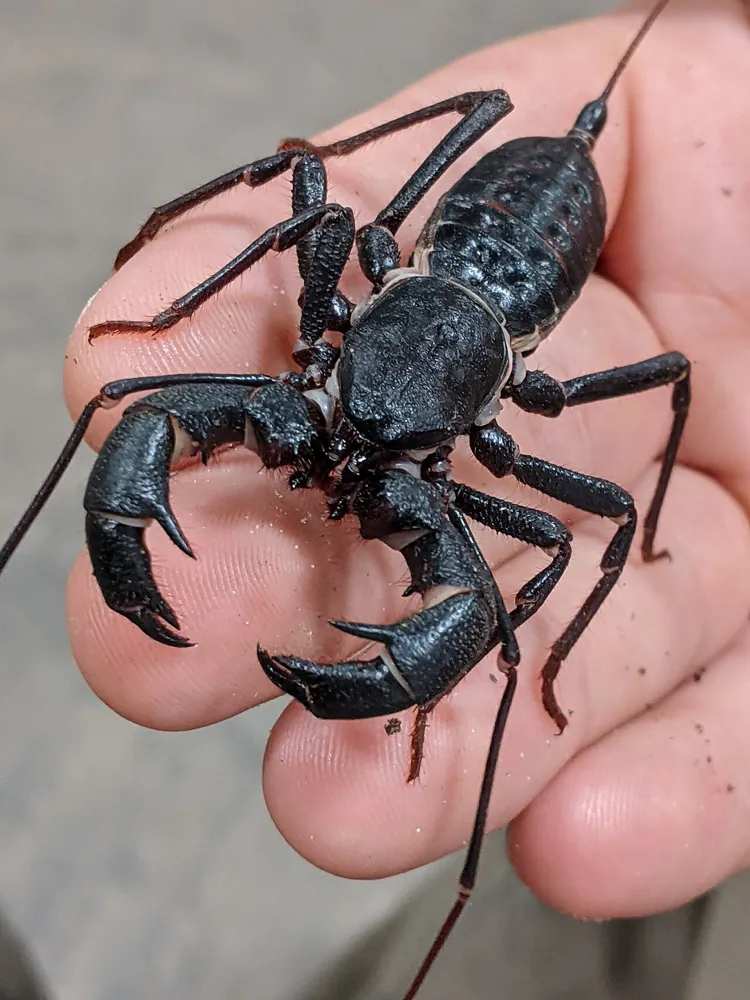
 Indlela yokusibona
- Body length is 40 to 60 millimetres, not counting the tail.1
- Has a long, thin, whip-like tail at the back.1
- Has two long front legs that it uses to feel around and sense vibrations.1
- Has two large pedipalps (front limbs) modified into claws for crushing prey.1
- When sprayed, it smells strongly of vinegar.1
Amandla obuthi
Sifafaza noma sikhafulela uketshezi oluhlabayo kulabo abasihlaselayo.
Ubuthi baso benzani?
It is not venomous. From the base of its tail it sprays a liquid made of 85% acetic acid, the main component of vinegar. If the spray gets into mucous membranes or cuts, it can sting, and it can irritate the eyes.1
Siyingozi kangakanani ebantwini?
Ingozi ebantwini: KuncaneNjengokuhlatshwa yinyosi noma ngaphansi. Cishe akunangozi ebantwini.It seldom bites or pinches people. Its main risk is the acid spray, which can sting and cause eye irritation.1
Senzani uma sesabile?
When threatened, it sprays acetic acid from the base of its tail.1
 Uma sikufafaza
- Ezinweleni zezimbungu ezihlabayo: zisuse ngetheyiphu enamathelayo, bese ugeza isikhumba. Ungahlikihli.
- Uma kulunyiwe: geza bese upholisa. Thola usizo lwezokwelapha uma umuntu ezizwa engaphilile noma opha kalula.
Njalo shayela kuqala inombolo yezimo eziphuthumayo (112, 000, 911). Lokhu kuyiseluleko sosizo lokuqala esijwayelekile, akusona iseluleko sezokwelapha. Izisekelo zosizo lokuqala
 Hlala uphephile
- Ungalokothi uthinte, ubambe noma ugcone isilwane sasendle, ngisho noma sincane, futhi ngisho noma sibukeka silele noma sifile.
- Sinike isikhala. Uma uhlangana naso, hlala uzolile, uhlehle kancane bese usiyeka sihambe ngendlela yaso.
- Uma sikufafaza: hlala uzolile, ungashukumi, shayela inombolo yezimo eziphuthumayo (112, 000, 911) noma uye esibhedlela ngokushesha. Khumbula ukuthi besibukeka kanjani, isithombe siyasiza.
Asikuzingeli wena. Sisebenzisa ubuthi baso ukuze sibambe ukudla noma ukuzivikela, futhi singancamela ukucasha. Okwengeziwe mayelana nokuhlala uphephile
Sikhulu kangakanani?
Side kangakanani?
 side njengezitini zamathoyizi ezingu-2 ezilandelanayo
Giant vinegaroon mkhulu kangakanani uma uqhathanisa NAWE?
Yizibalo nje kusiphequluli sakho. Akukho okulondolozwayo noma okuthunyelwa ndawo.
Sishesha kangakanani?


Amaqiniso
Its common name 'vinegaroon' comes from the vinegar smell of the acid it sprays.1
It is an efficient predator of scorpions, and it is sometimes bought for that purpose.1
Males fight each other at night in fierce battles for the chance to mate with a female.1
It has eight eyes, but they are very weak, so it finds its way mostly by feeling with its front legs, tail and pedipalps.1
Raccoons, coatis, armadillos, skunks, bears, roadrunners, lizards and tarantulas may all eat it.1
It is sold in the exotic animal trade as a pet.1
Umqothuli wezinganekwane
Inganekwane: Giant vinegaroons are dangerous and venomous to people.
Iqiniso: They are non-venomous and seldom bite or pinch people. The main risk is the acid spray, which can irritate the eyes or sting if it reaches cuts or mucous membranes.1
Okongoti bobuthi
- Igama lesayensi
- Mastigoproctus giganteus
- Iqembu
- Izimbungu nezinambuzane
- Umndeni
- Thelyphonidae2
- Ukuhleleka
- Uropygi
- Amazwekazi
- INyakatho Melika
- Izinsana
- The female produces about 40 offspring, which she protects and feeds during their early lives. She reproduces only once.1
- Isikhathi sokuphila
- cishe iminyaka engu-71
- Ingozi ebantwini
- 1 / 5: Kuncane3
Lapho amaqiniso evela khona
- Mastigoproctus giganteus (Wikipedia (CC BY-SA 4.0))
- Mastigoproctus giganteus (iNaturalist): amagama nokuhlelwa ngezigaba.
- Venom Wiki: izinga lengozi, usayizi ojwayelekile nesiqagela sejubane kungokwethu. Bona ukuthi sikubala kanjani: Indlela esilinganisa ngayo ingozi.
Iqiniso ngalinye kuleli khasi linenombolo ekhomba umthombo walo. Uma senze iphutha, uxolo, singabathandi bezilwane, hhayi iphephabhuku lesayensi. Sitshele ku-[email protected] futhi sizolilungisa.
 Ufezela ulambile! I-Venom Wiki iwumsebenzi womuntu oyedwa: imahhala, ayinazo izikhangiso noma izilandeli. Isipho esincane sisiza ukuyigcina ku-inthanethi.Phakela ufezela
Okunye okuvela eqenjini elifanayo: Izimbungu nezinambuzane
 Giant water bugIzimbungu nezinambuzaneKubuhlungu nje
 Puss caterpillarIzimbungu nezinambuzaneKubuhlungu njeUngathinti
 Saddleback caterpillarIzimbungu nezinambuzaneKubuhlungu njeUngathinti
 Wheel bugIzimbungu nezinambuzaneKubuhlungu nje
 Rhodnius kissing bugIzimbungu nezinambuzaneKudinga udokotela
 Black-waved flannel mothIzimbungu nezinambuzaneKubuhlungu njeUngathinti
 Terciopelo
 Eastern coral snake
 Eastern diamondback rattlesnake
 Eyelash viper
 Timber rattlesnake
 Western diamondback rattlesnake
_face.jpg)