
 I-Afrika
 I-Asia
 I-Yurophu
 INingizimu Melika
 I-Australia ne-Oceania
 I-Antarctica
 ULwandlekazi iPacific
 ULwandlekazi i-Atlantic
 ULwandlekazi i-India
 ULwandlekazi i-Arctic
 Ulwandle iMediterranean
 Ulwandle Olubomvu
 Ulwandle iCaribbean
 Ulwandle iCoral
 Ulwandle lwaseNingizimu China
 Ulwandle lwasePhilippines
 Ulwandle i-Andaman
 Ulwandle i-North Sea
 Ulwandle lwaseTimor ne-Arafura
 Ichweba laseBengal
 Ichweba laseCalifornia
Lion's mane jellyfish
 Ama-tentacle ahlabayo
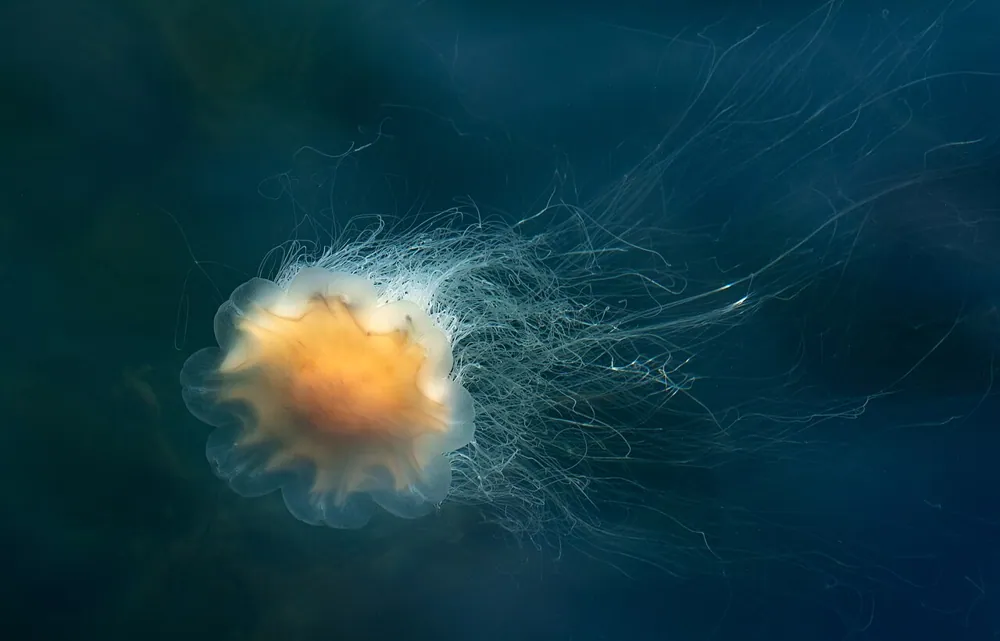
The lion's mane jellyfish is one of the largest jellyfish known, and its bell can be over 2 m across in the far north. It lives in cold northern seas, including the English Channel, the North Sea and the Irish Sea. Its long, trailing stinging tentacles can wash up on beaches in late summer and autumn.1



 Indlela yokusibona
- Bell is divided into eight lobes, giving it the look of an eight-point star1
- Young ones are light orange or tan, darkening to red and purple as they grow1
- Long, thin, trailing tentacles, with many more tentacles around the mouth1
- Bell is often about 50 cm across in lower latitudes, and much larger in the far north1
- Usually found alone, rarely in groups1
Ivamise ukudidaniswa ne: The blue jellyfish (Cyanea lamarckii) is sometimes found in the same waters. It is blue rather than red, and smaller, with a bell of about 10 to 20 cm across.1
Amandla obuthi
Izinkulungwane zamaseli amancane ahlabayo ziyadubula uma kukhona okuzithintayo.
Ubuthi baso benzani?
Its tentacles carry stinging cells, called nematocysts, which inject a sting when touched. The sting is very painful and feels like intense itching or burning, and it can cause temporary pain and redness where the skin was touched. Stings across large parts of the body can cause whole-body (systemic) effects, and medical attention is recommended in that case.1
Siyingozi kangakanani ebantwini?
Ingozi ebantwini: KubuhlunguKungaba buhlungu ngempela, kodwa cishe akukaze kube kubi kakhulu.Stings are not known to be fatal in healthy people, and there is normally no real danger, though people with special allergies may be at risk. Rare severe stings in deep water can cause panic, which may lead to drowning. In July 2010, about 150 beachgoers were stung by the remains of one broken-up jellyfish on a beach in New Hampshire, US.1
 Uma sihlaba
- Vinegar can be used to deactivate the stinging cells. If you have touched a large number of tentacles, get medical attention after exposure.1
- Phuma emanzini bese ukhipha noma yimiphi imicu ehlabayo (ama-tentacle) (ngamagilavu noma ngendwangu).
- Kuma-box jellyfish asezindaweni ezishisayo: thela uviniga ezindaweni ezihlatshiwe okungenani imizuzwana engama-30, biza usizo futhi ulungele ukwenza i-CPR. Kuma-bluebottle nakwamanye amaningi: hlanza ngamanzi olwandle, bese usebenzisa amanzi ashisayo ngenxa yobuhlungu.
Njalo shayela kuqala inombolo yezimo eziphuthumayo (112, 000, 911). Lokhu kuyiseluleko sosizo lokuqala esijwayelekile, akusona iseluleko sezokwelapha. Izisekelo zosizo lokuqala
 Hlala uphephile
- Ungalokothi uthinte, ubambe noma ugcone isilwane sasendle, ngisho noma sincane, futhi ngisho noma sibukeka silele noma sifile.
- Sinike isikhala. Uma uhlangana naso, hlala uzolile, uhlehle kancane bese usiyeka sihambe ngendlela yaso.
- Uma sikuhlaba: hlala uzolile, ungashukumi, shayela inombolo yezimo eziphuthumayo (112, 000, 911) noma uye esibhedlela ngokushesha. Khumbula ukuthi besibukeka kanjani, isithombe siyasiza.
Asikuzingeli wena. Sisebenzisa ubuthi baso ukuze sibambe ukudla noma ukuzivikela, futhi singancamela ukucasha. Okwengeziwe mayelana nokuhlala uphephile
Kuphi emhlabeni?
Sikhulu kangakanani?
Side kangakanani?
 side njengamakati asekhaya angu-4 kusuka ekhaleni kuya emsileni
 side njengobhanana abangu-12 abalandelanayo
 singabhukuda ubude bechibi elikhulu lokubhukuda (50 m) ngemizuzwana engu-140
Lion's mane jellyfish mkhulu kangakanani uma uqhathanisa NAWE?
Yizibalo nje kusiphequluli sakho. Akukho okulondolozwayo noma okuthunyelwa ndawo.
Sishesha kangakanani?

Amaqiniso
The longest recorded tentacles were 36.6 m long, longer than a blue whale.1
Its tentacles can still sting for up to 25 days after they have detached from the jellyfish.1
Each of the eight lobes of its bell has about 70 to 150 tentacles, and it has around 1,200 tentacles near its mouth.1
The leatherback sea turtle feeds almost exclusively on lion's mane jellyfish in large numbers during summer around Eastern Canada.1
Unlike most jellyfish that drift in groups, the lion's mane is completely solitary.1
Umqothuli wezinganekwane
Inganekwane: The lion's mane jellyfish is the longest animal in the world.
Iqiniso: This claim was made on a TV show, but it was corrected. A bootlace worm reported in 1864 was said to be over 55 m long, and that report is doubted because bootlace worms can stretch well beyond their natural length. If that report is wrong, the lion's mane would be the longest animal.1
Okongoti bobuthi
- Igama lesayensi
- Cyanea capillata
- Iqembu
- Ama-jellyfish nezinye izilwane zasolwandle ezihlabayo
- Umndeni
- Cyaneidae2
- Ukuhleleka
- Semaeostomeae
- Amazwekazi
- ULwandlekazi i-Arctic, ULwandlekazi i-Atlantic, ULwandlekazi iPacific, Ulwandle i-North Sea, Izilwandlekazi
- Izinsana
- The female carries fertilised eggs in a tentacle, and they grow into larvae that settle on a hard surface and become polyps, which then produce young jellyfish called ephyrae.1
- Isikhathi sokuphila
- cishe iminyaka engu-11
- Ingozi ebantwini
- 2 / 5: Kubuhlungu3
Lapho amaqiniso evela khona
- Lion's mane jellyfish (Wikipedia (CC BY-SA 4.0))
- Cyanea capillata (iNaturalist): amagama nokuhlelwa ngezigaba.
- Venom Wiki: izinga lengozi, usayizi ojwayelekile nesiqagela sejubane kungokwethu. Bona ukuthi sikubala kanjani: Indlela esilinganisa ngayo ingozi.
Iqiniso ngalinye kuleli khasi linenombolo ekhomba umthombo walo. Uma senze iphutha, uxolo, singabathandi bezilwane, hhayi iphephabhuku lesayensi. Sitshele ku-[email protected] futhi sizolilungisa.
 Ufezela ulambile! I-Venom Wiki iwumsebenzi womuntu oyedwa: imahhala, ayinazo izikhangiso noma izilandeli. Isipho esincane sisiza ukuyigcina ku-inthanethi.Phakela ufezela
Okunye okuvela eqenjini elifanayo: Ama-jellyfish nezinye izilwane zasolwandle ezihlabayo
 Australian box jellyfishAma-jellyfish nezinye izilwane zasolwandle ezihlabayoKuyabulalaUngathinti
 Irukandji jellyfishAma-jellyfish nezinye izilwane zasolwandle ezihlabayoKungabulalaUngathinti
 Portuguese man o' warAma-jellyfish nezinye izilwane zasolwandle ezihlabayoKudinga udokotelaUngathinti
 Moon jellyfishAma-jellyfish nezinye izilwane zasolwandle ezihlabayoAkunangozi
 Common kingslayerAma-jellyfish nezinye izilwane zasolwandle ezihlabayoKungabulalaUngathinti
 Hell's fire anemoneAma-jellyfish nezinye izilwane zasolwandle ezihlabayoKudinga udokotelaUngathinti
 Greenland shark
 Spiny dogfish
 Bootlace worm