
 I-Afrika
 I-Asia
 I-Yurophu
 INingizimu Melika
 I-Australia ne-Oceania
 I-Antarctica
 ULwandlekazi iPacific
 ULwandlekazi i-Atlantic
 ULwandlekazi i-India
 ULwandlekazi i-Arctic
 Ulwandle iMediterranean
 Ulwandle Olubomvu
 Ulwandle iCaribbean
 Ulwandle iCoral
 Ulwandle lwaseNingizimu China
 Ulwandle lwasePhilippines
 Ulwandle i-Andaman
 Ulwandle i-North Sea
 Ulwandle lwaseTimor ne-Arafura
 Ichweba laseBengal
 Ichweba laseCalifornia
Lollyfish
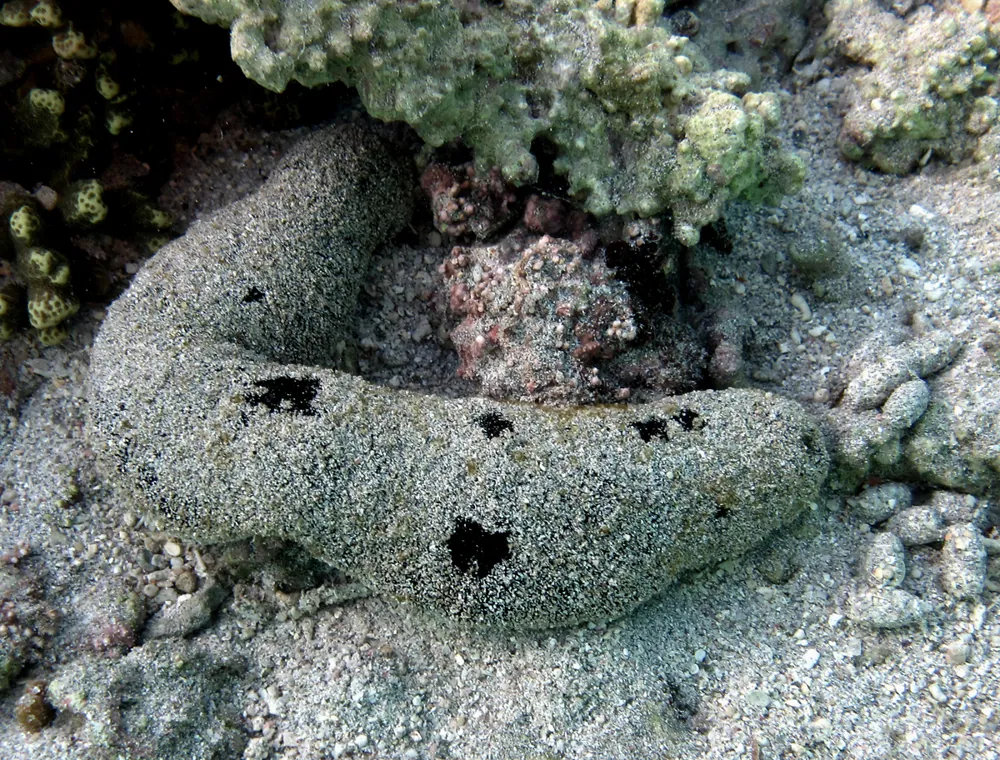
 Ushevu esikhumbeni sasoSidla: Kancane kwakho konkeSinoshevu, asinabo ubuthi bokuluma noma bokuhlaba
The lollyfish is a black sea cucumber, a soft-bodied animal that lives on the seabed. It is found in shallow tropical waters across the Indo-Pacific, from the Red Sea and East Africa to Australia. It matters to people because its skin releases a toxic red fluid when it is damaged.1
 Indlela yokusibona
Amandla oshevu
Isikhumba saso sinoshevu. Kuyingozi ukusithinta, ukusikhotha noma ukusidla.
Ushevu waso wenzani?
It is not venomous. When its skin is rubbed or damaged, it releases a toxic red fluid.1
Siyingozi kangakanani ebantwini?
Ingozi ebantwini: KuncaneNjengokuhlatshwa yinyosi noma ngaphansi. Cishe akunangozi ebantwini.Senzani uma sesabile?
When attacked, it pushes its internal organs out through its anus, and it releases a toxic red fluid when its skin is rubbed or damaged.1
 Uma umuntu esithintile noma esidlile
- Faka inxeba emanzini ashisayo, ashisa ngendlela umuntu angakwazi ukuyibekezelela ngaphandle kokusha, bese uthola usizo lwezokwelapha ukuze kukhishwe ameva. Ungawamambi ngokwakho.
Njalo shayela kuqala inombolo yezimo eziphuthumayo (112, 000, 911). Lokhu kuyiseluleko sosizo lokuqala esijwayelekile, akusona iseluleko sezokwelapha. Izisekelo zosizo lokuqala
 Hlala uphephile
- Ungalokothi uthinte, ubambe noma ugcone isilwane sasendle, ngisho noma sincane, futhi ngisho noma sibukeka silele noma sifile.
- Sinike isikhala. Uma uhlangana naso, hlala uzolile, uhlehle kancane bese usiyeka sihambe ngendlela yaso.
- Uma usithintile noma usidlile: ungahlikihli amehlo noma umlomo wakho, geza izandla zakho futhi uthole usizo lwezokwelapha.
Asikuzingeli wena. Ushevu waso ukhona nje ukuze kungabikho okusidlayo. Okwengeziwe mayelana nokuhlala uphephile
Kuphi emhlabeni?
Sikhulu kangakanani?
Side kangakanani?
 side njengobhanana abangu-3 abalandelanayo
 sihamba kancane kunomnenke wasengadini
Lollyfish mkhulu kangakanani uma uqhathanisa NAWE?
Yizibalo nje kusiphequluli sakho. Akukho okulondolozwayo noma okuthunyelwa ndawo.
Sishesha kangakanani?


Amaqiniso
When attacked, it pushes its internal organs out through its anus rather than firing sticky Cuvierian tubules as some sea cucumbers do.1
On Guam, its toxic red fluid is used to drive octopuses out of their hiding holes.1
It can split in two by transverse fission, and a sand coating does not stick to the new surfaces.1
Pools warmed by the sun can reach 39 °C, and individuals there still appeared healthy and fed.1
A thick coating of sand may help keep it cool by shading it from the sun.1
Okongoti bobuthi
- Igama lesayensi
- Holothuria atra
- Iqembu
- Izinkalankala zasolwandle ezinameva, izinkanyezi zasolwandle nezikelemu
- Umndeni
- Holothuriidae2
- Ukuhleleka
- Holothuriida
- Amazwekazi
- ULwandlekazi iPacific, ULwandlekazi i-India, Ulwandle Olubomvu, Ulwandle iCoral, Ulwandle lwasePhilippines, Ulwandle lwaseNingizimu China, Ulwandle lwaseTimor ne-Arafura, Ichweba laseBengal, Izilwandlekazi
- Izinsana
- It is not possible to tell males from females by looking at them. It spawns mostly in summer and autumn, or all year in equatorial waters. It can also reproduce by splitting in two, which mostly happens to smaller animals.1
- Ingozi ebantwini
- 1 / 5: Kuncane3
Lapho amaqiniso evela khona
- Holothuria atra (Wikipedia (CC BY-SA 4.0))
- Holothuria atra (iNaturalist): amagama nokuhlelwa ngezigaba.
- Venom Wiki: izinga lengozi, usayizi ojwayelekile nesiqagela sejubane kungokwethu. Bona ukuthi sikubala kanjani: Indlela esilinganisa ngayo ingozi.
Iqiniso ngalinye kuleli khasi linenombolo ekhomba umthombo walo. Uma senze iphutha, uxolo, singabathandi bezilwane, hhayi iphephabhuku lesayensi. Sitshele ku-[email protected] futhi sizolilungisa.
 Ufezela ulambile! I-Venom Wiki iwumsebenzi womuntu oyedwa: imahhala, ayinazo izikhangiso noma izilandeli. Isipho esincane sisiza ukuyigcina ku-inthanethi.Phakela ufezela
Okunye okuvela eqenjini elifanayo: Izinkalankala zasolwandle ezinameva, izinkanyezi zasolwandle nezikelemu
 Crown-of-thorns starfishIzinkalankala zasolwandle ezinameva, izinkanyezi zasolwandle nezikelemuKudinga udokotelaUngathinti
 Flower urchinIzinkalankala zasolwandle ezinameva, izinkanyezi zasolwandle nezikelemuKungabulala
 Fire urchinIzinkalankala zasolwandle ezinameva, izinkanyezi zasolwandle nezikelemuKudinga udokotelaUngathinti
 Bearded firewormIzinkalankala zasolwandle ezinameva, izinkanyezi zasolwandle nezikelemuKubuhlungu njeUngathinti
 Black long-spined urchinIzinkalankala zasolwandle ezinameva, izinkanyezi zasolwandle nezikelemuKubuhlungu njeUngathinti
 BloodwormIzinkalankala zasolwandle ezinameva, izinkanyezi zasolwandle nezikelemuKubuhlungu nje
Futhi ihlala: ULwandlekazi iPacific
 Australian box jellyfishAma-jellyfish nezinye izilwane zasolwandle ezihlabayoKuyabulalaUngathinti
 Geography coneIminenke ye-cone nezingwaneKuyabulala
 Greater blue-ringed octopusIminenke ye-cone nezingwaneKuyabulala
 Japanese pufferfishEzinye izilwane ezinoshevuKuyabulala
 Southern blue-ringed octopusIminenke ye-cone nezingwaneKuyabulala
 Hawksbill sea turtleEzinye izilwane ezinoshevuKungabulala