
 I-Afrika
 I-Asia
 I-Yurophu
 INingizimu Melika
 I-Australia ne-Oceania
 I-Antarctica
 ULwandlekazi iPacific
 ULwandlekazi i-Atlantic
 ULwandlekazi i-India
 ULwandlekazi i-Arctic
 Ulwandle iMediterranean
 Ulwandle Olubomvu
 Ulwandle iCaribbean
 Ulwandle iCoral
 Ulwandle lwaseNingizimu China
 Ulwandle lwasePhilippines
 Ulwandle i-Andaman
 Ulwandle i-North Sea
 Ulwandle lwaseTimor ne-Arafura
 Ichweba laseBengal
 Ichweba laseCalifornia
Texas lyre snake
 Ukuluma
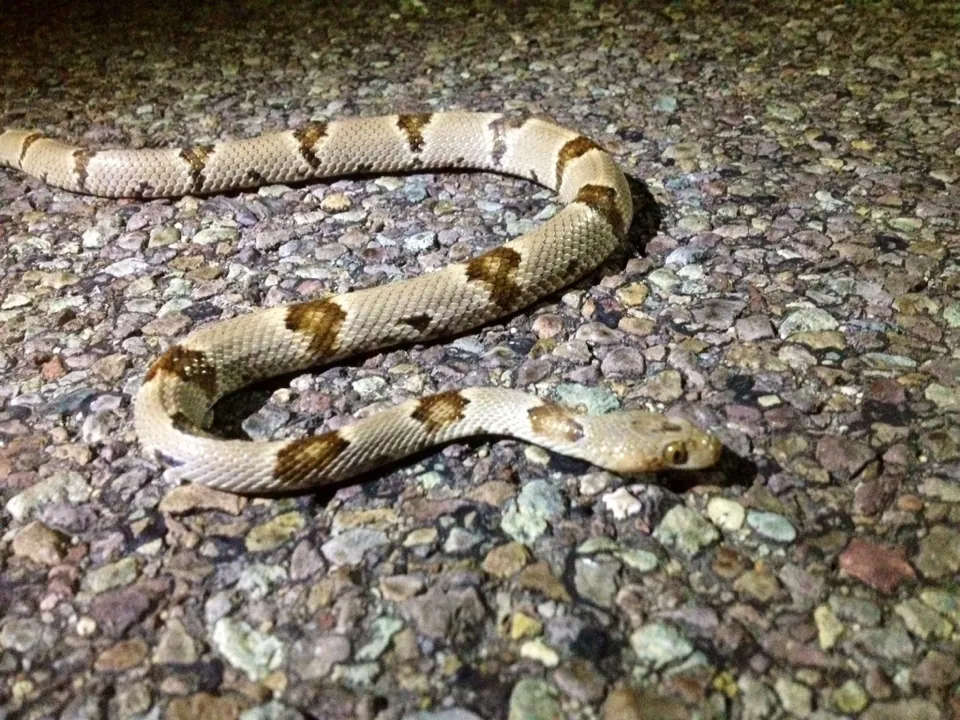
The Texas lyre snake is a medium-sized, mildly venomous snake that lives in deserts and rocky land in the south-western United States and northern Mexico. It is secretive and hides in rock crevices during the day, so it is often hard to spot.1



 Indlela yokusibona
- Brown, tan or grey, with 17 to 24 dark brown blotches down the back1
- Large eyes with vertical pupils1
- Medium-sized, reaching about 1 metre in total length, including the tail1
- No V-shaped mark on the head, unlike other lyre snakes1
Ivamise ukudidaniswa ne: Other lyre snakes in the genus Trimorphodon have a V-shaped pattern on the head that looks like a lyre. This subspecies does not have that mark.1
Amandla obuthi
Ubuthi buphuma ngamazinyo aso obuthi noma ngamazinyo uma siluma.
Ubuthi baso benzani?
This snake is mildly venomous and is rear-fanged, meaning its fangs are at the back of the mouth. Its venom is not considered harmful to humans.1
Siyingozi kangakanani ebantwini?
Ingozi ebantwini: KuncaneNjengokuhlatshwa yinyosi noma ngaphansi. Cishe akunangozi ebantwini.Its venom is not considered harmful to people. The snake is secretive and often difficult to find.1
 Uma siluma
- Geza inxeba lokulunywa, gcina umuntu ezolile bese uthola usizo lwezokwelapha. Ezinye izinhlobo (njenge-boomslang) zingabulala emahoreni amaningi kamuva.
Njalo shayela kuqala inombolo yezimo eziphuthumayo (112, 000, 911). Lokhu kuyiseluleko sosizo lokuqala esijwayelekile, akusona iseluleko sezokwelapha. Izisekelo zosizo lokuqala
 Hlala uphephile
- Ungalokothi uthinte, ubambe noma ugcone isilwane sasendle, ngisho noma sincane, futhi ngisho noma sibukeka silele noma sifile.
- Sinike isikhala. Uma uhlangana naso, hlala uzolile, uhlehle kancane bese usiyeka sihambe ngendlela yaso.
- Uma sikuluma: hlala uzolile, ungashukumi, shayela inombolo yezimo eziphuthumayo (112, 000, 911) noma uye esibhedlela ngokushesha. Khumbula ukuthi besibukeka kanjani, isithombe siyasiza.
Asikuzingeli wena. Sisebenzisa ubuthi baso ukuze sibambe ukudla noma ukuzivikela, futhi singancamela ukucasha. Okwengeziwe mayelana nokuhlala uphephile
Sikhulu kangakanani?
Side kangakanani?
 side njengamakati asekhaya angu-2 kusuka ekhaleni kuya emsileni
 side njengobhanana abangu-6 abalandelanayo
 singahamba amamitha ali-100 ngemizuzwana engu-71 (umuntu oshesha kunabo bonke udinga engu-9,6)
Texas lyre snake mkhulu kangakanani uma uqhathanisa NAWE?
Yizibalo nje kusiphequluli sakho. Akukho okulondolozwayo noma okuthunyelwa ndawo.
Sishesha kangakanani?


Amaqiniso
Despite its name, this subspecies has no V-shaped mark on its head, which is the pattern that gives lyre snakes their name.1
It is nocturnal, spending the day hidden in rock crevices and coming out to feed at night.1
It is seemingly common throughout its habitat, even though it is hard to find.1
It was once listed as Threatened in Texas, but it was removed from that list in 2020.1
Umqothuli wezinganekwane
Inganekwane: The name 'lyre snake' means every lyre snake has a lyre-shaped V mark on its head.
Iqiniso: This subspecies has no V mark on the head, even though the name refers to that pattern in other lyre snakes.1
Okongoti bobuthi
- Igama lesayensi
- Trimorphodon vilkinsonii
- Iqembu
- Izinyoka ezinamazinyo obuthi ngemuva
- Umndeni
- Colubridae2
- Ukuhleleka
- Squamata
- Amazwekazi
- INyakatho Melika
- Izinsana
- It lays eggs (it is oviparous), with about a dozen eggs per clutch.1
- Simo saso endle
- Removed from the Threatened list in Texas in 20201
- Ingozi ebantwini
- 1 / 5: Kuncane3
Lapho amaqiniso evela khona
- Texas lyre snake (Wikipedia (CC BY-SA 4.0))
- Trimorphodon vilkinsonii (iNaturalist): amagama nokuhlelwa ngezigaba.
- Venom Wiki: izinga lengozi, usayizi ojwayelekile nesiqagela sejubane kungokwethu. Bona ukuthi sikubala kanjani: Indlela esilinganisa ngayo ingozi.
Iqiniso ngalinye kuleli khasi linenombolo ekhomba umthombo walo. Uma senze iphutha, uxolo, singabathandi bezilwane, hhayi iphephabhuku lesayensi. Sitshele ku-[email protected] futhi sizolilungisa.
 Ufezela ulambile! I-Venom Wiki iwumsebenzi womuntu oyedwa: imahhala, ayinazo izikhangiso noma izilandeli. Isipho esincane sisiza ukuyigcina ku-inthanethi.Phakela ufezela
Okunye okuvela eqenjini elifanayo: Izinyoka ezinamazinyo obuthi ngemuva
 Western hognose snakeIzinyoka ezinamazinyo obuthi ngemuvaAkunangozi
 Brown vine snakeIzinyoka ezinamazinyo obuthi ngemuvaAkunangozi
 Eastern hognose snakeIzinyoka ezinamazinyo obuthi ngemuvaAkunangozi
 Green vine snakeIzinyoka ezinamazinyo obuthi ngemuvaAkunangozi
 Desert night snakeIzinyoka ezinamazinyo obuthi ngemuvaAkunangozi
 Night snakeIzinyoka ezinamazinyo obuthi ngemuvaAkunangozi
 Terciopelo
 Eastern coral snake
 Eastern diamondback rattlesnake
 Eyelash viper
 Timber rattlesnake
 Western diamondback rattlesnake